
Why a Leather Rifle Scabbard is a Hunter's Best Friend: Benefits, Durability, and Custom Fit
A leather rifle scabbard is a slim, protective sheath designed to carry and shield a rifle in active hunting environments, combining structural leather with lining and fastening systems to protect firearms from abrasion, impact, and the elements. This article explains why leather scabbards remain a top choice for big game hunting and field transport by focusing on three core pillars: reliable protection, enduring durability, and a custom fit that supports quick access and safe, hands-free carry. Hunters often face scratched finishes, shifting optics, and awkward carry arrangements that slow response times; a well-designed leather scabbard addresses those pain points by stabilizing the rifle, cushioning critical contact points, and offering mounting options for saddle or ATV use. You will learn the primary benefits, which leather types perform best in different conditions, precise fit and feature checklists for buying or ordering a custom scabbard, activity-specific design guidance for horseback and ATV use, and practical care steps to extend leather life. Throughout the guide we will reference manufacturing and customization capabilities that support these outcomes, and provide comparison tables and checklists to help both individual hunters and B2B buyers choose the right premium leather rifle scabbard for their needs.
What Are the Key Benefits of Using a Leather Rifle Scabbard for Hunting?
A leather rifle scabbard protects firearms by isolating the metal and wood from abrasive brush, moisture, and contact damage while preserving access ergonomics and stability during active movement. The combination of leather thickness, internal padding, and secure closures reduces scratching and shock transfer, making leather scabbards particularly suited for field conditions where contact with branches, saddles, or cargo is common. Beyond protection, hand-stitched leather scabbards age gracefully, developing a protective patina and remaining serviceable for years with basic maintenance, which reduces lifecycle cost and supports a heritage aesthetic valued by many hunters. The following list summarizes the primary benefits and sets up the material discussion that follows.
Leather rifle scabbards deliver core advantages for active hunters:
- Protection from abrasion and impact: thick leather and internal padding prevent scratches and absorb shocks.
- Durable long-term performance: quality leather and hand-stitching resist failure modes common to synthetics.
- Hands-free carry and quick access: saddle loops, slings, and quick-draw orientations enable field-ready deployment.
These benefits lead directly into material choices, because selecting the correct leather type and construction determines how well a scabbard achieves each advantage.
How Does a Leather Scabbard Provide Superior Firearm Protection?
A leather scabbard provides superior firearm protection by combining dense outer leather with internal padding and a scratch-resistant lining to control movement and shield finishes. Thick full-grain or buffalo leather absorbs and dissipates impact energy from knocks and brush, while an inner lining—sheepskin or synthetic suede—prevents direct abrasive contact with metal and wood surfaces. Closures, reinforcement at stress points, and hand-stitching reduce seam failure and keep the rifle snug, minimizing internal shifting that can scratch optics or actions. This protection model is why hunters who repeatedly encounter dense cover or transport over rough terrain prefer leather scabbards with reinforced seams and targeted padding at the muzzle and stock.
Why Is Durability Essential in a Leather Gun Case?
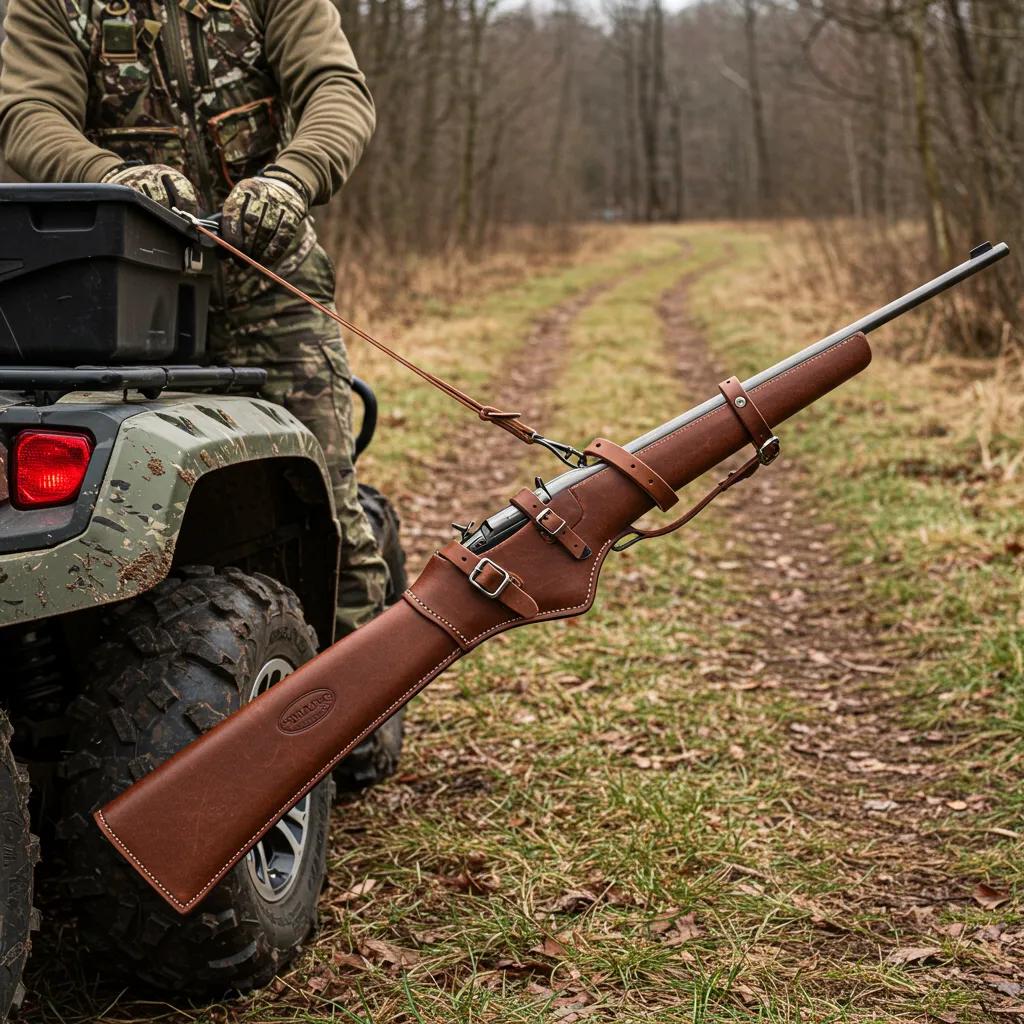
Durability in a leather gun case matters because hunters and retailers evaluate scabbards on cost-per-year performance, repairability, and reliability under harsh conditions rather than initial price alone. Leather resists many common failure modes of thinner synthetics: it does not splinter, and quality hides maintain tensile strength under load; hand-stitching provides reparable seams that can be replaced without discarding the whole unit. A durable scabbard preserves firearm finish and optics over multiple seasons and reduces replacement frequency, which is particularly important for B2B buyers stocking premium products. The durability discussion naturally leads to material selection, as the hide type, tanning, and finish directly influence longevity and maintenance needs.
How Does a Leather Scabbard Enhance Quick Access and Hands-Free Carry?
A leather scabbard enhances quick access and hands-free carry through ergonomic design elements such as saddle mounting loops, adjustable slings, and quick-release closures that orient the rifle for rapid retrieval. Proper strap placement and a stable retention system keep the firearm secure while allowing a predictable drawing motion, whether mounted or on foot; for example, a saddle-mounted scabbard oriented forward supports a forward sweep draw that many equestrian hunters prefer. Design trade-offs often center on concealment versus speed: lower-profile scabbards conceal better but may slow access, while quick-draw models favor open access and robust retention. Understanding these trade-offs prepares the buyer to choose mounting systems and closure types optimized for their typical hunting scenarios.
Which Types of Leather Are Best for Durable Rifle Scabbards?
Choosing the right leather type for a rifle scabbard balances strength, flexibility, weather resistance, and weight; different hides excel in different hunting contexts. Full-grain cowhide offers high tensile strength and long-term abrasion resistance suited to heavy-duty use, buffalo leather brings extra rugged thickness for extreme exposure, goat leather adds lightweight flexibility for pack hunters, and sheepskin-lined constructions prioritize a close, form-fitting profile that protects finishes.
Different leather types deliver distinct combinations of durability, flexibility, and weather resistance:
| Leather Type | Key Properties | Best Use-Cases |
|---|---|---|
| Full-grain cowhide | High tensile strength, abrasion resistance, develops protective patina | Big game, rugged field carry, saddle mounting |
| Buffalo leather | Thick, rugged, high impact resistance | Heavy-duty outdoor use, harsh climates, ATV transport |
| Goat leather | Lightweight, flexible, good tear resistance | Long-distance pack hunts, scoped rifles requiring contouring |
| Sheep (with lining) | Soft, form-fitting, protective lining options | Scoped rifles, delicate finishes, close-fit protection |
What Are the Differences Between Full-Grain Cowhide, Buffalo, Goat, and Sheep Leather?
Full-grain cowhide typically provides the best overall strength and abrasion resistance while developing a useful patina with age, making it a common choice for heavy-use scabbards. Buffalo leather is thicker and more impact-resistant, which is beneficial when the scabbard will take repeated knocks or be strapped to ATVs and heavy gear. Goat leather is valued for its flexibility and lower weight, enabling a snugger fit around contours such as scopes or bolt-action receivers without excessive bulk. Sheep-based constructions, often used with a soft lining, prioritize surface protection and a close fit for high-value scoped rifles where minimizing movement and contact is critical.
How Do Leather Properties Affect Scabbard Longevity and Protection?
Tanning method, grain integrity, and surface finish determine water resistance, stiffness, and abrasion behavior, which in turn drive maintenance schedules and expected lifespan. Vegetable-tanned full-grain leather, for instance, tends to develop a durable surface and can be conditioned for water resistance, whereas chrome-tanned leathers may retain suppleness but require different conditioners to prevent surface degradation. Grain tightness affects scratch resistance: tighter grain repels abrasion better, while porous or thin leathers can mark more easily. Understanding these property trade-offs helps hunters select appropriate finishes and plan a maintenance regimen that preserves protective performance.
How to Choose the Best Leather Rifle Scabbard for Your Hunting Needs?
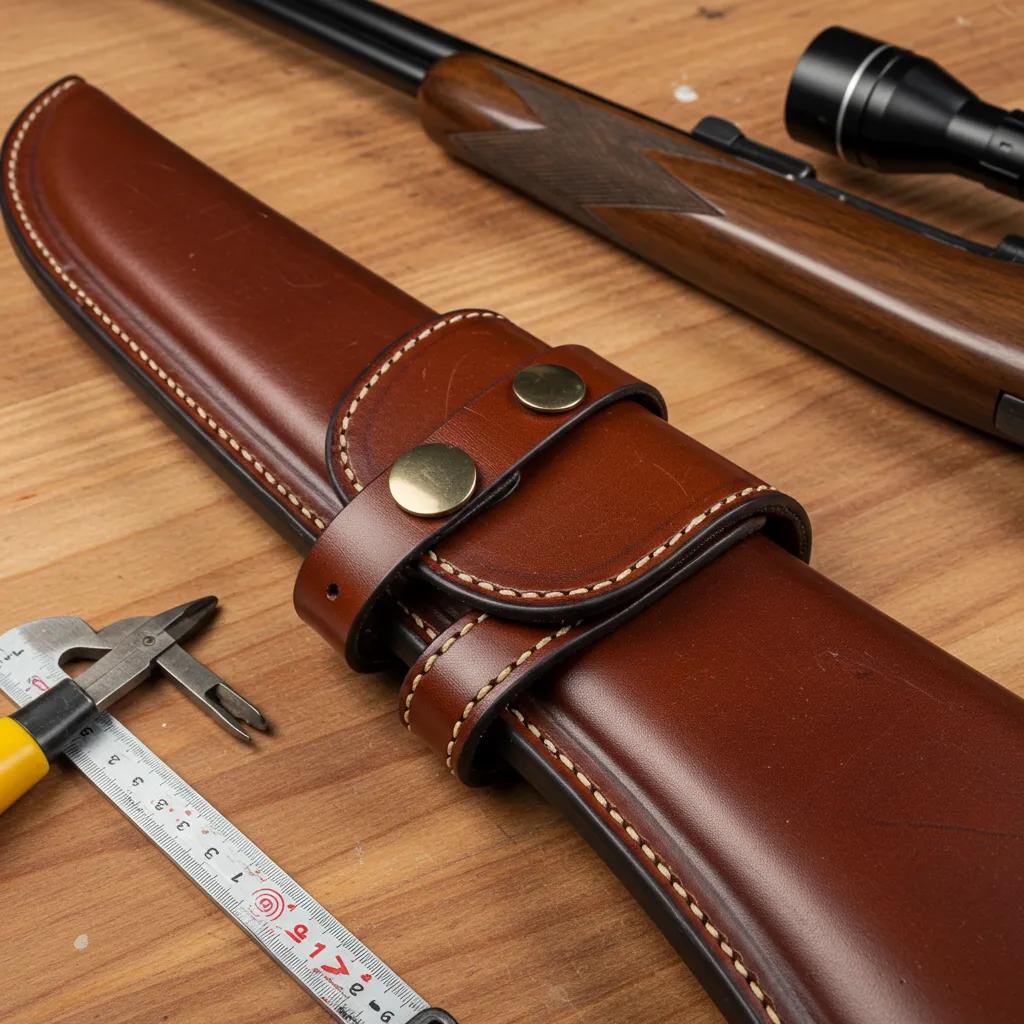
Selecting the best leather rifle scabbard requires matching dimensions, protection features, mounting systems, and finish choices to your rifle and primary hunting activity. Accurate measurements for overall length and scope clearance prevent improper fit that can stress seams or interfere with function, while features like padding, scratch-resistant lining, reinforced buckles, and saddle attachment loops define both protection level and field usability. For B2B buyers and retailers, customization options—hand-stitching, private-label finishes, and model-specific shaping—offer differentiation and durability benefits. Below is a practical checklist to guide selection, followed by a comparison table of key features to evaluate.
Use this stepwise checklist to choose a scabbard:
- Measure overall rifle length and barrel length, including scope and mounts for clearance.
- Verify headspace for bolt or lever actions and confirm allowance for scope height.
- Select desired mounting options (saddle loops, sling attachments, ATV brackets) for your typical carry.
- Choose lining and padding levels that protect finish and stabilize the rifle during movement.
These steps lead to a clear feature comparison so you can prioritize what matters most for your hunting approach.
| Feature | Why It Matters | What To Look For |
|---|---|---|
| Size & Fit | Ensures safe, secure fit that prevents movement | Exact overall length + scope allowance; adjustable closures |
| Lining & Padding | Protects finish and cushions impact | Sheepskin or synthetic suede inner lining; targeted muzzle padding |
| Mounting Options | Determines carry ergonomics and access speed | Saddle loops, detachable slings, ATV-compatible attachment points |
| Closure & Reinforcement | Prevents accidental ejection and seam failure | Solid metal buckles, riveted stress points, hand-stitched seams |
What Size and Fit Considerations Ensure a Perfect Custom Rifle Scabbard?
Accurate measurement starts with overall rifle length from butt plate to muzzle and includes scope height, mount clearance, and action type to avoid binding or rubbing during operation. Allow 0.5–1.5 inches clearance for scopes depending on turret height, and specify extra length for aftermarket muzzle devices or suppressors if used. Adjustable straps or internal foam inserts enable a single scabbard to accommodate multiple models, but true custom scabbards shaped to a specific rifle profile deliver the best immobilization and finish protection. Careful measurement prevents stress on seams and preserves quick-draw ergonomics under field conditions.
Which Features Should Hunters Look for in a Leather Rifle Scabbard?
Hunters should prioritize a scratch-resistant lining, durable padding at impact points, robust attachment hardware, and reinforced seams to balance protection and longevity. Strap width and buckle material matter: wider straps distribute load and brass or stainless hardware resist corrosion in wet environments. Weatherproof finishes or waxed topcoats improve water resistance without sacrificing breathability, and targeted reinforcement around the muzzle and throat of the scabbard prevents seam stress during repeated mounting and dismounting. Selecting these features aligns the scabbard’s functional profile with the expected field conditions and handling patterns.
What Are the Advantages of Custom-Made and Hand-Stitched Scabbards?
Custom-made, hand-stitched scabbards provide tailored fit, stronger seams, and greater repairability compared with mass-produced alternatives, extending both performance and perceived value. Hand-stitching methods—such as saddle stitching—create seams that remain serviceable after damage and are simpler to repair in the field or by a leatherworker, which is attractive to hunters and retailers focused on lifecycle cost. Custom builds also allow specific mounting placements, lining choices, and branding options that support private-label and B2B product differentiation. These durability and customization advantages make hand-crafted scabbards a preferred choice for premium hunters and specialized retail channels.
How Does a Leather Rifle Scabbard Support Different Hunting and Outdoor Activities?
A leather rifle scabbard’s design must reflect the unique mechanical and ergonomic demands of horseback hunting, ATV transport, scoped rifles, and general field carry to deliver protection and access where it matters. For mounted hunting, balance, secure saddle loops, and forward orientation for quick draw are paramount; for ATV use, vibration-resistant mounting and robust retention systems prevent movement. Scoped rifles benefit from interior shaping and additional padding around optics to protect expensive glass. The activity table below maps common activities to design considerations and recommended scabbard features so readers can match a product to their routine.
| Activity | Design Considerations | Recommended Scabbard Features |
|---|---|---|
| Horseback hunting | Balance, retention, quick-draw orientation | Saddle loops, forward-facing draw, low-profile straps |
| ATV transport | Vibration, impact, secure attachment | Reinforced mounting points, anti-vibration padding, locking closures |
| Field carry (on foot) | Weight distribution, concealment, accessibility | Lightweight hides, adjustable slings, slim profile |
| Scoped rifle use | Optic clearance, stabilization | Shaped interior, extra padding around scope, adjustable braces |
Why Is a Horseback Rifle Scabbard Important for Equestrian Hunters?
A horseback rifle scabbard integrates with the saddle to ensure balance and minimize interference with the rider’s movement while providing a predictable draw angle for mounted shots. Proper saddle loop placement and retention prevent the rifle from swinging and striking the horse or rider, and weight distribution across the saddle reduces torque that can affect riding stability. A forward-oriented scabbard enables quick-draw action while minimizing snag risk on brush, which is essential during steep or fast-moving pursuits. Considering saddle fit and rider ergonomics when specifying scabbard placement prevents safety issues in the field.
How Does an ATV-Compatible Scabbard Improve Firearm Transport?
An ATV-compatible scabbard uses reinforced mounting points and anti-vibration padding to prevent movement, protect finishes, and retain the firearm securely during rough rides. Vibration-resistant attachments and locking closures reduce the risk of accidental ejection, and padded contact points preserve the rifle’s finish against repeated jostling. Accessibility is balanced against safety: well-designed mounts offer stable retention while allowing deliberate retrieval when stopped. These features ensure that the rifle remains protected and ready without compromising rider safety during multi-terrain travel.
What Makes a Scoped Rifle Scabbard Different from Standard Models?
Scoped rifle scabbards provide extra interior clearance, shaped contours, and localized padding to protect optics and prevent pressure on turrets and objective lenses. Designers account for headspace and turret height by creating raised interior channels or removable foam inserts that secure the rifle body while keeping the scope free of concentrated pressure. Stabilization straps positioned behind the scope help prevent axial movement that could jar zero or damage mounts during transport. These adaptations preserve optic alignment and extend the life of sensitive components on high-value hunting rifles.
What Are the Best Practices for Leather Rifle Scabbard Care and Maintenance?
Proper care—cleaning debris, conditioning leather, and storing scabbards in ventilated environments—extends service life and preserves protective function, especially in salt, mud, or blood exposure common after hunts. Regular inspection of seams, reinforcements, and hardware allows early repair, and selective conditioning prevents drying and cracking while maintaining breathability. Use mild leather cleaners, avoid solvent saturation, and apply appropriate conditioners sparingly to retain structural integrity. A cleaning checklist below and storage guidance following it provide actionable steps hunters can follow seasonally.
Common maintenance steps keep leather functional and attractive:
- Remove loose debris and dry mud promptly with a soft brush to prevent abrasion and mold.
- Clean spots with a mild leather cleaner or saddle soap, avoiding harsh solvents that strip natural oils.
- Condition leather lightly with a quality leather conditioner to restore oils and prevent cracking.
How Should You Clean and Condition Your Leather Scabbard?
Start by removing loose dirt with a soft brush and a damp cloth, then apply a pH-balanced leather cleaner for stubborn spots, taking care to spot-test on an inconspicuous area first. Avoid soaking the leather; use minimal water and allow the scabbard to dry naturally away from direct heat, which can stiffen and crack hides. Once dry, apply a small amount of a recommended leather conditioner evenly to replenish oils and preserve flexibility, focusing on areas of high flex and seam stress. Consistent, moderate conditioning combined with prompt cleaning after exposure to salt or blood prevents long-term damage and maintains protective qualities.
What Storage Tips Extend the Life of Your Leather Gun Case?
Store leather scabbards in a cool, dry, ventilated area away from direct sunlight to prevent UV damage and drying; breathable covers or cotton bags reduce dust while allowing airflow. Avoid compressed storage or stacking heavy objects that deform shape; use padded racks or hangers that support the scabbard’s natural form. Periodic inspection during off-season storage catches mildew or seam loosening early, and light conditioning every few months maintains suppleness without over-saturating the hide. These storage habits protect both the leather and the firearm contained within, ensuring readiness when the season returns.
Why Choose Pakistan Leather for Premium Handcrafted Rifle Scabbards?
Pakistan Leather is positioned as a manufacturer and exporter capable of producing premium, custom, hand-stitched leather rifle scabbards using varied hides such as cow, buffalo, goat, and sheep. Their production approach emphasizes hand-stitching techniques, custom shaping to rifle dimensions, and the ability to source different leather types to match performance needs—attributes that support durability, repairability, and aesthetic appeal desired by premium hunters and B2B buyers. For importers and retailers seeking private-label or wholesale scabbards, working with a manufacturer experienced in custom leather goods can streamline specification-driven production while preserving product quality and brand differentiation.
The company’s manufacturing strengths include material expertise and handcrafted construction:
- Customization capabilities: made-to-order shaping and feature selection for scoped or standard rifles.
- Hand-stitching techniques: seam durability and repairability that extend product life for end users.
- Range of leathers: access to cowhide, buffalo, goat, and sheep leathers to match use-case performance.
These capabilities align with procurement needs for durable, premium scabbards and provide a clear path for buyers to request sample specifications and discuss minimum order considerations in a B2B context.
How Does Pakistan Leather Ensure Quality Through Customization and Hand-Stitching?
Quality is supported by aligning material selection to the scabbard’s intended function—choosing full-grain cowhide for heavy-duty models or goat leather for lightweight designs—and by using hand-stitching methods that create robust, long-lasting seams. Hand-stitching allows targeted reinforcement at stress points and simplifies repairs, which conserves value over the product lifecycle and reduces replacement frequency for distributors. By offering tailored fit options and lining choices, the manufacturer enables scabbards that precisely immobilize rifles and protect optics, meeting both end-user expectations and retail quality requirements.
What Makes Pakistan Leather’s Materials and Craftsmanship Stand Out Globally?
The combination of varied leather sourcing, handcrafted assembly, and an export-oriented manufacturing model positions Pakistan Leather to serve global B2B buyers seeking premium, custom leather rifle scabbards. Use of multiple hides allows specification of the ideal hide for climate and activity, while handcrafted construction preserves the aesthetic and functional traits that premium buyers demand. For importers or retailers interested in specifying scabbard dimensions, hardware, and branding, Pakistan Leather’s capabilities support customization and manufacturing scalability suited to private-label partnerships and wholesale distribution.
What Are the Most Frequently Asked Questions About Leather Rifle Scabbards?
This FAQ block addresses common buyer and user questions with concise, actionable answers focused on practical use, safety, and material trade-offs. The following Q&A entries clarify differences, safe carry practices, material considerations, and customization steps to help hunters and sellers make informed decisions.
What Is the Difference Between a Rifle Case and a Leather Scabbard?
A rifle case is typically an enclosed, padded container designed for long-distance transport and storage, while a leather scabbard is a slim, often mounted sheath intended for field carry and quick access. Cases prioritize maximum shock protection and concealment during travel, whereas scabbards emphasize low profile, mounting integration, and draw ergonomics in active hunting scenarios. Understanding this distinction helps buyers choose a solution matching their primary use—storage and transit versus active field deployment.
How Do You Carry a Rifle Safely on Horseback Using a Leather Scabbard?
Carry a rifle safely on horseback by ensuring secure attachment points, correct orientation for a predictable draw, and balanced weight distribution to avoid interfering with saddle fit and rider stability. Secure retention prevents swinging that could spook the horse or cause interference, and forward-facing scabbard orientation supports an intuitive draw motion while minimizing snag risk. Regular checks of straps and hardware before riding reduce the chance of failure, and riders should practice draws in safe conditions to refine motion.
Why Is Leather Preferred Over Synthetic Materials for Rifle Scabbards?
Leather is often preferred because it offers repairability, a protective patina with age, and strong seam integrity when hand-stitched; these traits support long service life and heritage aesthetics. Synthetics can be lighter or cheaper but may crack, delaminate, or fail at seams under prolonged UV and abrasion exposure. The trade-off depends on priorities: synthetic options suit ultralight needs, while leather delivers longevity, maintainability, and a classic appearance that many hunters value.
How Can Hunters Customize Their Leather Rifle Scabbard for Specific Firearms?
Hunters can customize scabbards by providing precise rifle measurements, specifying scope dimensions and turret heights, selecting lining materials and padding levels, and choosing mounting options such as saddle loops or ATV brackets. Clear specification of action type and any muzzle devices ensures the scabbard accommodates operation without stress on seams or optics. Communicating intended carry methods and environmental exposures allows the maker to recommend leather types and finishes that match performance needs.
This article has provided practical comparisons, checklists, design guidance, and maintenance protocols to help hunters and buyers select, use, and care for premium leather rifle scabbards that balance protection, durability, and access.


