
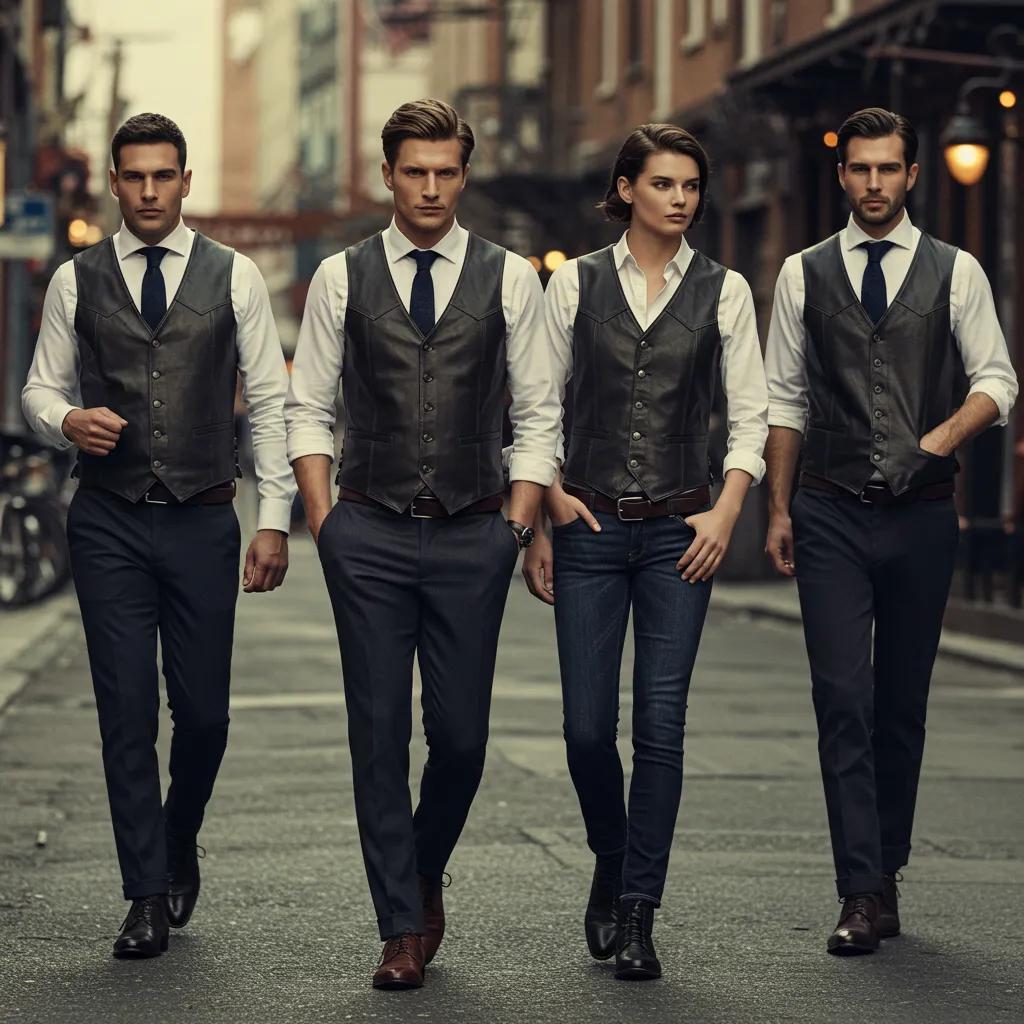
Outfit Ideas: How to Wear Leather Vests — Stylish Looks for Men & Women
Leather vests are a flexible wardrobe piece that sit between gritty streetwear and smart tailoring — a go-to for men’s and women’s closets in 2025. This guide walks through every common silhouette — cropped, tailored, biker and western — and explains proportion, layering, and easy outfit formulas that look finished. You’ll find season-by-season layering rules, focused looks for women and men, a practical materials-and-fit checklist, and accessory and footwear pairings to complete each ensemble. If you prefer handcrafted, customizable vests, Pakistan Leather is a reliable manufacturer and exporter offering hand-stitched construction and Pantone color matching to fit your wardrobe. The article includes styling tips for women, forward-ready men’s outfits for 2025, stepwise layering strategies, comparative material guidance, reasons to choose custom vests from Pakistan Leather, and finishing touches to round out every look.
How to Style Leather Vests for Women
A women’s leather vest is a sleeveless outer layer that shapes your silhouette and introduces texture—workable across casual and elevated looks depending on what you pair it with. Cropped pieces accentuate high waists; tailored waistcoats act as a fitted midlayer over shirts and blouses. Vests add visual balance, warmth without bulk, and an instant style edge that can lift a dress or trousers into a considered outfit. Below are clear outfit recipes and proportion rules to help you choose cropped or tailored vests and pair them with skirts, dresses and wide-leg trousers.
Best Outfit Ideas with Women’s Cropped and Tailored Leather Vests
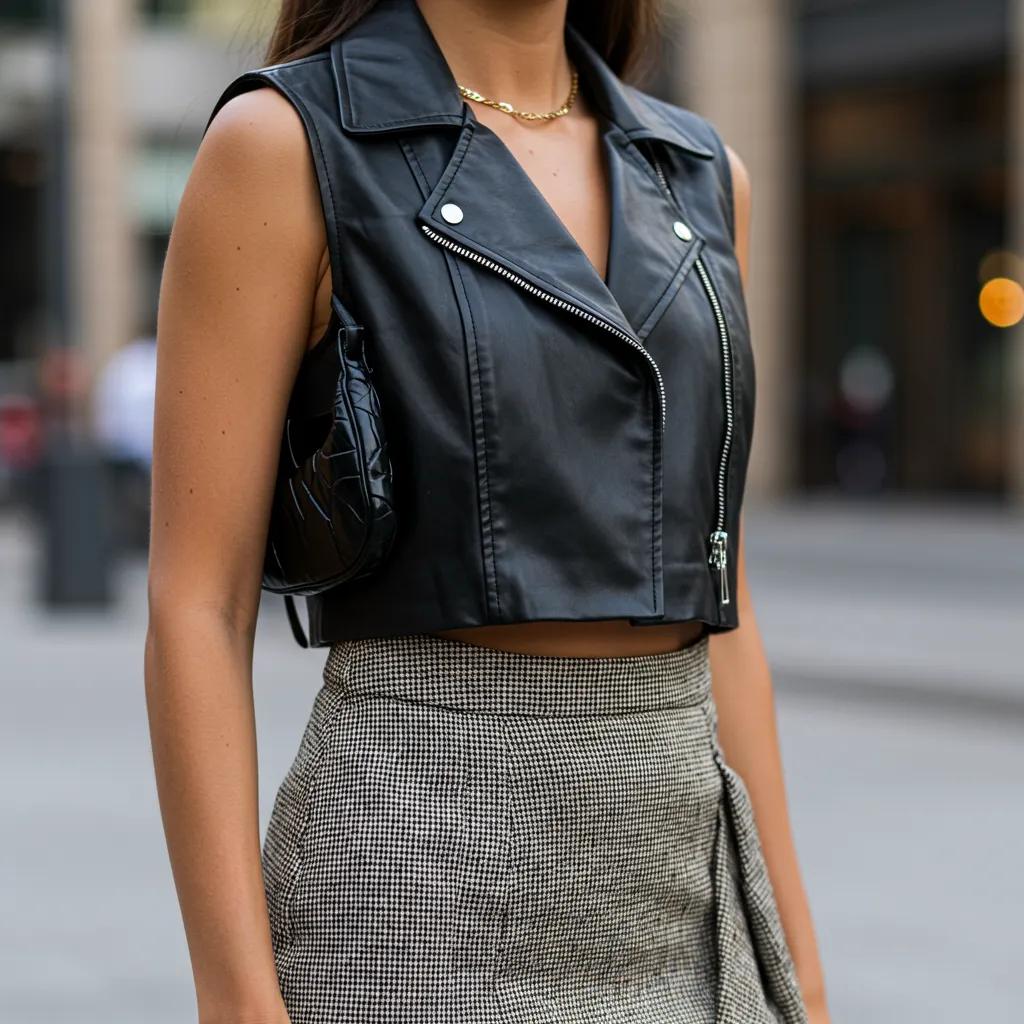
Cropped and tailored vests solve different proportion challenges and produce distinct results based on hem height and waistline. A cropped vest worn with high-waist trousers or a midi tightens the waist and visually lengthens the leg — ideal for casual outings or date nights. A tailored waistcoat layered over a crisp shirt or slim knit functions like light outerwear, offering polish for smart-casual or office looks without the weight of a jacket. For every outfit, think fabric contrast — silk or fine knit beneath leather adds tactile interest — and make sure the shoulder fit lets the vest sit smoothly over your base layers.
Pairing Leather Vests with Skirts, Dresses and Wide-Leg Pants
Successful pairings rely on balanced proportions and complementary fabrics so the vest supports, not overwhelms, the silhouette. With skirts and dresses, match vest length to the garment: short vests suit high-rise minis or midis, while longer waistcoats layer well over ankle-length dresses to create a vertical column. With wide-leg pants, choose a cropped or subtly tapered vest to preserve the waistline and counterbalance volume — finish with heels or pointed flats to elongate. Consider necklines carefully: open-front vests reveal collars and necklines, so pick complementary shapes to keep the look cohesive.
Top Men’s Leather Vest Outfit Ideas for 2025
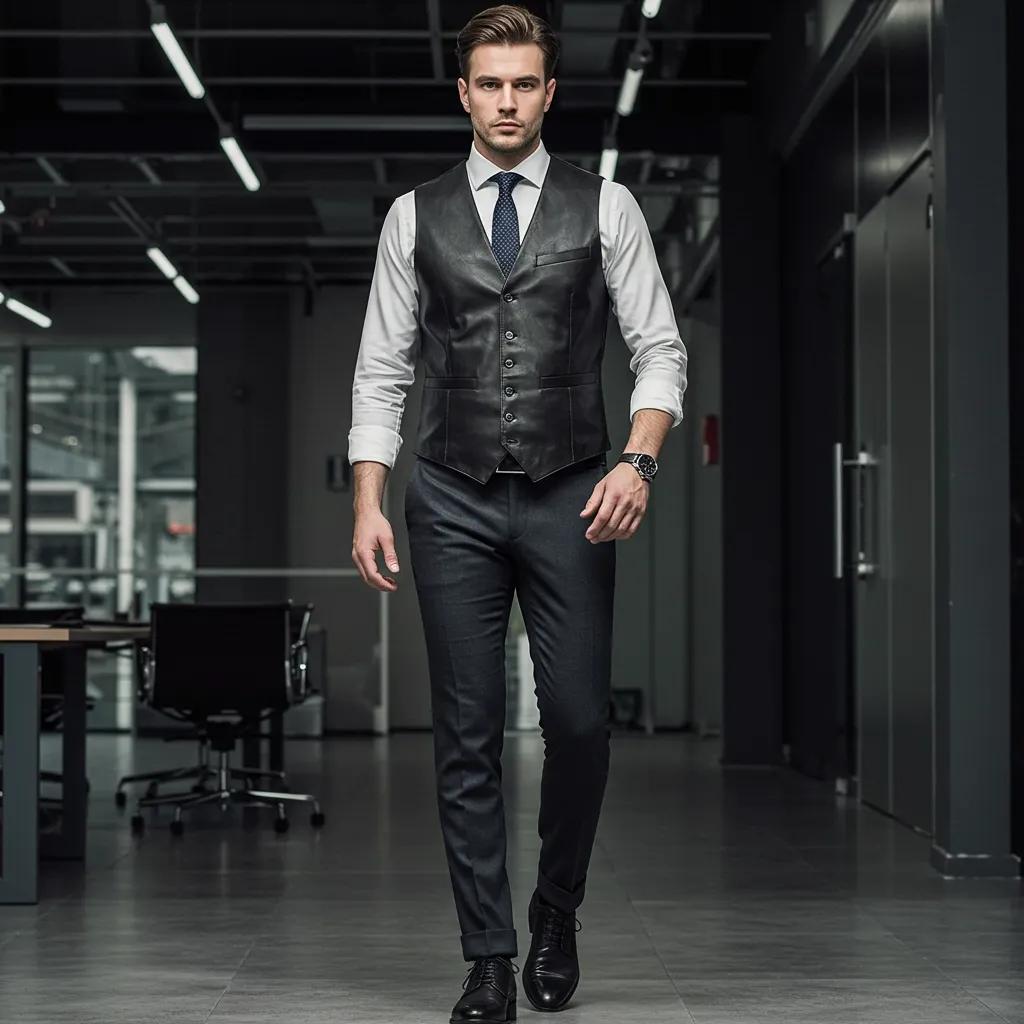
In 2025 men’s leather vests split between utility and refined tailoring — biker, western and tailored waistcoats lead the pack in both market and street style. For men the vest works as a purposeful midlayer that can replace or complement jackets during transitions, offering freedom of movement and a distinct attitude. Key strategies: balance silhouette weight, match footwear to the vest’s character, and pick leathers suited to use — softer goat for drape, cowhide for durability. Use the breakdown below to adapt vests for casual wear, riding, and semi-formal settings.
Styling Biker and Western Leather Vests for Men
Biker and western vests tell different stories but follow the same rule: use supporting pieces to reinforce the narrative. A biker vest pairs best with heavy denim, rugged boots and layered tees or thermals for a road-ready, purposeful look where hardware and reinforced seams matter. Western vests sit naturally with button-downs, pointed boots and structured denim or chinos, leaning into Americana with clean lines and modest belt hardware. In both styles, shoulder and chest fit are essential for mobility — and the right footwear completes the outfit’s intent.
Formal and Casual Leather Vest Looks for Men
A vest can read formal when made from fine-grain leather and paired with tailored trousers and a dress shirt, or casual when worn in rugged hides with tees and sneakers; the difference is material, finish and accessories. For semi-formal settings, choose smooth matte leather, a neat V-front and trousers in related tones to create a cohesive look. Casual outfits welcome visible stitching, distressed finishes and utility pockets, balanced with relaxed denim and boots. Tailoring details — lining, seam finishes and hardware — determine how easily a vest shifts between casual and smarter environments.
How to Layer a Leather Vest for Every Season
Good layering is about temperature control, silhouette and fabric mix so the vest performs as a useful midlayer year-round. In warm months, an unlined or lightweight-lined vest adds texture without overheating. In autumn, layer vests over thin knits or flannels as your primary insulating layer. In winter, use the vest over a thick sweater or under a coat for core warmth without bulky sleeves — opt for insulated linings or heavier hides where needed. Below are recommended combos and a quick reference table that pairs common layers to season and occasion.
A compact layering table to help you choose combinations by climate and use.
| Layering Combo | Season / Occasion | Why it Works |
|---|---|---|
| Vest + Sleeveless Tee | Summer / Casual | Adds edge without trapping heat; pick a lightweight lining for breathability |
| Vest + Button-Down + Blazer | Fall / Smart-casual | Provides midlayer structure and warmth while keeping tailored lines |
| Vest + Thick Knit Sweater | Winter / Layered warmth | Core insulation that preserves arm mobility under outerwear |
| Vest + Hoodie + Coat | Winter / Streetwear | Mixes insulation with casual texture for a modern layered look |
Best Layering Combinations with Hoodies, Sweaters and Blazers
Pairing vests with hoodies, sweaters or blazers means watching scale and fabric weight to avoid bulk and keep lines clean. A vest over a slim hoodie creates a street-ready silhouette that keeps the torso defined; choose a slightly roomier vest for comfort. Worn under a blazer, a vest adds structure while preserving the blazer’s outer line — ensure the blazer has enough shoulder and sleeve room. Over chunky knits, favor softer hides or relaxed cuts that sit comfortably without pulling, and balance the look with proportionate bottoms.
Layering is central to modern outerwear — it’s how memorable, wearable looks are built.
Conscious Fashion: Layering Techniques for Stylish Outerwear
Layering is a key method for building striking, memorable outfits that invite a second look. The industry continues to embrace multi-layered outerwear — combining different silhouettes and textures to create looks that feel both elegant and deliberately bold. Layering is a trend in its own right, adaptable across seasonal and stylistic cycles.
A MULTI-LAYERED IMAGE IS A TREND OF CONSCIOUS FASHION, 2022
Wearing Leather Vests in Summer vs. Fall and Winter
Seasonal choices come down to lining, leather weight and your base layers. In summer, favor unlined or lightweight-lined vests in softer leathers like sheep or goat for breath and drape; pair with sleeveless tops and light linens. For fall, pick midweight hides and layer over long sleeves or thin knits to bridge temperatures; tonal mixes with corduroy or denim ground the look. In winter, move to heavier leathers and insulated linings, and use the vest as a core layer under outerwear — protect the leather with proper weatherproof care.
What to Consider When Choosing the Perfect Leather Vest
Choosing the right vest combines intended use, material traits, fit mechanics and color. Material affects drape and durability — sheep and goat leathers drape softly; cow and buffalo leathers add structure and abrasion resistance. Fit points to check: shoulder seam placement, chest ease for movement, and hem length relative to trousers or skirts to preserve balance. The table below summarizes common leather types and their practical tradeoffs to help you decide.
Leather type directly affects fit, care needs and visual character.
| Leather Type | Characteristic | Practical Impact |
|---|---|---|
| Sheep Leather | Soft, high drape | Great for cropped and tailored vests where fluidity and comfort matter |
| Goat Leather | Supple with light grain | Offers a balance of drape and toughness; good for slightly structured cuts |
| Cow Leather | Dense, durable | Ideal for biker and heavy-use vests where abrasion resistance is needed |
| Buffalo Leather | Thick, textured | Delivers rugged structure and long-term resilience for utility styles |
Different Leather Vest Styles and Materials
Biker, tailored waistcoat, cropped and western vests each bring distinct design cues — hardware, pocket placement and cut define their best pairings. Biker vests emphasize robust hardware and thicker hides; tailored waistcoats favor clean lines, fine-grain leather and minimal hardware for dressier settings. Cropped vests play with proportions against high-waist bottoms; western styles lean on yokes, embroidery or Americana shaping. Match material to purpose: softer sheep or goat for drape-focused tailoring; cow or buffalo where structure and durability are priorities.
Finding the Right Fit and Color for Your Leather Vest
A proper fit checks shoulder seam alignment, allows chest ease for movement, and selects a hem length that complements your typical bottoms. Measure across the chest in a natural stance and add allowance if you’ll layer knits under the vest; shoulder seams should sit at your natural shoulder edge to avoid skewed drape. For color, black and deep brown are versatile anchors; tan and cognac add warmth and contrast. Pantone-matched custom options make precise wardrobe or brand pairing possible. Choose a finish — matte, waxed or polished — that matches the look you want to achieve.
Why Choose Custom Leather Vests from Pakistan Leather?
Ordering custom vests from a specialist manufacturer gives you better fit, finish and material choice — valuable for individual buyers and wholesale customers alike. Pakistan Leather focuses on hand-stitched construction and works with sheep, goat, cow and buffalo leathers so you can prioritize drape, toughness or texture. They offer Pantone color matching, single-item bespoke orders and wholesale/export production, combining factory control with custom results. Below are the main benefits and a short overview of how design choices become a finished vest.
| Feature | Attribute | Benefit |
|---|---|---|
| Hand-stitched seams | Craftsmanship-driven | Cleaner, stronger finishes that improve durability and visual detail |
| Multiple leather types | Material flexibility | Match drape or toughness to the intended silhouette and use |
| Pantone color matching | Color precision | Enables exact wardrobe or branding matches for retail and wholesale clients |
Benefits of Hand-Stitched and Personalized Leather Vests
Hand-stitched construction gives tighter seam control, better stress-point tolerance and an artisanal finish that extends the vest’s life and elevates its look. Personalization — bespoke fit, chosen hardware and Pantone color matching — allows buyers to align garments with personal style or brand identity, which matters for wholesale and export lines needing consistency. Hand finishing and careful material selection reduce premature wear at seams and hardware; the bespoke process typically includes sample reviews and adjustments before full production to ensure quality and fit.
How to Design Your Custom Leather Vest with Pakistan Leather
The design process usually follows clear steps: submit design notes and measurements, choose leather and Pantone color, review a sample or prototype, approve details, then move into production with export or direct-sales fulfillment. Clients provide measurements and style references, pick materials and hardware, and approve a pre-production sample where possible. Pakistan Leather handles single bespoke orders and larger wholesale production, communicating lead times, minimums and finish options so buyers understand fit iterations, color matching and delivery schedules.
What Accessories and Footwear Complement Leather Vest Outfits?
Accessories and footwear set the outfit’s tone — they can make a vest feel rugged, refined, minimalist or bold. Chunky silver jewelry and combat boots underline a biker story; silk scarves and simple loafers elevate tailored vests. Match accessory scale to the vest silhouette — delicate jewelry with cropped tailored pieces, heavier hardware with biker styles — and use belts and boots to echo or contrast leather tones. Below are practical accessory groups and finishing tips to complete looks across styles.
Which Jewelry, Scarves and Boots Pair Best with Leather Vests?
The right accessories depend on the vest’s style. Chunky chains, stacked rings and heavy boots suit biker aesthetics, creating weight and visual continuity with rugged hardware. For tailored or cropped vests, choose delicate necklaces, silk neckerchiefs and polished loafers or heels for a softer, elevated finish. Scarves add warmth and a color or pattern focal point — match scarf scale to lapel size and avoid bulky knits when the vest is narrow. Let one accessory be the focal point and keep the rest supportive in texture or tone.
Creating Monochrome and Statement Looks with Leather Vests
Monochrome outfits rely on mixed textures and subtle tonal shifts to read intentional rather than flat — pair a black vest with matte knit, glossy boots and soft cotton to add depth while staying unified. For statement looks, add a bold accent through a scarf, shoe or Pantone-matched lining to contrast the vest and highlight craftsmanship. Practical examples: a tonal neutral using mixed textures, a high-contrast accent piece against black, and a branded statement using a custom Pantone lining to align with a capsule or retail collection. Each approach makes the vest feel curated, not accidental.
- Monochrome Neutral: Combine varied black textures for a unified yet tactile outfit.
- Tonal Contrast: Add a warm tan or cognac accessory to a black vest for focused contrast.
- Custom Accent: Include a Pantone-matched lining or scarf to make a bespoke vest uniquely yours.
These strategies ensure accessories and footwear support the vest’s purpose — whether subtle and refined or bold and emblematic.
This guide has shared practical outfit ideas, seasonal layering techniques, material comparisons and accessory pairings to help you wear leather vests with confidence. Use the tables, lists and step-by-step tips above to pick styles and materials that match your needs, and consider custom manufacturing when precise fit, color matching or wholesale production are required.
Frequently Asked Questions
What are the key differences between biker and western leather vests?
Biker and western vests answer different needs. Biker vests use thicker hides and robust hardware for durability and a protective, utilitarian look — they pair naturally with heavy denim and boots. Western vests draw on Americana: structured cuts, occasional embroidery or yoke details, and styling with button-downs and cowboy boots for a polished-casual feel. Knowing the differences helps you pick a vest that matches both style and use.
How can I maintain and care for my leather vest?
Regular care keeps a leather vest looking its best. Wipe down with a soft, slightly damp cloth to remove dust, and condition every few months to maintain suppleness. Avoid prolonged sun exposure and heavy moisture to prevent fading or damage. For stubborn stains, seek a professional leather cleaner. Consistent, gentle care preserves both appearance and lifespan.
Can leather vests be worn in all seasons?
Yes—with smart layering. In summer choose lightweight, unlined vests and breathable fabrics like cotton or linen underneath. In fall layer over long sleeves or thin knits for warmth without bulk. In winter use vests as a core insulation layer under a coat or over a thick sweater; heavier leathers and insulated linings offer extra protection. Adjust base layers and outerwear to stay comfortable across seasons.
What should I consider when choosing the color of my leather vest?
Think about versatility and how the color complements your wardrobe. Black and deep brown are reliable anchors that work across many looks. Tan and cognac add warmth and seasonal contrast. Consider finish — matte, waxed or polished — since it changes the vest’s character. If you need an exact match, Pantone color options let you integrate a vest precisely into a capsule or brand palette.
Are there specific accessories that work best with leather vests?
Accessories shape the vest’s final tone. For a biker edge, choose chunky silver jewelry, combat boots and utility belts. For tailored vests, pick delicate necklaces, silk scarves and polished loafers. Scarves add color and pattern; match their scale to lapels. Overall, let one accessory stand out while the rest support the look through texture and tone.
How do I know if a leather vest fits properly?
Check key fit points: shoulder seams should align with your natural shoulders, the chest should allow movement and layering, and the hem should sit well with your usual bottoms. Move your arms and shoulders while trying it on to make sure it doesn’t restrict you. A well-fitted vest boosts both comfort and style and becomes one of the most versatile pieces in your wardrobe.
Conclusion
Leather vests give you a unique mix of style and utility — they can be rugged or refined depending on how you layer and accessorize. With the right fit, material and color, a vest becomes a powerful wardrobe tool. Explore custom options if you need exact fit or color matching. Browse our collection of premium vests and find the piece that elevates your everyday looks.


