
Vegan Leather Options
Explore Premium Vegan Leather: Sustainable, Ethical and Stylish Alternatives
Vegan leather describes a range of leather-like materials made to look and perform like animal hide—but without using any animal-derived skins. It’s changing how fashion and accessories are designed and manufactured. This guide walks you through what vegan leather is, why more brands and shoppers are choosing it, and which synthetic and plant-based materials are shaping the market in 2025. You’ll find clear distinctions between material families, practical notes on durability and care, and honest environmental trade-offs to help you decide. We also explain how manufacturers adapt traditional craftsmanship to new materials and how Pakistan Leather applies its hand-stitching and custom production know‑how to plant-based leathers and prototypes. Sections cover definitions and taxonomy, deep dives into Piñatex, cactus and mycelium leathers, a durability and care guide with test-focused metrics, the ethical and sustainability case, and straightforward buying and wholesale paths. Together, these sections give the practical and technical information you need to choose, maintain, and source premium vegan leather goods.
What are vegan leather options — and why are they becoming popular?
Vegan leather covers materials engineered to look and behave like leather but made without animal hides. Broadly, they fall into two families: polymer-based synthetics (for example PU and PVC) and plant- or bio-based alternatives (like Piñatex, cactus and mycelium). Some products are textile bases coated with polymers; others are biofabricated to form a leather-like matrix. The result is a cruelty-free surface usable for jackets, bags, upholstery and more, with a wide range of textures and finishes. Growing consumer interest, advances in materials science, and brand commitments to sustainability are all pushing these options from niche to mainstream. As suppliers publish more lifecycle data and designers experiment with new fabrication methods, demand for verified lower-impact alternatives keeps rising.
Both strengths and trade-offs exist: synthetics deliver consistent performance and lower cost, plant-based leathers can cut fossil-feedstock reliance in some pathways, and biofabricated leathers offer strong compostability potential. Knowing composition and expected performance is the next step when matching materials to products and intended use.
What is vegan leather made of?
Vegan leather is produced in two main ways: polymer-backed textiles and plant- or bio-derived sheets that replace animal hide. Polymer-backed options usually start with a woven or nonwoven textile laminated with polyurethane (PU) or, less commonly, PVC; coatings provide finish, grain and water resistance. Plant-based leathers use agricultural residues or cultivated biomass—pineapple leaf fibers are pressed into nonwoven sheets for Piñatex, cactus pads are processed into flexible sheets for cactus leather, and mycelium is grown and treated to create dense, leather-like panels. Typical manufacturing steps include fiber or biomass preparation, forming or bonding into sheets, surface finishing (color, embossing, protective coatings) and assembly with linings and hardware. Recognising these families helps buyers weigh environmental impacts and performance characteristics.
This overview sets the stage for a direct comparison between vegan options and traditional animal leather, so you can see where each performs best.
How does vegan leather compare to traditional leather?
Vegan leather and animal leather differ in resource use, lifespan expectations and care. When you account for tanning and finishing, animal leather can show higher embodied carbon and water intensity, while some synthetics depend on fossil feedstocks and raise microplastic concerns. In durability, full‑grain leather still often leads on long-term abrasion and tensile strength, though advanced PU and some plant-based leathers now approach everyday-use performance. Ethically, vegan leathers remove direct animal welfare issues but introduce new supply-chain questions—polymer sourcing, chemical use and end-of-life behaviour. Practically, match material to the product: heavy-duty luggage may still call for very high-durability composites, while fashion jackets and accessories can use plant-based leathers that prioritise texture and lower-impact feedstocks. The next section outlines the sustainable vegan leather materials currently leading the market.
Which sustainable vegan leather materials are leading the market?
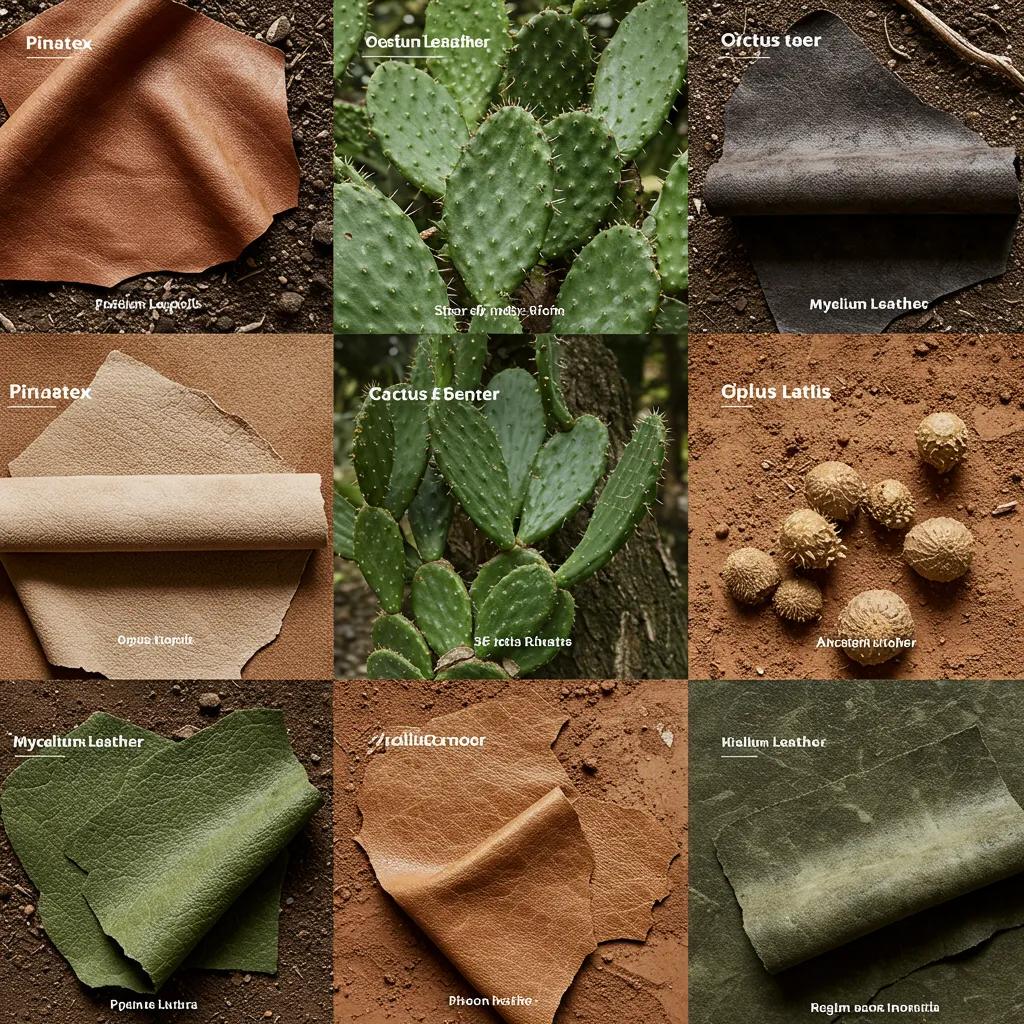
Top vegan leather choices differ by origin and performance, and designers pick them based on texture, sustainability profile and application. Below we highlight prominent plant- and bio-based options—Piñatex (pineapple leaf), Desserto-style cactus leather, mycelium, cork and apple-based leathers—and summarise their trade-offs so you can choose by feel, expected lifespan and environmental footprint.
Here’s a concise comparison that helps with quick decisions.
This table outlines each material’s origin, durability signals, water/climate footprint and biodegradability expectations.
| Material | Key Attributes | Value |
|---|---|---|
| Piñatex (pineapple leaf fibers) | Origin: agricultural fiber; Durability: moderate–high for accessories; Water use: low (uses agricultural waste); Biodegradability: partially biodegradable | Lightweight, textured surface ideal for bags and shoes; adds value to waste streams |
| Cactus leather (Desserto-style) | Origin: succulent pads; Durability: medium; Water use: very low in cultivation; Biodegradability: partial depending on coating | Soft and flexible—good for apparel and accessories; grown from a drought‑resilient crop |
| Mycelium leather (fungal network) | Origin: cultivated fungal biomass; Durability: variable (engineered for strength); Water use: low in production; Biodegradability: high | Highly tunable texture and strong compostability potential; scalable through fermentation |
| Cork leather | Origin: cork oak bark; Durability: high for accessories; Water use: low; Biodegradability: high | Distinct natural grain, lightweight and moisture‑resistant—great for wallets and bags |
| Apple leather (apple pomace) | Origin: fruit waste; Durability: low–medium; Water use: low (uses waste); Biodegradability: partial | Smooth finish suited to small goods and interior linings |
This comparison shows how origin and processing shape both performance and environmental trade-offs. Next we look more closely at Piñatex and why it’s widely used.
What are the features and benefits of Piñatex pineapple leather?
Piñatex is made from pineapple leaf fibers recovered from existing agriculture and formed into a nonwoven textile, then coated and finished to look and feel like leather. By using a waste stream as feedstock, it reduces the need for new fiber cultivation and creates extra income for farming communities. In use, Piñatex offers a distinctive textured grain, good tensile strength for bags and shoes, and a lighter weight than many animal leathers. Common applications include structured handbags, footwear panels and upholstery where a textile core with leather aesthetics is desired. Lifecycle comparisons often show lower water footprints than fully tanned animal leather when agricultural waste is counted, though surface coatings can affect recyclability and end‑of‑life outcomes.
Developing leather alternatives from pineapple leaf fiber is a promising route toward more bio-based materials in fashion and accessories.
Pineapple Leaf Fiber: A Sustainable Bio-Based Leather Alternative
The production of a leather alternative from pineapple leaf fibers (PALF) demonstrates a viable path to bio-based leather substitutes. Research into PALF-based alternatives highlights the material’s potential and mentions related plant- and fungi-based options—such as Piñatex and mushroom leather—reflecting growing interest in diverse bio-based leathers.
Development of green leather alternative from natural rubber and pineapple leaf fiber, 2023
Knowing Piñatex’s strengths and limits helps buyers match it to product design and durability requirements. Next: cactus leather.
How does Desserto cactus leather support sustainability?
Cactus leather is made by harvesting mature pads, processing the flesh into a pulp and forming sheets that are finished to mimic leather surfaces. The cactus plant is drought‑tolerant and usually needs very little irrigation, which gives cactus leather a low water footprint. In some systems, cultivation can also support soil health and carbon storage. Performance-wise, cactus leather is soft and flexible, making it a good choice for jackets and lightweight bags where drape and hand feel matter. As with other plant-based options, the choice of coatings and topcoats determines longevity—durable finishes extend everyday life. Overall, cactus leather balances a premium tactile experience with reduced water use compared with conventional hide leather.
Interest in leather alternatives keeps growing, and cactus is one of the commercially proven plant-based routes gaining market traction.
Cactus Leather: A Growing Market for Sustainable Alternatives
Demand for leather alternatives is rising, with cactus leather gaining attention as brands partner with producers like Desserto®. This reflects growing commercial adoption of plant-based leather substitutes.
Sustainable textiles from unconventional biomaterials—cactus based, 2023
From cultivation we turn to mycelium, which uses a different production model altogether.
What makes mushroom-based mycelium leather eco-friendly?
Mycelium leather is grown by cultivating fungal networks under controlled conditions, then compressing and treating the biomass into sheets that resemble hide. This fermentation-based process limits land use compared with crop agriculture and can be fast and resource‑efficient. Producers can tune density, grain and tensile properties during growth, which makes mycelium highly customisable. Environmental advantages include lower agricultural inputs, potential for closed-loop production and good end‑of‑life compostability when coatings are biodegradable. Current limitations include variability between suppliers and the need for industrial finishing to meet luxury-grade abrasion resistance, but ongoing R&D is closing those gaps. Mycelium’s adaptability makes it a promising option for future high-performance vegan leather applications.
Fungi-derived leathers are an emerging class of sustainable materials that increasingly meet both aesthetic and functional expectations.
Mycelium-Based Leather: Ethical and Sustainable Fungi Alternatives
Fungi-derived leather substitutes are an emerging class of renewable materials that can be produced by upcycling low-cost agricultural and forestry by-products into fungal biomass through a natural growth process. These biofabricated materials show promise as ethical and sustainable alternatives to bovine and synthetic leathers.
Leather-like material biofabrication using fungi, M Jones, 2021
Beyond Piñatex, cactus and mycelium, other plant-based leathers occupy specific niches for designers.
What other plant-based leathers should you know about?
Several plant-based leathers offer niche benefits depending on feedstock and process. Cork leather comes from bark harvested without cutting trees; it’s water‑resistant, lightweight and has a distinctive grain for accessories. Apple leather repurposes apple pomace (pressing residue) into composite sheets with a smooth finish suitable for linings and trims. Mirum-style and similar composite bio-leathers blend plant oils and natural fillers to create plastic‑free alternatives that mimic PU performance without fossil inputs. Each option involves trade-offs between texture, cost and end‑of‑life behaviour, and designers often combine materials to reach specific performance goals.
Summarising these options helps set realistic expectations for durability and care, which we cover next.
What vegan leather products does Pakistan Leather offer?
Pakistan Leather is an e-commerce and manufacturing hub with strong experience in traditional leather garments and goods. Those skills transfer well to vegan materials: our hand-stitching, custom production and export capabilities let us prototype and produce plant-based and synthetic leather items with careful finishing and fit. Shoppers can find handcrafted vegan leather jackets, bags, wallets, belts and accessories that reflect traditional tailoring and finish work. We also produce samples and prototypes for designers and wholesale buyers, so material choices can be tested before full runs. Sample availability and prototyping help turn material research into finished products.
- Product categories include jackets, structured and soft bags, wallets, belts and small accessories made from vegan materials with hand-stitched details.
- Custom finishes and embossing replicate leather grain while allowing selection of lining, hardware and edge treatments for each collection.
- Prototype and sample workflows support material testing, stitch patterns and hardware durability checks before bulk production.
These categories set expectations for production steps, which we describe next.
How are handcrafted vegan leather jackets made?
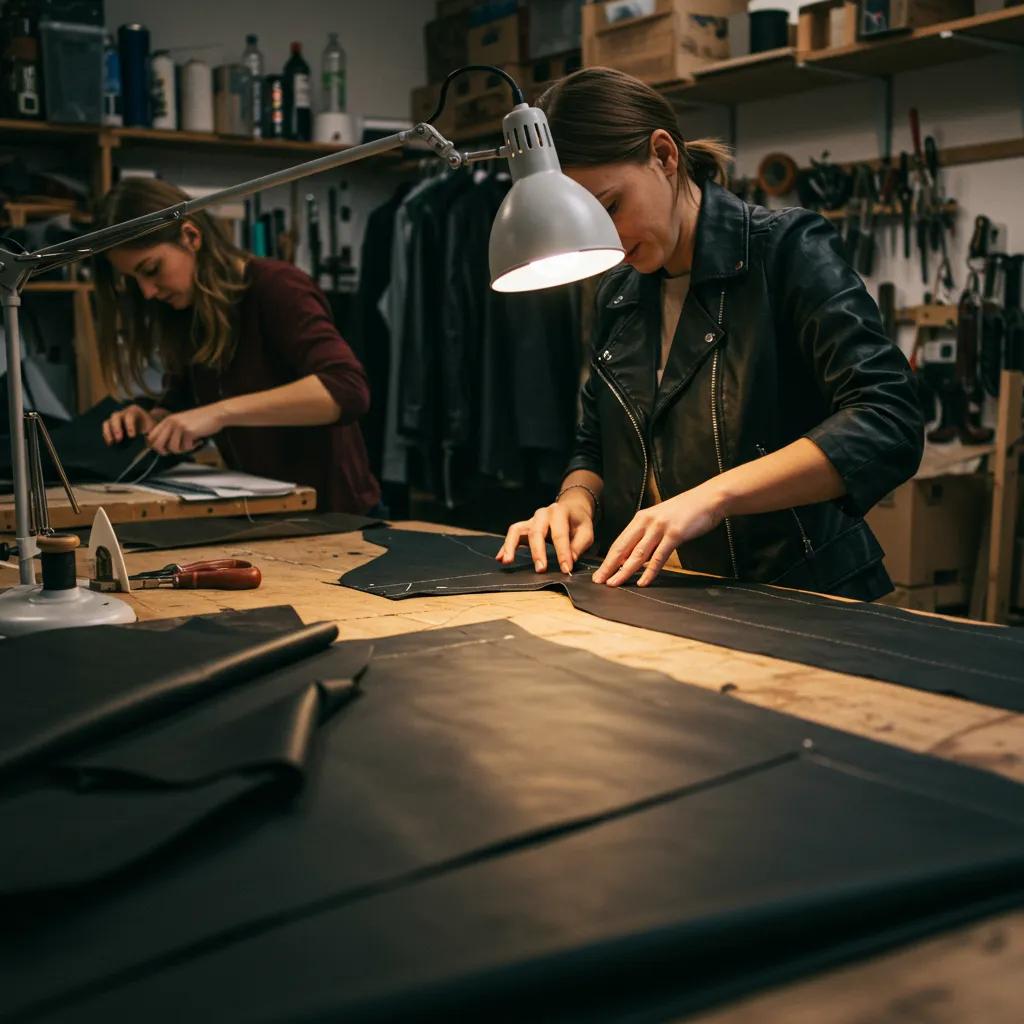
Handcrafted vegan jackets begin with careful material selection—choosing the right plant-based sheet or a high-grade PU with suitable backing and finish—then move through pattern cutting, edge preparation and hand or machine-assisted stitching adapted to the substrate. Handling differs from animal hide: some plant-based sheets stretch less and need altered seam allowances, while coated textiles require specific needles and threads to avoid surface damage. After assembly we press, finish edges, attach hardware and perform quality checks focused on seam strength, finish adhesion and symmetry. Final inspection evaluates stitch density, hardware function and surface uniformity so the jacket meets premium standards.
Thorough production-stage quality control reduces returns and gives wholesale buyers confidence in manufacturing robustness—especially important for export orders and bulk commitments.
What stylish vegan leather bags and accessories are available?
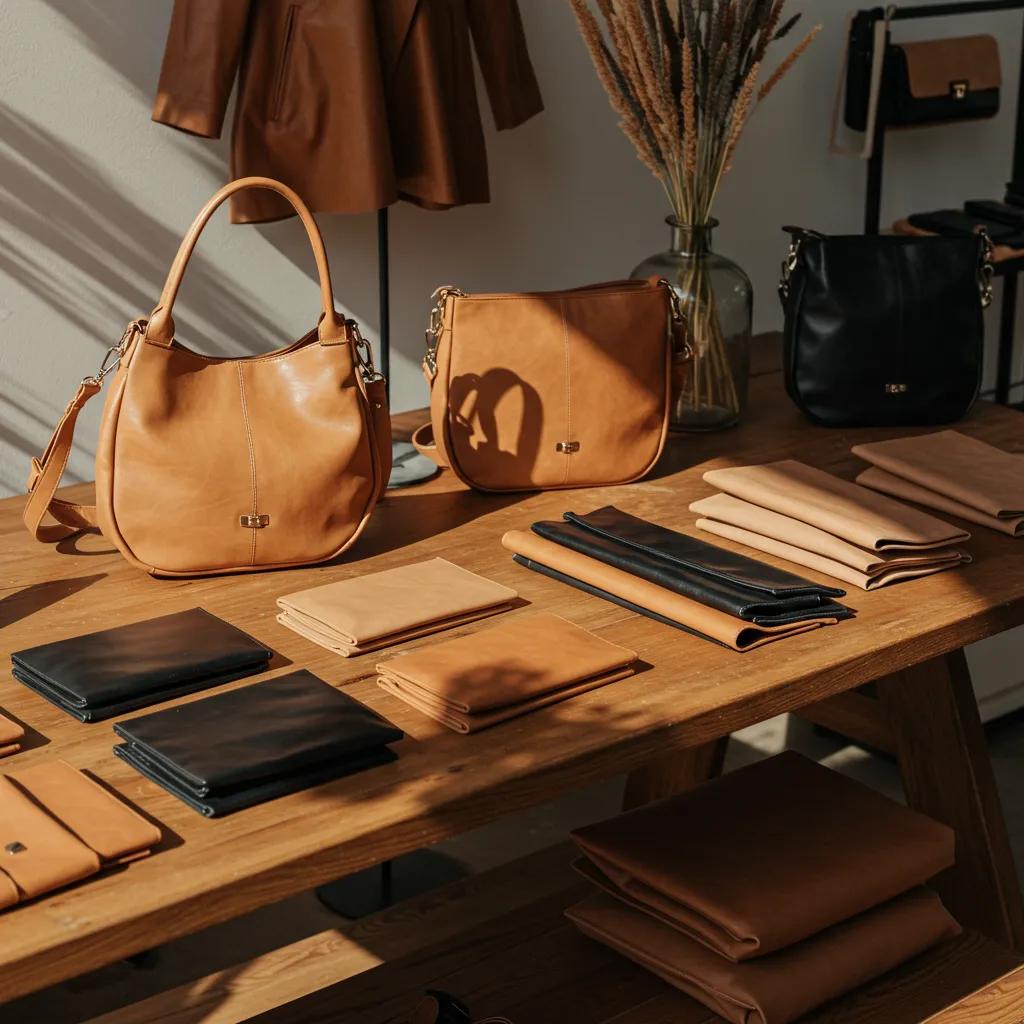
Our vegan leather range includes structured totes, crossbody bags, backpacks and small leather goods like wallets and belts. Texture, hardware and lining choices shape the perceived luxury of each piece. Options include embossed grain to emulate full-grain leather, suede-like microfiber finishes and the natural patterns of plant-based materials. Hardware, internal layouts and reinforcements at stress points determine day-to-day functionality. We offer colourways, lining fabrics, monogramming and bespoke sizing for both retail and wholesale clients. Pakistan Leather’s production experience supports small-batch customization and scalable runs while keeping hand-finished details that increase perceived value.
Knowing construction and design trade-offs prepares buyers for the durability and care guidance that follows.
How durable and high-quality are vegan leather options?
Durability varies by material family. High-quality PU-backed textiles often score well on abrasion and tensile tests for everyday use. Plant-based leathers like Piñatex and cactus typically deliver moderate durability suitable for fashion and accessories, and engineered mycelium can be tuned for higher strength while keeping biodegradability. Durability depends on surface coating toughness, backing strength and stitching quality; these determine expected lifespan and best product categories. Quality assurance uses standard tests—abrasion cycles, tensile strength and seam load testing—to match materials to use. When buying, prioritise abrasion-resistance figures and stitching standards for items destined for heavy use.
| Product Type | Test / Attribute | Typical Value / Expectation |
|---|---|---|
| Everyday bag (PU-backed) | Abrasion resistance | High — suited for daily carry with protective coatings |
| Fashion jacket (plant-based) | Tensile strength | Moderate — best for style wear; reinforce seams for longer life |
| Wallet (cork or Piñatex) | Expected lifespan | Medium — durable for pockets and light abrasion |
| Mycelium accessories | Abrasion & tensile | Variable — can be engineered for higher strength with treatments |
This table links common product types to the attributes buyers should verify before purchase. Next, specific care steps that extend product life.
What is the durability of plant-based vegan leather?
Plant-based leathers generally offer moderate to good durability, depending heavily on finishing and coating quality. Abrasion resistance typically meets everyday fashion needs, but heavy abrasion or rough surfaces can expose backing layers or cause edge wear. Tensile strength varies—materials backed by robust textiles and protected with strong top coats outperform thin composite sheets in structured items. In practice, plant-based leathers suit bags, wallets and apparel for moderate use; heavy-duty luggage or work gear may need reinforced composites or high-performance PU. Asking manufacturers for abrasion-cycle test results helps predict real-world performance.
Understanding these durability expectations leads naturally to the care practices that prolong product life.
How should you care for vegan leather products?
Caring for vegan leather means gentle cleaning, avoiding prolonged sun exposure, and using conditioners or protectors that won’t damage surface coatings. Regularly wipe with a soft damp cloth; treat stains with a mild soap solution and avoid solvent cleaners. Store items away from direct heat to prevent drying or cracking. For plant-based materials and mycelium, avoid abrasive cleaning and use biodegradable or pH-neutral cleaners where recommended; for cork, occasional sealing restores water resistance. For repairs, consult the manufacturer or a repair specialist experienced with alternative materials to maintain finish integrity.
Following these basic steps reduces common failures—peeling, delamination and edge fraying—and supports longer product life.
Why choose sustainable and ethical vegan leather?
Choosing plant-based or otherwise sustainable vegan leather can reduce direct animal-welfare impacts and, in many material pathways, lower water and land pressures compared with conventional hide production. Environmental benefits usually stem from feedstock choice (using agricultural waste or low-input crops) and reduced reliance on intensive livestock systems. Ethically, vegan leather removes animal hide sourcing and aligns with cruelty-free values, appealing to conscious consumers and brands. That said, buyers should evaluate full supply-chain transparency and finishing chemistry to confirm sustainability claims and avoid non-biodegradable coatings or hidden plastic pollution.
The sections that follow quantify environmental benefits and explain how ethical verification works in practice.
What are the environmental benefits of plant-based vegan leather?
Plant-based vegan leathers can lower water use and greenhouse gas emissions when they repurpose agricultural residues or come from drought-tolerant crops—for example, using pineapple leaf waste avoids additional cultivation water demands and turns residue into value. Lifecycle advantages include reduced land use compared with ruminant livestock and fewer tanning chemicals in some pathways. However, finishing steps and polymer coatings strongly affect end-of-life and recyclability, so environmental gains are largest when coatings are minimised or replaced by biodegradable alternatives. Ask for material-specific lifecycle data and plan for reuse, repair or composting to maximise benefits.
These trade-offs underline the importance of supply-chain traceability and certification, which we address next.
How does vegan leather support cruelty-free and ethical fashion?
Vegan leather supports cruelty-free fashion by eliminating animal hide sourcing, aligning products with animal-welfare values and appealing to ethically driven customers. To verify claims, look for transparent sourcing, independent material verification and documented manufacturing practices that show responsible labour and environmental standards. Brands that provide sample testing, clear material disclosures and traceability for feedstocks make it easier to judge whether products meet ethical standards. Paired with repairable design and open supply chains, vegan leather goods can be part of a credible ethical-fashion approach that balances innovation with social and environmental responsibility.
With material, durability and ethics covered, the last step is knowing how to buy premium vegan leather products from a capable manufacturer.
Where can you buy high-quality vegan leather products from Pakistan Leather?
Pakistan Leather operates as an e-commerce and manufacturing partner with export experience that extends to vegan leather products. We support retail purchases, sample requests and wholesale/export inquiries using our hand-stitching and custom production workflows. Retail shoppers can browse product pages and categories to match materials and styles; wholesale and export buyers follow clear steps to request prototypes and production quotes so material testing can happen before bulk orders. Our manufacturing capabilities let us produce bespoke runs, iterate on samples and scale for export markets while applying traditional craftsmanship to new material families.
Below is a practical ordering-path table explaining how retail and wholesale buyers can engage.
| Ordering Path | Attribute | Expected Process |
|---|---|---|
| Retail purchase | Sample policy | View product images and request pre-production samples or small-batch pieces through the online catalog |
| Prototype & sampling | Lead time | Prototype samples are produced for material evaluation before bulk approval |
| Wholesale / export inquiry | Documentation required | Buyers provide product specs and quantities to receive a tailored quote and sample plan |
How to shop Pakistan Leather’s vegan leather collection online?
To shop online, browse categories by material and style, read product descriptions for composition and care instructions, and request a prototype or sample when evaluating feel and finish for higher-value purchases. Use filters for material family, product type and customisation to narrow choices. Review high-resolution images and product details that highlight stitching and hardware. For custom sizes or bespoke finishes, order a sample to confirm fit and finish before placing a larger order. Clear communication about intended use and expected wear helps match material to longevity needs.
After choosing a sample or product, check shipping and international export details for timelines and fulfilment expectations.
How to request wholesale or export orders for vegan leather goods?
Wholesale and export inquiries typically start with a product brief that lists chosen material, target quantities, desired customisations and destination market requirements. Clear specs enable accurate MOQs and lead-time estimates. A common workflow is: initial inquiry, material/sample approval, production scheduling with lead times, and export documentation for international shipments. To speed things up, prepare technical specs—dimensions, stitch counts and hardware preferences—and ask for a sample run to validate material and finishing. Pakistan Leather’s manufacturing set-up supports prototyping and custom production; discuss sample policies and production windows early to align expectations.
Practical checklist items for wholesale buyers include:
- Prepare a detailed product brief with material and finish preferences.
- Request a prototype sample to validate look, feel and durability.
- Agree lead times and production milestones before confirming bulk orders.
Following these steps makes collaboration between designers, retailers and manufacturers smoother when adopting vegan leather alternatives.
Frequently Asked Questions
What are the main advantages of choosing vegan leather over traditional leather?
Vegan leather brings several advantages: it removes the need for animal hides, aligning with cruelty‑free values; many plant-based options reuse waste or come from low‑input crops, lowering water and land use in some cases; and synthetics often cost less and offer consistent performance. Advances in materials science mean many vegan options now provide durability and finish comparable to traditional leather. That said, always check lifecycle details and finishing chemistry to understand the full environmental picture.
How can I determine the quality of vegan leather products?
Look at material composition, test results and manufacturing quality. Seek standardized data such as abrasion resistance and tensile strength for durability signals. Inspect craftsmanship—stitching, edge finishes and hardware—and read customer reviews. Brands that offer transparent sourcing and sample testing make it easier to judge quality before you buy.
Are there any specific care instructions for maintaining vegan leather?
Care is simple: wipe regularly with a soft damp cloth, treat stains with mild soap and avoid solvents, and keep items out of prolonged sun and direct heat. Use pH-neutral or biodegradable cleaners for plant-based materials and limit abrasive cleaning. For cork, occasional sealing restores water resistance. For repairs, use specialists experienced with alternative materials to preserve the finish.
What are the environmental impacts of vegan leather compared to traditional leather?
Plant-based vegan leathers can have lower water use and greenhouse gas emissions when they use residues or drought-tolerant crops, and they often require less land than livestock systems. However, finishing steps and synthetic coatings affect recyclability and end-of-life outcomes. Synthetic vegan leathers may rely on fossil feedstocks and create microplastic concerns. Request lifecycle data where available and consider end-of-life strategies—reuse, repair or composting—when judging overall impact.
Can vegan leather be recycled or composted at the end of its life?
End-of-life options depend on material composition. Some plant-based leathers, like mycelium or Piñatex without synthetic coatings, have strong biodegradability potential. Synthetic PU or PVC leathers are less likely to be recyclable and can contribute to plastic waste. Always check manufacturer guidance for recycling, composting or take-back programs.
What trends are emerging in the vegan leather market?
Key trends include rising adoption of mycelium, apple and other bio-based leathers; greater transparency around sourcing and lifecycle data; and more customisation and collaborations between brands and material producers. Expect continued innovation that improves durability, finish options and end-of-life performance.
Conclusion
Choosing premium vegan leather supports more sustainable and ethical fashion while offering stylish, practical alternatives. By understanding materials like Piñatex, cactus leather and mycelium, you can make choices that match your values and product needs. Explore our collection of handcrafted vegan leather products to find pieces that suit your lifestyle, and let Pakistan Leather help you move toward a more sustainable future.


