
The Origins of Leather Craft
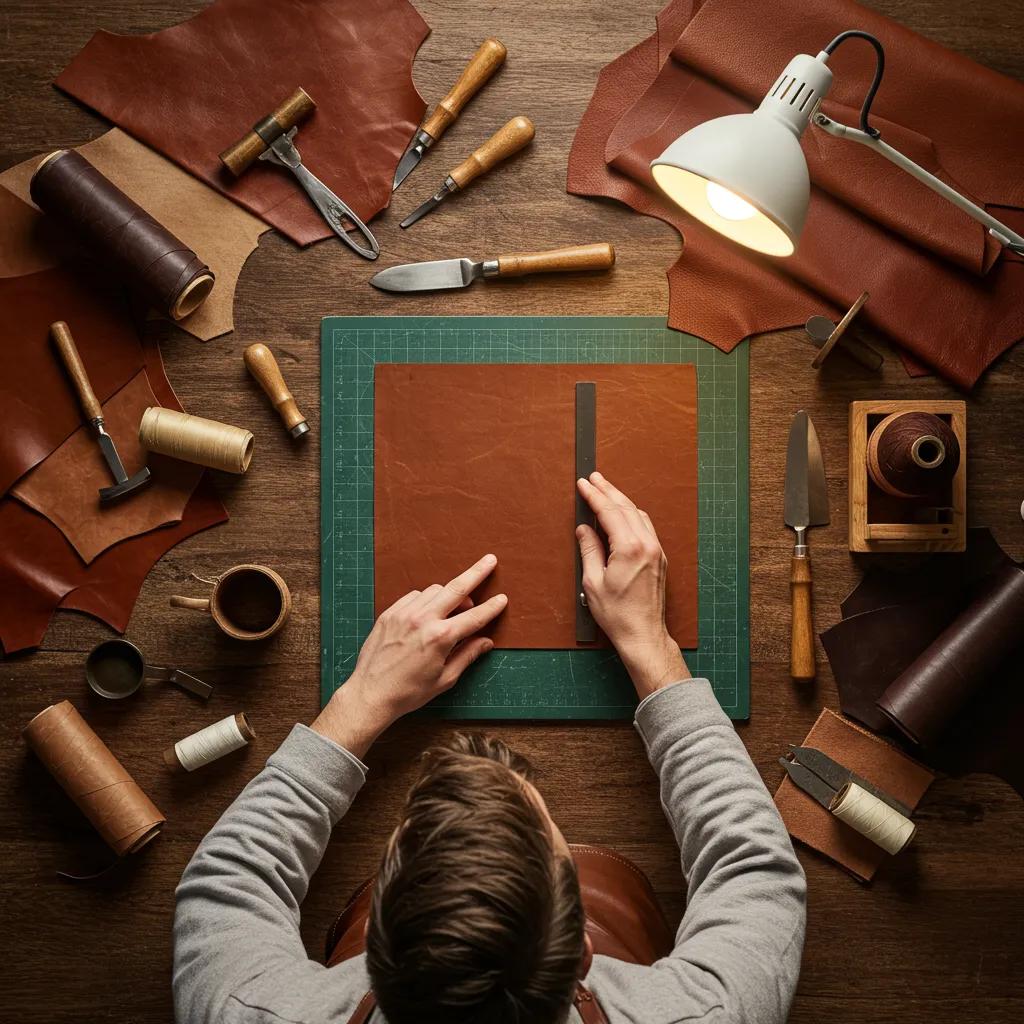
The Origins of Leather Craft: Exploring the History of Leather Making and Ancient Techniques
Leather craft covers the hands‑on methods and longstanding traditions that turn raw animal hides into durable, shaped materials used for clothing, shelter, tools and decorative goods. Its story runs from prehistoric hide‑processing for survival, through organized tanneries and guild systems that produced armor and luxury items, to today’s mix of artisan workshops and industrial production shaping fashion and functional products.
In this article you’ll discover when and why people first worked hides, how ancient civilizations refined tanning and finishing, which medieval and Renaissance innovations mattered, and how the Industrial Revolution and modern sustainability efforts changed leather’s role in everyday life and trade. Knowing that lineage explains why hand‑stitched, vegetable‑tanned or carefully finished leather still stands for durability and craftsmanship—and it helps you judge quality and provenance when buying leather goods.
The piece follows a clear timeline and technical guide: prehistoric origins, methods used by early civilizations, medieval and guild‑era refinements, industrial transformations, sustainability connections, and a close look at how Pakistan Leather keeps the hand‑stitched tradition alive while applying historically informed manufacturing choices.
When Did Leather Crafting First Begin? Understanding Prehistoric Leather Uses
Leatherworking started in prehistory when people turned hides into protective, insulating and transport materials by scraping, drying and primitive tanning. Hides kept their tensile strength after careful treatment; simple steps—scraping, smoking and salting—slowed decay and kept the material flexible, producing usable coverings for clothing and shelter. The immediate benefit was practical: weather‑resistant, long‑lasting materials that helped people live in colder climates, carry goods and expand mobility and trade. Seeing these functional roots makes it easier to follow later technical refinements and the gradual invention of specialized tools and tanning recipes across regions. The next section looks at the specific early uses that shaped those choices.
What Were the Earliest Uses of Animal Hides by Prehistoric Humans?

Early people used hides for clothing, shoes, temporary shelters, containers and simple gear because prepared hides offered warmth, abrasion resistance and some water repellence. Archaeological finds—preserved hide fragments and tool impressions—point to footwear and outer garments among the first intentional leather items, designed to protect extremities and retain body heat in harsh climates. Function mattered: flexibility, insulation and easy repair guided treatment choices—smoking for waterproofing or brain and vegetable techniques for softness—and those regional choices later shaped local tanning traditions. Next we review the basic tools that made these early techniques possible.
Prehistoric Hide and Skin Curing: Materials for Equipment and Clothing
Leather, hide and fur were likely the primary materials for many prehistoric items—tents, bags, vessels and clothing—yet evidence is scarce because organic materials rarely survive. Palynology and experimental archaeology try to fill these gaps.
The curing of hides and skins in European prehistory, 1999
Which Primitive Tools and Techniques Shaped Early Leather Craft?
Early leatherwork relied on simple tools—flint and stone scrapers, bone awls and wooden stakes—to remove flesh, punch holes and stitch with sinew, producing the first sewn garments and containers. Preservation methods such as smoke‑curing, salting and air‑drying acted as low‑chemical tannages that reduced rot while keeping hides pliable, especially where water or plant tannins were limited. The basic sequence—scrape, stretch, soften, sometimes smoke—delivered repeatable results and eventually evolved into later specialized steps like liming and bating. Knowing this toolset helps explain how later craftsmen developed more sophisticated equipment and processes to increase consistency and scale.
How Did Ancient Civilizations Develop Leather Crafting and Tanning Methods?
As states and cities grew, leatherworking became more organized: workshops, tailored tannins and uses tied to military, domestic and ceremonial roles turned hides from survival items into categorized products. Societies invested labor in consistent recipes—plant tannins, controlled soaking and multi‑stage treatments—to produce reliable, durable leather for armor, footwear and harnesses. Leather carried both practical value and social meaning: strong gear supported armies and trade, while ornate coverings signaled status. Regional plant resources and administrative systems shaped local tannage choices; the next section highlights Mesopotamia’s early documentary and material contributions.
Below is a concise comparison of regional approaches—method types, materials and primary uses—that helps trace how techniques traveled and evolved.
| Region | Method Type | Materials Used |
|---|---|---|
| Mesopotamia | Early vegetable and controlled soaking methods | Local plant tannins, lime and river water |
| Egypt | Vegetable tanning with smoke preservation | Plant tannins and smoke‑curing for water resistance |
| Greece/Rome | Refined processes for durability and larger output | Vegetable tannins with improved soaking and finishing |
Written records and finds from Mesopotamia show administrative interest in leather production, organizing craft knowledge into repeatable procedures and moving finished goods through local and long‑distance markets.
What Innovations Did Mesopotamia Introduce in Early Tanning?
Mesopotamia brought greater oversight and repeatability to leather production—controlled soaking, the use of local plant tannins and specialized workshops—so tanning became more predictable and scalable. Transaction lists and administrative texts indicate leather goods were tracked and distributed, implying early quality control. These steps mattered because consistent methods produced durable leather for harnesses, footwear and containers that supported trade and state functions. Mesopotamia’s emphasis on standardization set a model later societies adapted, shifting from ad‑hoc preservation toward codified craft practices that improved reliability and market confidence.
How Did Egyptian, Greek, and Roman Cultures Advance Leather Production?
Egyptian artisans focused on fine finishing and decorative uses—sandals, straps and ornamental pieces—often combining smoke‑curing with vegetable tannins for better water resistance. Greek craftsmen refined patterns and stitching for athletic gear and footwear that fit the body more comfortably. Roman workshops scaled these improvements, supplying military armor, harnesses and mass‑market shoes, and adding more systematic processing steps and specialized roles inside tanneries. Together, these cultures advanced soaking baths, tanning recipes and finishing methods, broadening leather’s functional and social roles and creating the groundwork for medieval craft transmission.
What Were the Key Leather Craft Developments During the Medieval to Renaissance Periods?
Throughout the medieval and Renaissance eras, leathercraft knowledge consolidated around specialized tanners—often organized in guilds—and absorbed techniques from Arab regions, increasing variety and quality. Guilds enforced training, standards and apprenticeships, while decorative methods like tooling, stamping and dyeing expanded leather’s aesthetic uses for courts, churches and urban markets. These social and technical systems mattered because they institutionalized quality, enabled luxury production and supported export, giving reputational value to certain leathers and workshops. The following sections examine Arab tannery innovations and the European guild system in more detail.
How Did Arab Tanners Influence Leather Craftsmanship?
Arab tanners refined processes that produced prized leathers—examples include Morocco and Cordovan styles—by focusing on dyeing, soft finishes and careful finishing steps that combined vegetable tannins with skilled polishing. Those methods spread around the Mediterranean through trade and cultural exchange, introducing new dyes, finishes and recipes to European tanneries. This exchange shifted demand in Europe and led to broader use of softer, more decorative leathers in bookbinding, garments and furnishings—techniques later codified by guilds.
What Role Did European Guilds and Decorative Techniques Play?
European guilds organized leathercraft through regulated apprenticeships, quality standards and trade rules that preserved skills and protected markets. Decorative techniques—embossing, tooling and gilding—flourished under patronage from courts and urban elites, raising expectations for finish and consistency. Guild governance encouraged specialization, sustained artisan communities and supported both local needs and exports, while incremental tool and finish improvements raised overall quality. With guild systems in place, leather moved beyond utility into luxury, ceremonial and commercial goods and prepared the craft for industrial changes to come.
How Did the Industrial Revolution Transform Leather Production and Fashion?
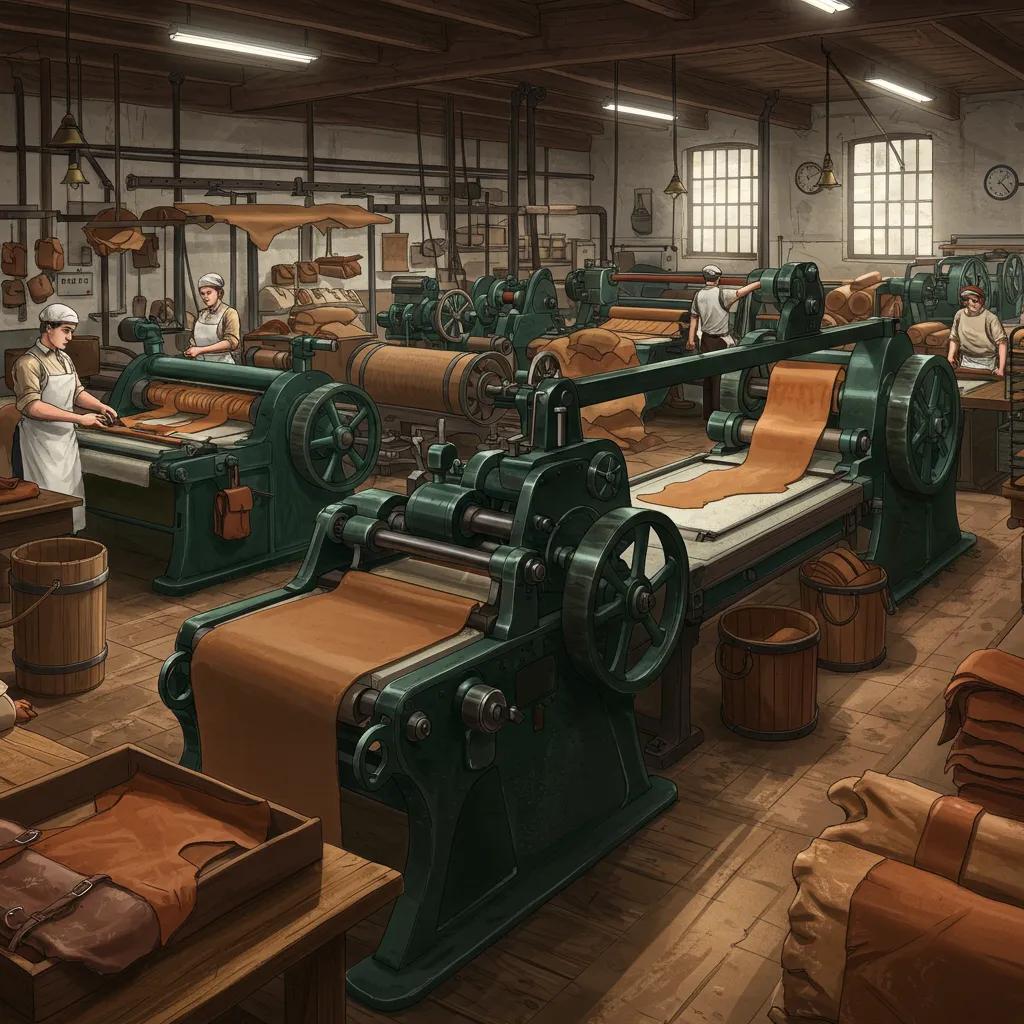
The Industrial Revolution brought mechanization, chemical innovation and new tanning methods—most notably chrome tanning—so production shifted from small workshops to larger factories able to mass‑produce leather goods. Machines for splitting, rolling and stitching boosted throughput, while chrome tanning shortened processing time and produced more uniform, water‑resistant hides suited to shoes, belts and garments. The result was wider consumer access and faster fashion cycles: leather became a common material in everyday clothing as well as in emerging industrial styles.
Use the table below to weigh tradeoffs—when to choose vegetable‑tanned leather for patina, repairability and environmental considerations, or chrome‑tanned leather for speed and uniformity.
| Tanning Approach | Processing Time | Durability | Environmental Impact |
|---|---|---|---|
| Vegetable Tanning | Weeks to months | High; develops patina | Lower synthetic runoff when managed; uses plant tannins |
| Chrome Tanning | Hours to days | High immediate stability | Uses chromium salts; requires careful effluent control |
| Oil/Alum Tanning | Variable | Moderate | Traditional methods with localized environmental effects |
What Are the Differences Between Traditional and Chrome Tanning Methods?
Vegetable tanning uses plant tannins that bond slowly to collagen, producing firm, richly colored leather that ages with a distinct patina and is easier to repair—qualities craftsmen prize despite the longer process. Chrome tanning uses chromium salts to cross‑link collagen much faster, creating softer, water‑resistant leather ready for mass production; it’s faster and often cheaper per unit but raises environmental and disposal concerns when not properly controlled. Each approach has practical benefits: vegetable‑tanned leather offers longevity and character, while chrome‑tanned leather gives immediate flexibility and consistent coloring for many fashion uses. Understanding these differences helps manufacturers and buyers choose the right material for function and sustainability goals.
How Has Leather Fashion Evolved in the Modern Era?
Today leather sits between heritage craft and contemporary fashion—from haute couture and streetwear to bespoke and utility pieces. Trends favor personalization—custom cuts, hand‑stitching and color choices—while production spans artisanal workshops to large factories, serving niche heritage markets and mass consumers alike. The blend of traditional techniques (hand‑stitching, vegetable finishing) with modern design and production has increased interest in provenance, repairability and sustainability, changing how artisans and brands present leather goods to informed buyers.
How Is Sustainability Shaping the Future of Leather Craft? Bridging Ancient Wisdom with Modern Practices
Sustainability in leathercraft combines old‑world techniques—vegetable tanning, smoke‑curing—with modern environmental controls: reduced chemical loads, improved effluent treatment and clearer sourcing. Traditional low‑chemical approaches show practical ways to make durable leather without heavy synthetic inputs; contemporary improvements add wastewater treatment, supply‑chain traceability and energy efficiency. The payoff is twofold: consumers receive ethically made products built to last, and manufacturers preserve artisanal skills while meeting regulatory and market expectations.
Historic preservation techniques and resource‑efficient steps continue to guide modern sustainability choices in tanneries, from raw material selection to finishing.
- Vegetable‑based tanning and low‑water recipes: Use plant tannins and reduce fresh water in process baths.
- Handcrafting and hand‑stitching: Favor low‑energy artisan steps for assembly and finishing.
- Closed‑loop effluent systems: Capture and treat tannery runoff to prevent pollution.
These practices show how historical methods shape today’s sustainability priorities—emphasizing longevity, minimized chemical use and reduced waste. Below we describe how those approaches translate into a real production strategy for modern manufacturers.
To attract direct customers, secure wholesale and export contracts, build trust and showcase manufacturing standards, producers choose materials and processes deliberately—selecting sheep or goat pelts for supple, hand‑stitched jackets, using vegetable tannins where feasible, and documenting artisanal steps for buyers. Aligning production with sustainability—low‑energy handwork, controlled dyeing and selective vegetable tanning—meets demand for ethical, high‑quality leather and helps brands stand out. The next section looks at traditional preservation techniques that inform these sustainable choices.
What Traditional Leather Preservation Techniques Inform Sustainable Practices?
Methods like smoke‑curing, brain tanning and vegetable tannage still inform sustainable production because they reduce reliance on synthetic chemicals and often need less energy while creating repairable, long‑lasting leather. Smoke‑curing gives hydrophobic qualities and inhibits microbes without heavy chemicals; brain and vegetable tanning use renewable tannins to stabilize collagen; careful air‑drying limits mechanical energy use. Scaling these techniques typically requires process control and hybrid systems—combining time‑tested steps with modern filtration and treatment to meet regulations. Updated this way, historic methods become practical templates for lower‑impact production.
How Does Pakistan Leather Embrace Ethical and Eco-Friendly Manufacturing?
At Pakistan Leather we combine artisanal hand‑stitching with careful material selection—sheep, goat, cow and buffalo hides—and finishing choices that balance craftsmanship and environmental responsibility. Our focus on customization, visible workmanship and small‑batch dyeing reduces waste and highlights traceability, building trust with retail customers and export partners. Hand‑stitching cuts machine energy in assembly and supports repairability, while clear product descriptions and quality photos communicate the leather type and workmanship buyers can expect. These choices show how tradition and sustainability can work together in real manufacturing.
What Is Pakistan Leather’s Legacy in Continuing the Art of Hand-Stitched Leather Craft?
Pakistan Leather links ancient handcraft traditions to modern hand‑stitched garments and made‑ups by prioritizing workmanship, customization and quality across jackets, bags, wallets and other pieces. The continuity is simple: hand‑stitching and careful hide selection deliver durability and repair options that machine‑only processes often sacrifice, giving customers tangible value in longevity and finish. Our business serves both individual buyers and wholesale/export clients while showcasing manufacturing capabilities—an important trust signal for partners. The sections that follow map technique lineage to product choices and customization options for prospective buyers.
How Does Hand-Stitching Reflect Ancient Leather Craftsmanship Traditions?
Hand‑stitching preserves an ancestral workflow—measured seam placement and durable saddle stitching—that improves garment life and makes repairs straightforward, echoing the patch‑and‑maintain practices of early leather users. Saddle stitches resist unraveling and spread stress evenly, which extends product life and reduces waste versus many machine stitches. Hand‑stitched pieces also signal heritage and visible craftsmanship to customers who value artisanal detail, and they work efficiently for small‑batch customization where machine setup isn’t practical. Framing these advantages helps buyers see why hand‑stitched leather commands attention in quality‑focused markets.
Pakistan Leather positions hand‑stitching as a defining advantage, pairing skilled artisanship with contemporary finishing standards to balance heritage technique and commercial readiness for both bespoke orders and larger exports.
What Customization and Quality Standards Define Pakistan Leather’s Products?
We offer product ranges mapped to leather choices and quality checkpoints, with customization options like leather type, color, sizing and hand‑finish choices to meet both individual and wholesale needs.
| Product Category | Preferred Leather Type | Customization Options / Quality Checks |
|---|---|---|
| Jackets | Sheep, goat, cow | Sizing, lining choice, hand‑stitched reinforcements |
| Bags | Cow, buffalo, goat | Color options, strap layouts, edge finishing |
| Wallets & Card Holders | Sheep, goat | Stitch pattern, leather finish, edge burnish |
| Made-ups & Promotional Items | Various | Logo placement, material selection, inspection standards |
This mapping clarifies how leather types and product designs interact, helping customers and trade partners choose the right materials and set realistic expectations. Below are tangible benefits and ways to engage with our production process.
- Customization Benefits: Tailored fit, material choices and hand‑finishing increase longevity and perceived value.
- Quality Assurance Steps: Visual inspection, hand‑stitch verification and finish testing keep deliveries consistent.
- Engagement Paths: Bespoke or bulk orders follow clear specifications and sample approvals to ensure matching expectations.
These structured options demonstrate Pakistan Leather’s manufacturing capabilities and how historical craftsmanship guides our modern product strategy for retail and export customers. This article has traced leather’s arc from prehistoric necessity to contemporary craft, highlighting the technical decisions and sustainability considerations that shape quality leather goods today.
Frequently Asked Questions
What are the environmental impacts of leather production?
Leather production can have notable environmental effects, especially when chemical tanning like chrome tanning is involved and wastewater isn’t treated. That said, sustainable options—vegetable tanning, lower‑water recipes and closed‑loop effluent systems—aim to reduce those impacts. By choosing plant‑based tannins, cutting fresh‑water use and improving effluent treatment, modern tanneries can make quality leather with a smaller ecological footprint. More buyers now look for leather that balances durability with environmental responsibility.
How can consumers identify high-quality leather products?
Look for a few clear signs: the tanning method, finish and craftsmanship. Vegetable‑tanned leather typically lasts longer and develops a unique patina; chrome‑tanned leather is softer and more uniform. Inspect stitching—hand‑stitching or saddle stitching indicates strong construction—and check edge finishing and burnish. Provenance, certifications or clear supplier information also help confirm ethical sourcing and consistent quality.
What role does leather play in modern fashion trends?
Leather has moved from pure utility to a marker of style and quality across haute couture, streetwear and bespoke markets. Current trends favor personalization—custom cuts, hand‑stitched details and selective finishes—while sustainability and provenance play a growing role. Leather’s mix of durability and character keeps it relevant across seasons and styles.
How do traditional techniques influence modern leather crafting?
Traditional methods—hand‑stitching, vegetable tanning, careful finishing—still shape modern practice by prioritizing durability and lower chemical use. Artisans combine these techniques with contemporary design and production controls to create pieces that honor craft heritage while meeting today’s standards for performance and sustainability.
What are the benefits of hand-stitched leather products?
Hand‑stitched goods offer stronger, more repairable seams and longer life. Saddle stitching, for example, resists unraveling and distributes stress across the seam. Hand stitching also supports customization and gives visible artisan detail that many customers prize, making these items both practical and distinctive.
How is sustainability being integrated into leather manufacturing?
Sustainability is being baked in through reduced chemical use, better waste treatment and ethical sourcing. Revival of vegetable tanning and smoke‑curing, adoption of closed‑loop wastewater systems and energy‑efficient workflows are common steps. Mixing traditional methods with modern environmental controls helps the industry meet regulatory and market expectations for responsibly produced leather.
What future trends can we expect in leather craft?
Expect continued focus on sustainability, personalization and technical innovation. Consumers will push for eco‑friendly materials and transparent supply chains, while designers and tanneries explore new tanning methods and finishes that improve performance and reduce impact. Customization will stay important, letting buyers choose leather goods that reflect their style and values.
Conclusion
Tracing leather’s history—from survival tool to prized material—shows how techniques and choices shape durability, appearance and environmental impact. That perspective helps you buy smarter: choose leather for its longevity, repairability and the traceable practices behind it. Explore our curated selection of handcrafted leather goods and discover pieces that honor this craft legacy.


