
How to Organize Your Leather Knife Roll: The Chef’s Secret Weapon for Efficient and Safe Knife Storage
A leather knife roll is a compact, protective wrap for chef knives that, when organized correctly, speeds service, protects blade edges, and improves safe transport between kitchens. This guide teaches professional chefs, culinary students, and traveling cooks how to inventory tools, choose the right slots and protections, and roll and secure a leather knife roll for daily service and travel. Many chefs struggle with blade damage, slow access during service, and hygiene concerns when knives touch or rattle together; organized rolls remove these pain points and create a consistent workflow. You will learn why organization matters, which premium features to look for, step-by-step packing techniques, advanced organization hacks, what extra tools to pack, and leather care practices that preserve both material and blade. The article also includes practical tables comparing leather types, recommended slot placement by knife, and customization options for buyers sourcing custom rolls. Throughout, keywords like chef tools, blade protection, portable knife storage, and leather care are used to help you find the precise tactics that fit a busy kitchen or travel routine.
Why Is Organizing Your Chef Knife Roll Essential?
An organized knife roll reduces risk and improves efficiency by keeping each blade in its own place, preventing contact and accidental cuts. Proper organization works because individual slots, sleeves, and closures separate knives and stabilize them during movement, which preserves edge geometry and reduces nicks. The result is safer transport, fewer sharpening sessions, and faster selection at the line, all of which support consistent kitchen performance. Below we unpack the concrete benefits, safety mechanisms, and performance gains that come from an intentional roll layout.
What Are the Benefits of a Well-Organized Leather Knife Roll?
A well-organized leather knife roll delivers clear operational and practical advantages for chefs and culinary students. First, it reduces prep time because knives are arranged predictably and always return to the same slot after use. Second, it presents a professional image when working front-of-house or at events, reflecting care and readiness. Third, inventory management becomes easier; a standard layout helps with quick audits and replacement planning during busy service. These benefits combine to lower stress and improve the chef’s ability to focus on cooking rather than searching for tools.
- The layout saves seconds per tool selection, which compounds during service.
- Standardized slots aid shared-kitchen consistency and reduce errors.
- Clear slots and pockets protect both handle and blade, extending service intervals.
- Predictable storage speeds training for culinary students and temporary staff.
These advantages make organization an operational priority rather than a small convenience, and they lead directly into why specific protection choices extend blade life.
How Does Organization Improve Knife Safety and Blade Longevity?
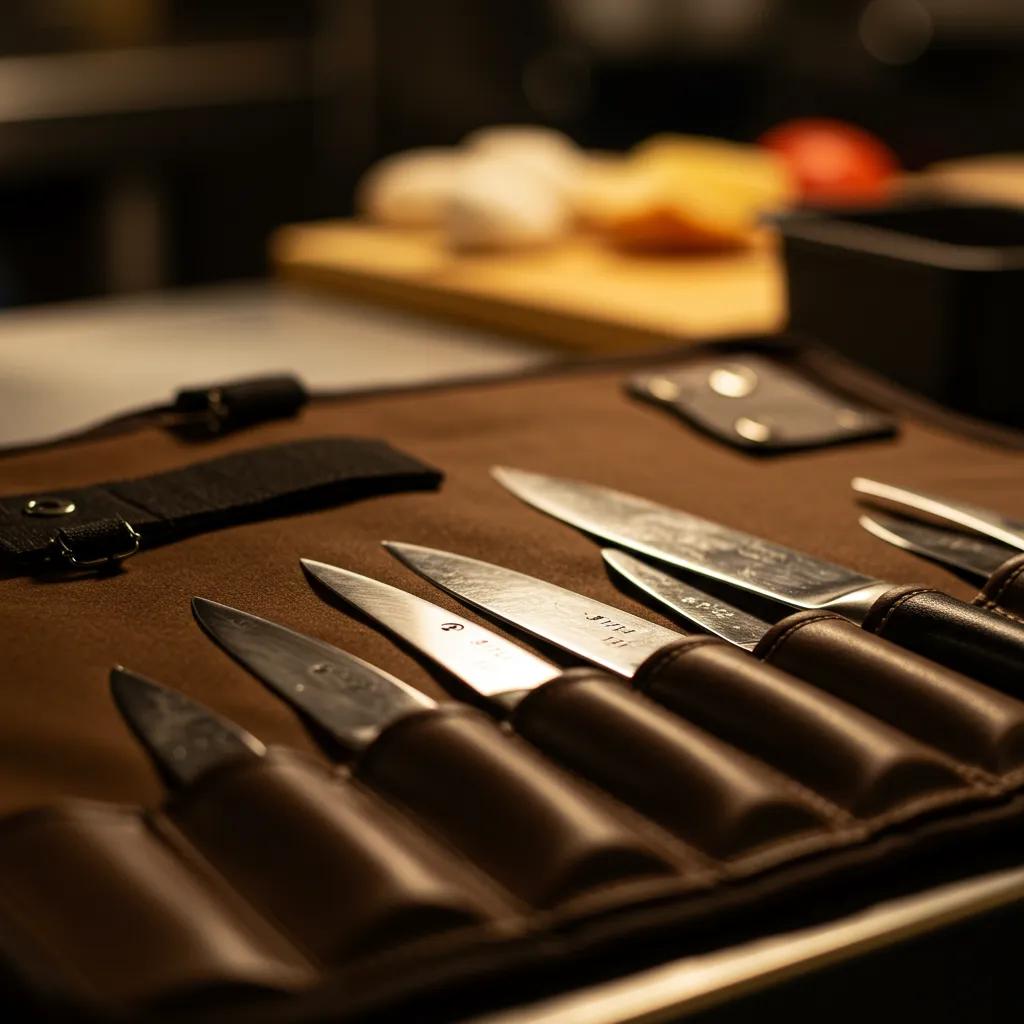
Organization improves safety by eliminating blade-to-blade contact and preventing loose blades from shifting during transport. Individual slots, internal barriers, and edge guards act as physical barriers that stop edges from rubbing and losing temper, which preserves blade sharpness. Secure closures such as straps and buckles keep the roll compact and prevent accidental exposure when carrying knives between kitchens. Good organization also reduces the chance of cuts during packing and unpacking, protecting both the chef and the tools.
- Proper spacing prevents nicks and dulling from contact.
- Edge guards and sleeves isolate tips and edges during transit.
- Tight closures stop movement that causes abrasion against seams.
- An organized roll reduces accidental punctures when reaching into compartments.
Understanding these safety mechanisms leads naturally to measurable performance improvements on the line.
How Does Efficient Organization Enhance Kitchen Performance?
When a chef arranges knives by function and frequency, decision time shrinks and cognitive load drops during service. An efficient layout groups prep knives, filleting tools, and finishing blades so each action requires minimal reach and thought. Teams using consistent color-coding or slot numbering report fewer delays and smoother hand-offs at busy stations. Faster access and fewer errors translate into better timing on orders and improved team coordination during peak service.
- Group frequently used knives nearest the roll opening for quick access.
- Use consistent layouts across a brigade to standardize workflow.
- Color tabs or tags speed visual identification during high-pressure shifts.
- Regular audits of the roll ensure worn or mis-sized pockets are corrected.
This operational efficiency sets the stage for selecting the right physical features in a premium knife roll.
What Are the Key Features of a Premium Leather Knife Roll?
Premium knife rolls combine material choice, construction quality, and functional features to deliver durability, protection, and professional appearance. The best rolls use robust leather, precision stitching, reinforced stress points, and functional elements such as varied slot sizes, interior lining, and secure closures. These design decisions control how the roll performs under daily wear, during international travel, and across different kitchen environments. Below we compare common leather types and summarize construction and customization features chefs should prioritize.
Leather type affects durability, patina, weight, and cost. The table below compares frequently used options to guide selection based on service intensity and desired appearance.
| Leather Type | Durability | Patina & Feel | Cost |
|---|---|---|---|
| Full-grain | Very durable | Develops rich patina; firm hand | Higher |
| Top-grain | Durable | Softer finish; controlled patina | Moderate |
| Sheepskin / Goatskin | Moderate | Lightweight; softer feel | Lower to Moderate |
| Buffalo / Cowhide | High | Heavier; rugged patina | Moderate to High |
This comparison helps chefs and buyers weigh longevity against weight and cost, leading to better procurement decisions.
Which Types of Leather Are Best for Durable Knife Rolls?
Full-grain leather is the top choice for long-term durability because it retains the hide’s natural strength and forms a desirable patina over time. Top-grain leather balances durability and cost with a smoother surface that resists staining and abrades less visibly in service. Lighter leathers such as sheepskin and goatskin lower roll weight for traveling chefs, but they trade off some abrasion resistance and structure. Consider leather finish and lining: a well-selected lining reduces moisture transfer and keeps blades from contacting untreated leather.
Choosing the leather brings up construction choices that further protect blades and extend product life.
How Do Multiple Knife Slots and Secure Closures Protect Your Knives?
Slot design matters: properly sized and spaced slots prevent blade tips and edges from touching and provide tension to hold knives upright. Internal barriers and reinforced stitching at slot seams stop tears from forming when heavy blades are inserted repeatedly. Closure systems—buckles, straps, ties, or snap-over flaps—ensure the roll stays compact and sealed during movement. The right combination of slots and closures minimizes blade movement and reduces the need for emergency sharpening between services.
- Reinforced stitching at stress points increases longevity.
- Adjustable straps accommodate different tool sets and volumes.
- Snap flaps or buckles add an extra layer of security for transport.
- Well-sized slots match knife geometry, preventing pressure points.
These functional features are often customizable by manufacturer to match a chef’s workflow.
What Customization Options Enhance Your Knife Roll’s Functionality?

Customization makes a roll fit the chef rather than forcing the chef to adapt to the roll. Common options include configurable slot counts and sizes, removable pockets, internal sleeves for steels and stones, and branding like logo embossing. Lining choices and additional padding can be specified to balance weight, protection, and hygiene. While customization raises lead times and cost, it yields a tool optimized for a specific brigade or retail product line.
- Configurable slot layouts support role-specific toolsets.
- Removable modules let traveling chefs adapt to different gigs.
- Logo embossing and color options help brand retail or hospitality purchases.
- Specifying lining materials improves hygiene and ease of cleaning.
To illustrate how manufacturers can support these options in practice, consider a manufacturing example from an export-capable supplier.
Pakistan Leather is an example of a manufacturer that emphasizes custom, hand-stitched leather made-ups and offers a range of leather types and color options for export buyers. Their craft focus on reinforced stitching and made-up accessories demonstrates how production choices translate into durable, service-ready knife rolls. This manufacturer-led perspective shows how selecting a supplier with customization capability reduces surprises during production and ensures finished rolls match kitchen requirements.
How Do You Pack and Organize Your Chef Knife Roll Step-by-Step?
Packing a knife roll follows a clear sequence: inventory and categorize tools, assign slots by size and function, fit protective sleeves where needed, and roll with secure tension. Each step reduces the chance of blade damage and ensures fast access during service. Below is a concise HowTo that chefs can apply in less than ten minutes and repeat each day before service. After these steps, a compact roll will be ready for transport, storage, or staging at the line.
- Inventory and measure your knives before assigning slots.
- Insert edge guards or sleeves on exposed edges and tips.
- Place largest blades centrally or toward the back, smallest near the flap.
- Roll with the cutting edges inward, then secure straps snugly.
These steps form a reliable routine that transitions into specific inventory and placement rules described next.
How Do You Inventory and Categorize Your Knives and Tools?
Start by listing each tool, recording blade length, and noting primary function—slicing, boning, paring, cleaving. Measure blade lengths and annotate them on a simple checklist that travels with the roll for audits and replacements. Prioritize frequently used knives by placing them in the most accessible slots nearest the roll opening. Periodic inventory checks reveal missing or mis-sized slots, enabling timely maintenance and ensuring the roll remains optimized.
- Track blade length, function, and last sharpening date.
- Update the checklist after any tool swap or repair.
- Place high-use knives in the front-most accessible pockets.
- Use the inventory to request replacement parts or custom slot changes.
A brief inventory routine prevents surprises during service and prepares the roll for consistent layout.
| Knife / Tool | Blade Length | Recommended Placement |
|---|---|---|
| Chef’s Knife | 8–10 in | Center or back center slot |
| Paring Knife | 2.5–4 in | Near flap / front pocket |
| Boning Knife | 5–7 in | Adjacent to chef’s knife |
| Cleaver | 6–9 in | Reinforced outer slot |
| Utility Knife | 5–6 in | Front or secondary slot |
This placement table helps standardize layout across different sets and workflows.
What Is the Best Way to Arrange Knives by Size and Function?
Place the largest, bulkiest blades toward the center or back of the roll so the roll curves naturally around them without compressing edges. Smaller blades and finishing tools go near the flap for immediate access without unrolling the entire set. Group knives by function—prep, trimming, finishing—so each station or task uses a contiguous subset of tools. For traveling chefs, minimize weight by moving seldom-used tools to a separate pouch or modular insert.
- Large blades get reinforced slots to prevent stress on seams.
- Small, frequent-use knives sit nearest the opening for quick grabs.
- Functional grouping reduces search time during live service.
- Modular inserts allow customization for travel versus stationary work.
Good arrangement reduces strain and speeds knife selection under pressure.
How Do You Protect Blades with Edge Guards and Sleeves?
Edge guards, leather sleeves, and plastic guards each provide a barrier that prevents edges from contacting other metal or leather. Leather sleeves breathe and fit snugly, reducing moisture transfer and supporting hygiene when dried properly. Plastic edge guards offer rigid protection for thin tips and are useful for travel when extra rigidity is required. Clean and inspect guards regularly; damaged guards can harbor debris or scratch blades if left unaddressed.
- Use leather sleeves for routine storage and lightweight protection.
- Use rigid guards for long-distance travel or airline transit.
- Replace guards that show cracks, splits, or embedded grit.
- Clean sleeves and guards regularly to avoid cross-contamination.
Selecting the right guard type depends on blade geometry and transport needs.
How Should You Securely Roll and Close Your Leather Knife Roll?
Roll the flap inward so cutting edges face the roll center and do not press against the outer leather. Apply even tension while rolling—tight enough to stabilize tools but loose enough to avoid compressing blade spines. Fasten straps or buckles with enough slack to allow slight expansion; over-tightening can warp handles and stress seams. When transporting, carry the roll flat or in a protective outer case to avoid impact on edges and tips.
- Roll with edges inward to keep them safe from impact.
- Tighten straps for stability but avoid compressing blades.
- Check straps and buckles for wear and replace when stressed.
- Carry the roll in a secondary case for added protection during transit.
These rolling practices lock in protection and make transport predictable and safe.
What Advanced Tips Can Improve Your Knife Roll Organization?
Advanced organization hacks focus on labeling, leather-safe cleaning, and workflow-specific customization to shave time and preserve materials. Small changes such as color-coded tabs, removable modular pockets, and dedicated sanitation pouches make a major difference in team kitchens. These advanced techniques also support hygiene policies and help chefs adapt quickly to varying service contexts. The tips below are practical, low-cost, and designed for adoption without major equipment changes.
- Use stitched color tabs or small leather tags for role-based identification.
- Add removable pockets for specialty tools and replace them as needs change.
- Reserve an outer pocket for cleaning cloths and single-use sanitizing wipes.
These hacks are straightforward to implement and translate directly into faster service and better tool care.
How Can Labeling and Color-Coding Speed Up Knife Identification?
Labeling by function or chef station cuts decision time by providing an immediate visual cue. Durable options include stitched color tabs, small leather tags, or embedded tabs on handles that resist washing and wear. For shared kitchens, adopt a simple legend—color equals function or station—to prevent cross-usage and reduce tools going missing. Labels should be robust and replaceable so they survive daily cleaning and heavy handling.
- Color-code by function or station to speed selection.
- Use stitched tabs rather than tape for durability.
- Create a simple legend for brigade-wide consistency.
- Replace labels that fade or fray to maintain clarity.
Clear labeling supports the broader goal of standardization and team efficiency.
What Are the Best Practices for Maintaining Cleanliness and Leather Care?
After each shift, wipe the roll interior with a dry microfiber cloth to remove debris and moisture; avoid saturating leather with water. For periodic deeper care, use a mild leather cleaner applied sparingly and follow with a conditioner to restore oils and flexibility. Avoid harsh detergents and aggressive solvents that strip natural oils and damage stitches. Ensure the roll is fully dry before storing it flat in a ventilated area to prevent mold and deformation.
- Wipe after use and allow airflow to dry the roll naturally.
- Condition leather every few months to prevent cracking.
- Use mild cleaners and avoid saturation that can harm lining.
- Store flat and unrolled for long-term storage to retain shape.
These maintenance practices preserve both leather and blade performance and lead into manufacturing finish considerations.
How Can You Customize Your Knife Roll for Your Workflow?
Customization can be tactical: removable pockets for occasional tools, extra padding for heavy cleavers, or slimmer slots for travel-focused setups. Consider weight distribution—adding too many heavy pockets can make travel awkward and strain seams. Branding elements like embossed logos add retail value but should not compromise slot placement or seam integrity. Modular designs give the best balance, allowing chefs to configure the roll per assignment without permanent alterations.
- Removable modules let the roll adapt to different events.
- Balance weight to keep the roll ergonomic for transport.
- Prioritize function over cosmetic customization for daily use.
- Modular designs reduce the need for multiple specialized rolls.
These choices support personalization while keeping tool protection central to the design.
What Else Should You Pack in Your Leather Knife Roll Besides Knives?
A well-prepared roll holds more than blades: sharpeners, steels, sanitation items, and small tools make on-the-go maintenance possible. Packing the right accessories reduces downtime and helps chefs maintain edge quality between shifts. The list below covers essential non-knife items and the rationale for each, focusing on compact, service-friendly tools that fit inside pockets or modular inserts.
- Sharpening stone or compact diamond rod: for edge restoration during long events.
- Honing steel: quick realignment of the edge between uses.
- Microfiber cloth: for wiping blades dry and removing residues.
- Sanitizing wipes (single-use): for quick surface hygiene before service.
- Marker or tag set: for labeling or temporary station notes.
- Small tweezer or fish spatula: for plating and small finishing tasks.
These additions keep the chef self-sufficient and reduce reliance on station equipment, which leads into travel-specific packing methods.
Which Culinary Tools Complement Your Knife Roll Setup?
Small maintenance and finishing tools complement knives and are compact enough to store within organized pockets. A travel-compatible sharpening stone or compact rod restores edges when needed without adding much bulk. A honing steel helps align edges between plates, preserving performance through service. Small preparation tools like peelers, tweezers, and temperature probes round out capability without requiring a separate toolbox.
- Compact stones and rods fit securely in padded pockets.
- A microfiber cloth helps maintain dry, clean blades.
- Tweezers and small spatulas assist with plating without much space.
- Reserve a pocket for lightweight, frequently used extras.
Packing complementary tools reduces interruption during service and keeps the chef prepared in varied environments.
How Do Travel Chefs Optimize Portable Knife Roll Storage?
Travel chefs prioritize low weight, secure blade protection, and compliance with transport rules. Use lightweight leathers or modular inserts to reduce bulk, and always fit rigid edge guards for airline or long-distance transit. Keep documentation and packing tags separate to assert compliance with local or carrier regulations when required. For international work, separate sharp tools into checked luggage with rigid containment and luggage locks where allowed.
- Choose lightweight leathers for portability without sacrificing protection.
- Use rigid guards for travel and consider a lockable outer case.
- Pack only essential knives for each assignment to reduce weight.
- Keep sanitizing items and documentation handy for inspections.
These steps make the roll travel-ready and reduce stress when moving between kitchens.
How Do You Care for and Maintain Your Leather Knife Roll for Longevity?
Proper maintenance extends a roll’s service life, maintains hygiene, and protects blades from moisture and contaminants. Regular wiping, occasional conditioning, and storing the roll unrolled or flat in a ventilated area prevents deformation and mildew. Repair small seam issues early and replace worn straps before they fail to ensure tools remain secured. The guidance below covers cleaning, conditioning, storage, and repair practices suited to professional kitchens.
Wipe down interiors after each shift and condition leather periodically to maintain suppleness and prevent cracking. Use mild, leather-safe cleaners and apply conditioner with a soft cloth, allowing the leather to absorb oils gradually. Avoid heavy saturation and never machine-wash leather rolls; instead, spot-clean linings and allow full air drying. These care routines protect the leather while maintaining blade hygiene and edge integrity.
What Are the Best Cleaning and Conditioning Tips for Leather?
Clean interiors by removing crumbs and debris with a dry brush or microfiber cloth, and spot-clean stains with a damp cloth and a mild leather cleaner applied sparingly. Condition the leather every few months with a neutral, food-safe leather conditioner to restore oils and prevent brittleness, especially if the roll is used in humid or dry climates. Allow the roll to air-dry completely before storage and avoid direct heat, which can stiffen hides and damage stitching. For waxed or finished leathers, follow manufacturer guidance to avoid removing protective coatings.
- Wipe debris after each use and air-dry the roll thoroughly.
- Use mild leather cleaners and condition every few months.
- Avoid heat and direct sunlight when drying to preserve oils.
- Spot-test any product on an inconspicuous area before full application.
Following these steps reduces long-term repair needs and preserves professional appearance, which relates to total cost of ownership discussed below.
How Does Proper Maintenance Protect Your Investment?
Maintained leather retains flexibility and appearance, reducing replacement frequency and lowering total cost of ownership for restaurants and traveling chefs. A well-cared-for roll resists cracking, seam failure, and deformation, keeping tools secured and protected under repeated use. Compare a neglected roll that requires replacement within a year to a maintained roll that performs reliably for multiple seasons; the difference in replacement and downtime costs is substantial. Regular maintenance also preserves brand appearance for hospitality buyers who display or gift branded rolls.
- Maintenance extends material life and maintains resale or retail value.
- Fewer repairs reduce service interruptions and replacement purchases.
- Consistent appearance supports brand expectations in client-facing settings.
- Routine care lowers lifetime costs and improves user confidence.
These lifecycle benefits make a small maintenance routine a high-return activity for any chef or buyer.
Where Can You Find Custom Premium Leather Knife Rolls for Chefs?
Sourcing custom premium knife rolls requires asking suppliers about leather types, seam reinforcement, minimum order quantities, lead times, and sample policies. Good manufacturers provide detailed specs for leather grade, lining materials, and available color and finishing options. For B2B buyers, clarity on quality assurance, export packaging, and customization capabilities reduces risk and helps align product features with retail or hospitality requirements. The table below summarizes common customization options and practical considerations for buyers evaluating suppliers.
| Custom Option | Minimum Order / Lead Time | Practical Note |
|---|---|---|
| Color Options | Varies by supplier / Weeks | Color matching increases lead time |
| Stitching & Reinforcement | Per-spec / Weeks | Reinforcement improves durability |
| Logo Embossing | Samples often required / Weeks | Adds branding but may add cost |
| Modular Layouts | Per-spec / Weeks | Modular inserts need prototyping |
Why Choose Pakistan Leather for Custom Hand-Stitched Knife Rolls?
Pakistan Leather serves as an illustrative example of a manufacturer focusing on hand-stitched made-ups and a range of leather types suitable for export buyers. Their capability to offer multiple leather options, reinforced stitching, and color variations demonstrates how production choices translate to functional, durable knife rolls. For buyers evaluating suppliers, features such as hand-stitching and control over finishes serve as trust signals that products will withstand professional use. Choosing a manufacturer with export experience helps ensure consistent quality and packaging for international distribution.
How Can B2B Buyers Benefit from Bulk and Custom Orders?
Bulk and custom orders let retailers and hospitality buyers secure branding, consistent specs, and economies of scale that reduce per-unit cost. When negotiating with suppliers, confirm minimum order quantities, sample policies, quality assurance processes, and typical lead times to avoid delays. Request pre-production samples to validate leather feel, slot fit, and stitching before committing to production runs. Establishing clear acceptance criteria and inspection checkpoints during production reduces warranty claims and ensures timely delivery.
- Confirm MOQ and sample approval processes before signing agreements.
- Specify inspection criteria for seams, slot dimensions, and finishes.
- Negotiate lead times and buffer periods for seasonal peaks.
- Use pre-production samples to validate final product specifications.
What Are the Available Leather Types and Color Options?
Buyers typically choose among full-grain, top-grain, cow/buffalo, and lighter sheepskin or goatskin variants depending on desired weight and patina. Full-grain offers maximum durability and an attractive aging process, while top-grain balances cost and finish. Sheepskin and goatskin lower weight for travel-focused products but reduce abrasion resistance. Color and finish choices—natural, aniline, semi-aniline, or waxed—affect appearance and maintenance needs, so select finishes that match the intended retail positioning and service environment.
- Full-grain for rugged, long-lasting products and strong patina development.
- Top-grain for smoother, retail-friendly finishes with balanced cost.
- Sheepskin/goatskin for lightweight travel models where portability matters.
- Finishes and dyes influence care routines and long-term appearance.
Choosing the right leather and finish completes the specification set and readies buyers to request samples and finalize orders.
- For custom manufacturing inquiries consider a supplier that offers hand-stitched construction, multiple leather types, and configurable slot layouts.
- Ask suppliers about sample policies, lead times, and export-capable packaging options.
- Specify preferred finishes and color options and request pre-production samples to confirm fit and finish.


