
Sustainable Leather Certifications

Sustainable Leather Certifications: Understanding Standards for Eco-Friendly and Ethical Leather Production
Sustainable leather certifications are independent verifications that a tannery or finished-goods maker meets defined environmental, chemical and social performance standards. They help buyers spot lower‑impact, responsibly produced leather. This guide explains what these certifications evaluate, why they matter for brands and consumers, and how they relate to tanning choices (for example, vegetable or chrome‑free methods), chemical‑management frameworks like ZDHC, and traceability systems. You’ll learn how to compare leading standards, read certification claims, and use a practical buyer checklist to reduce risk while keeping market access and regulatory compliance in view. We outline the main programs, technical tannery steps to cut water and chemical impacts, traceability options, and clear verification steps for buyers. Throughout, we bring in manufacturer-level context so you can see how compliance and transparency translate into dependable sourcing and export-ready production—advice grounded in industry practice through late 2025.
What sustainable leather certifications are — and why they matter
Sustainable leather certifications are structured audit or testing programs that check environmental, chemical and social practices across the leather supply chain. They typically use third‑party audits, measurable KPIs and public reporting. Standards set clear metrics—water-use targets, chemical limits, effluent-treatment performance and worker‑safety controls—and require evidence such as monitoring logs, independent lab tests and corrective‑action plans. For brands and buyers, certifications lower procurement risk, improve transparency, and create verifiable claims that support market access and regulatory compliance. The next section clarifies which attributes define sustainable leather and why they matter for both environmental outcomes and product quality.
What makes leather “sustainable” and why it matters

We call leather sustainable when it has a smaller environmental footprint, follows responsible chemical controls, is ethically sourced, and comes with traceability that documents hide origin and processing steps. Common impact‑reducing practices include water recycling and effluent treatment, replacing hazardous tanning agents, improving energy efficiency, and sourcing hides as meat‑industry by‑products rather than from cleared land. These measures reduce pollution risks, protect worker and community health, and give brands a defensible stance against greenwashing. Knowing these attributes helps buyers focus on the right certifications and technical evidence when assessing suppliers and finished goods.
How certifications create trust and protect quality
Certifications build trust by combining independent audits, continuous monitoring and public documentation so claims are backed by evidence rather than marketing language. Audits review operational controls—chemical inventories and dosing, effluent treatment, storage and disposal—and check records for traceability, worker conditions and management systems, then issue a rating or score buyers can use during supplier selection. Certified leather also tends to carry product‑safety advantages, such as lower risk of harmful residues and documented substance testing required by product standards. This verification reduces procurement risk and supports lasting supplier relationships rooted in documented quality and transparency.
Key sustainable leather certifications to know
Each major certification covers different but complementary sustainability aspects: tannery environmental audits, product safety testing, chemical‑discharge commitments and broader sustainability scoring. Common programs include the Leather Working Group (LWG) for tannery audits, OEKO‑TEX for harmful‑substance testing, the Sustainable Leather Foundation (SLF) for multi‑dimensional scoring, and ZDHC for chemical‑management roadmaps. Knowing what each standard covers—and how they work together—helps brands choose the right mix of evidence for regulatory and market needs. Below is a concise comparison of the main programs and their audit focus.
Certifications for sustainability in footwear and leather sectors
Footwear and leather manufacturing use many chemicals to turn raw hides into finished goods, and these processes can release pollutants harmful to people and the environment. Consumer awareness of these risks is growing, increasing demand for environmentally responsible products. Certification systems assess industry performance across social, economic and safety criteria to show whether a business meets recognised standards. The following notes outline some widely used certifications that serve as evidence of sustainability in the footwear and leather sectors.
Certifications for sustainability in footwear and leather sectors, 2020
| Certification | Scope | Primary Audit / Focus |
|---|---|---|
| Leather Working Group (LWG) | Tannery-level environmental and management audits | Water, energy, waste, chemical management, traceability and management systems |
| OEKO-TEX (leather/product standard) | Product-level harmful-substance testing and limits | Chemical residue testing and product safety for finished leather items |
| Sustainable Leather Foundation (SLF) | Holistic sustainability assessment across supply chain | Scoring on environmental, social, traceability and governance metrics |
This comparison shows that buyers usually need more than one certification type—tannery audits plus product testing—to cover both manufacturing practices and finished‑product safety. The next subsections look more closely at LWG and how OEKO‑TEX and SLF differ in focus and buyer implications.
What LWG certification covers and why it helps buyers
The Leather Working Group (LWG) is a third‑party tannery audit that grades facilities on environmental management, chemical handling, effluent control, water and energy use, and traceability. Facilities receive ratings such as Gold, Silver or Bronze after on‑site audits, documentation review and corrective‑action tracking. Buyers use LWG scores to speed supplier qualification and reduce due diligence time. For manufacturers, LWG drives better operational controls, stronger positioning in procurement, and clearer routes to export markets that ask for environmental proof. Knowing how LWG evaluates water and chemical management is key to interpreting a tannery’s rating and what it signals about finished‑goods quality.
To reassure commercial buyers about supply readiness, Pakistan Leather states this objective clearly: to drive direct sales to individual customers, secure wholesale and export orders, build trust, and highlight manufacturing capability and product quality.
How OEKO‑TEX and SLF complement tannery audits
OEKO‑TEX certifies finished materials and products against tight limits for harmful substances, so it focuses on product‑level chemical safety. The Sustainable Leather Foundation (SLF) takes a broader view, scoring environmental, social and governance factors and emphasising chain‑of‑custody transparency for cross‑attribute comparisons. OEKO‑TEX and SLF complement LWG: OEKO‑TEX confirms finished‑product safety, while SLF provides a multi‑dimensional sustainability score useful for reporting non‑environmental metrics. Together, these standards form a layered assurance model—tannery performance, chemical safety, and wider sustainability metrics—that reduces buyer uncertainty and helps meet regulatory requirements.
How Pakistan Leather approaches sustainable leather production
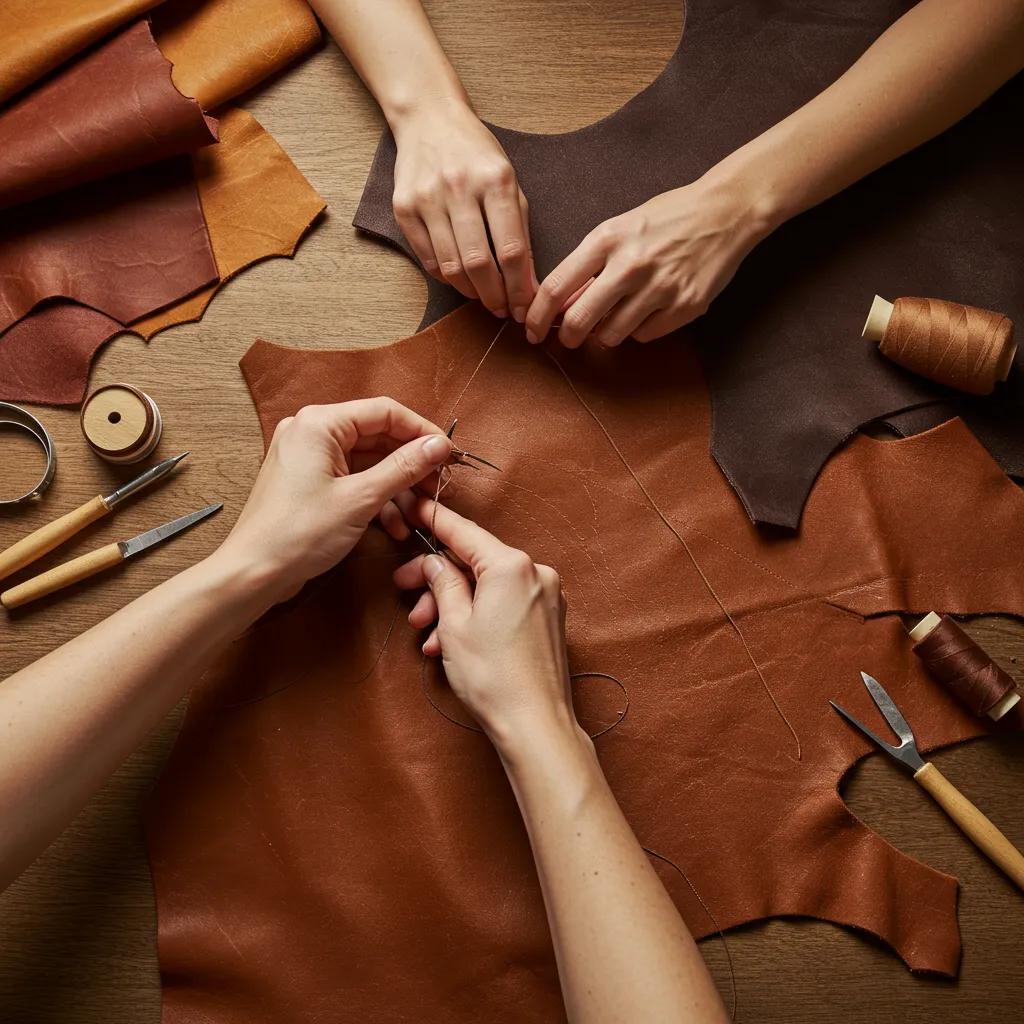
Pakistan Leather focuses on manufacturing high‑quality, hand‑stitched leather garments and goods using sheep, goat, cow and buffalo hides, with custom colour options. We align production with core sustainability priorities—chemical management, traceability and quality control—and prepare documentation buyers can request to check compliance and product safety. Practically, this means following best practices for chemical handling, keeping quality‑control records, and maintaining traceable production batches to support wholesale and export workflows. These steps help us drive direct sales, win wholesale and export orders, build trust, and demonstrate manufacturing and product quality.
Our current and planned certification goals
Pakistan Leather prioritises product quality controls and traceability documentation while preparing a phased approach to formal certifications. We are documenting current processes, exploring partnerships with certified tanneries where needed, and scheduling pre‑audit improvements in chemical storage, waste handling and recordkeeping to meet LWG, OEKO‑TEX and SLF criteria. These steps aim to lower procurement barriers for international buyers and show export readiness with verifiable evidence. Embedding certification milestones into production planning helps us turn environmental and safety improvements into tangible commercial advantages for wholesale clients.
How our tanning and chemical‑management practices align with standards
We use a mix of tanning approaches, offering vegetable tanning and chrome‑free finishes on request, while managing chemicals through inventory controls, dosing logs and compliance with supplier safety data sheets. Our chemical management follows ZDHC principles in spirit—prioritising substitution of highly hazardous substances where possible, maintaining containment and controlled disposal, and documenting use for reporting. Operational examples include segregated chemical storage, batch‑level records linking hides to processing steps, and coordinated quality checks that trigger residue testing when required. These practices reduce environmental risk and support buyer requests for documented chemical‑safety evidence.
How ethical sourcing and transparency are maintained
Ethical sourcing starts with purchasing hides that are by‑products of regulated meat production, avoiding hides tied to deforestation or illegal land use, and documenting origins with supplier declarations and origin certificates. Supply‑chain transparency relies on supplier audits, chain‑of‑custody records, and traceability tools like batch IDs and digital logs that map hides from origin to final product. These measures help brands respect animal‑welfare considerations where relevant and ensure purchasing doesn’t cause unintended environmental harm. The next sections list practical sourcing criteria and traceability steps buyers can request when assessing suppliers.
The table below maps traceability elements and the practical documents or methods buyers should expect when verifying ethical sourcing.
| Traceability Element | Key Documentation | Typical Method |
|---|---|---|
| Raw Hide | Origin certificate or supplier declaration | Batch ID and supplier invoice linking to origin region |
| Supplier | Social and environmental criteria | Audit reports or supplier self‑assessments with corrective actions |
| Chain-of-custody | Transfer records | Batch‑level processing logs and completed product records |
What responsible hide origins and animal‑welfare practices look like
Responsible sourcing typically begins with hides that are by‑products of regulated meat industries and includes documentation confirming hides did not come from deforested or illegally cleared land. Buyers should request origin certificates, supplier declarations and land‑use records as needed to ensure hides are not driving primary agricultural expansion.
Relevant animal‑welfare practices focus on avoiding sourcing linked to unlawful or inhumane methods and preferring supply chains that follow national animal‑health and welfare rules. Simple supplier attestations and straightforward documentation help brands reduce reputational and regulatory risk when choosing leather suppliers.
How traceability increases supply‑chain accountability
Traceability creates a verifiable audit trail from hide origin through tannery processing to finished product, which speeds issue resolution and clarifies responsibilities in audits. Practical methods include batch IDs on processing records, chain‑of‑custody documents that follow hides across subcontractors, and digital recordkeeping linking production lots to test certificates. These tools support certification audits by making origin and processing evidence available, and they give buyers confidence that provenance claims can be checked. Traceability also makes corrective actions faster and clearer when nonconformities arise.
Environmental measures tanneries use to reduce impact
Tanneries combine technical systems and operational controls to cut water, energy and waste impacts—examples include closed‑loop water systems, effluent treatment and reuse, more efficient boilers or heat recovery, and scrap recycling or upcycling. These measures target measurable KPIs such as litres of water per kilogram of leather, energy per unit of output, and reuse/diversion rates that certification schemes and buyers monitor. Holistic reduction programs mix infrastructure (water‑treatment plants), process optimisation (shorter chemical cycles), and circular approaches (reprocessing offcuts) to lower lifecycle impacts. The table that follows compares common measures and example KPIs tanneries track.
This short note explains the table: it compares specific tannery measures with typical methods and example KPIs so buyers can see the operational evidence behind claims.
| Environmental Measure | Typical Method | Example KPI |
|---|---|---|
| Water Conservation | Closed‑loop water reuse and effluent treatment | Litres per kg leather reduced by 30–60% |
| Energy Efficiency | Efficient boilers and heat recovery systems | kWh per kg leather reduced and renewable share increased |
| Waste Management | Segregation, hazardous waste treatment, scrap recycling | Reuse rate of leather offcuts and landfill diversion percentage |
How tanneries implement water and energy savings
Water savings come from process changes—like counter‑current rinsing—and from infrastructure such as effluent‑treatment plants that reclaim water for non‑critical uses. Energy savings follow with better boilers, waste‑heat recovery, improved motor controls and adding renewables where sensible; all are tracked with energy‑intensity KPIs. Practical KPIs include litres of freshwater per kilogram of finished leather and kWh per production batch, which tanneries log to measure progress. These documented KPIs and monitoring plans are key evidence during audits and help buyers compare supplier performance.
Waste management and recycling strategies that support a circular approach
Waste management emphasises segregating hazardous waste, treating and disposing of it correctly, and creatively reusing non‑hazardous offcuts—turning scrap into accessories or composite materials to keep it out of landfill. Upcycling programs can convert offcuts into belts or wallets, while partnerships with downstream recyclers create wider circular loops. Tracking reuse rates and landfill diversion percentages gives buyers and certifiers concrete metrics to evaluate. Designing products with circularity in mind also reduces raw material demand and strengthens brands’ sustainability claims with measurable production data.
How consumers and buyers can choose eco‑friendly leather
Consumers and procurement teams can recognise eco‑friendly leather by checking for recognised certification logos, requesting traceability documents, and asking for product‑level test reports that confirm chemical safety and processing claims. The simple checklist below shows which documents and checks to prioritise.
- Verify certification logos: Make sure any claimed certification is current with the issuing body and applies to the specific material or tannery.
- Request traceability documents: Ask for batch IDs, origin certificates or chain‑of‑custody records that tie hides to finished goods.
- Obtain product test reports: Request OEKO‑TEX or equivalent chemical test certificates for finished leather items.
- Review supplier records: Ask for process descriptions, effluent‑treatment reports and corrective‑action documents when available.
Certification labels and standards buyers should prioritise
Prioritise certification marks from recognised programs: LWG for tannery environmental performance, OEKO‑TEX for harmful‑substance testing on finished materials, SLF for holistic sustainability scoring, and evidence of ZDHC alignment for chemical‑management commitments. Verification tips: check issuing‑body directories, ask suppliers for audit or test report references, and request batch‑level documents that tie certification to specific lots. Watch for vague claims without paperwork, self‑declared certifications, or product photos that lack supporting test certificates. Targeted questions and document requests make it easier to choose genuinely lower‑impact options.
How Pakistan Leather demonstrates transparency and product safety
We work to drive direct sales to individual customers, secure wholesale and export orders, build trust, and showcase our manufacturing and product quality. Pakistan Leather supports transparency through product pages like About Us and Quality Control and by sharing technical details on request—material descriptions, tannery process notes and test certificates where available. Buyers are encouraged to ask for samples and documentation—batch records, test reports and process photos—before placing wholesale or export orders. Clear documentation and a willingness to share production details build buyer confidence and align our capabilities with compliance expectations.
For sample requests, wholesale pricing or technical documentation, contact Pakistan Leather’s sales and quality team using the contact details listed on our company profiles and business listings. When evaluating certified or test‑verified items, request specific batch documentation.
Frequently Asked Questions
What are the environmental benefits of sustainable leather production?
Sustainable leather production cuts environmental harm by using water‑saving measures, improving energy efficiency, and managing waste responsibly. Techniques such as closed‑loop water systems and efficient boilers reduce resource use and pollution. Sourcing hides as by‑products of the meat industry helps avoid deforestation and supports a circular approach. These practices lower the ecological footprint and often improve product safety and quality, which matter to eco‑conscious consumers.
How can consumers verify the authenticity of sustainable leather certifications?
Verify certifications by checking for recognised logos and confirming their current status with the issuing organisations. Ask for supporting documents—origin certificates, batch IDs and test reports—that prove compliance. Be cautious of vague statements or self‑declared claims without paperwork. Direct supplier engagement and specific document requests are the most reliable steps to confirm sustainability claims.
What role does traceability play in sustainable leather sourcing?
Traceability provides a clear audit trail from hide origin to finished product, helping ensure hides were sourced ethically and not linked to deforestation or illegal practices. Keeping records like batch IDs and chain‑of‑custody documents lets brands verify material origins and demonstrate compliance with animal‑welfare and regulatory expectations. Strong traceability builds consumer trust and simplifies audits.
What are common challenges in achieving sustainable leather production?
Common challenges include the upfront costs of eco‑friendly technology and certification, limited awareness among some buyers, and the complexity of coordinating multiple suppliers. Many tanneries need investment in infrastructure and training to meet higher standards. Overcoming these barriers requires collaboration across the supply chain, clear education on best practices, and long‑term commitment to transparency and improvement.
How do chemical management practices affect leather sustainability?
Good chemical management is central to sustainable leather. Choosing safer chemicals, keeping strict inventory and dosing records, and following frameworks like ZDHC reduce environmental and health risks. These steps protect workers and communities, lower the chance of harmful residues in finished goods, and support buyers’ requirements for safe, traceable products.
What future trends are expected in sustainable leather certifications?
Expect greater transparency, tighter standards, and more digital traceability tools like blockchain to verify provenance. Certification programs will broaden their metrics to include social and governance criteria alongside environmental measures. As consumer demand for verified sustainability grows, industry collaboration will be essential to harmonise standards and scale responsible practices across the leather sector.
Conclusion
Understanding sustainable leather certifications helps consumers and brands make informed decisions that prioritise environmental responsibility and ethical sourcing. Certifications such as LWG, OEKO‑TEX and SLF provide complementary evidence—tannery performance, product safety, and broader sustainability scoring—that buyers can use to choose responsibly. We invite you to explore our certified and test‑verified leather products and take a practical step toward more responsible purchasing. Together, we can support a leather industry grounded in transparency, quality and measurable improvement.


