
Overcoming Leather Production Challenges
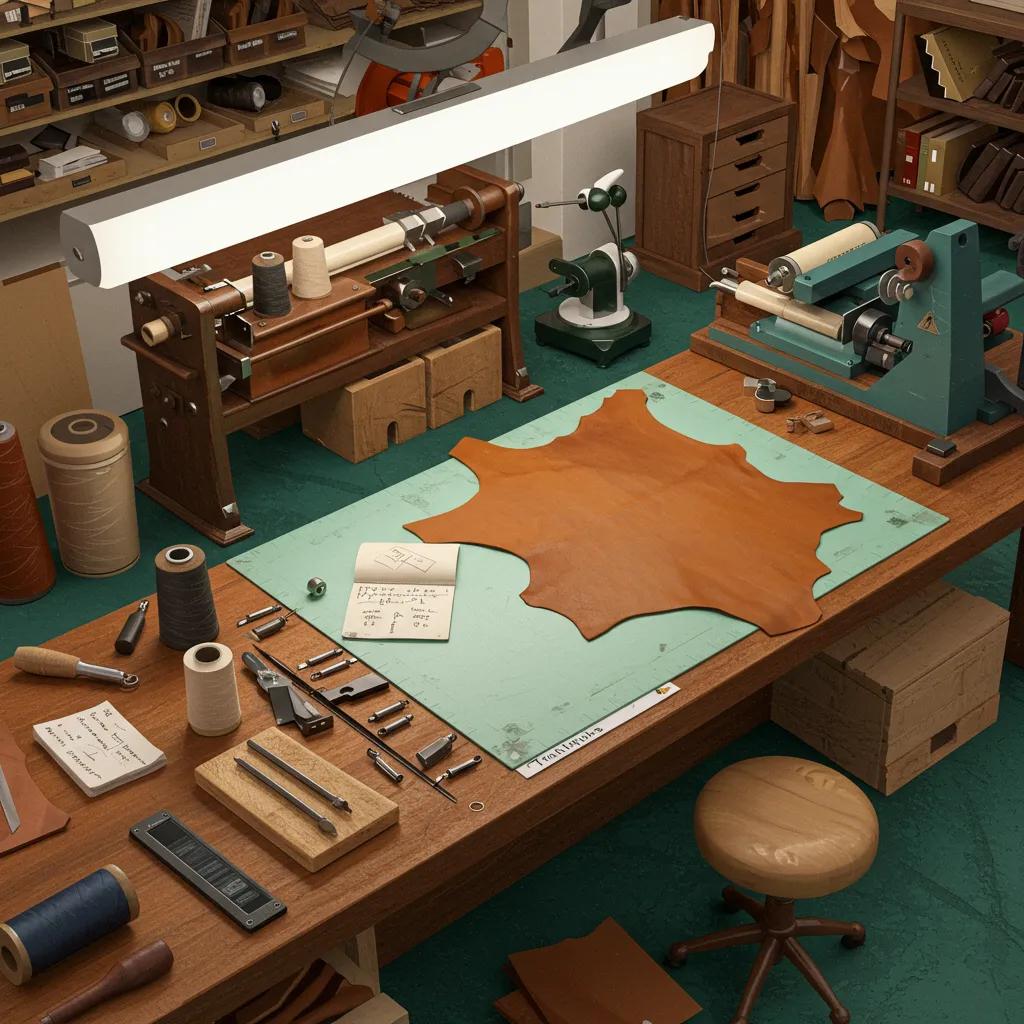
Overcoming Leather Production Challenges with Practical, Sustainable Manufacturing Solutions
Leather manufacturing brings real-world environmental, operational and quality pressures for both makers and buyers. This article lays out the key problems—high water use, complex effluent chemistry, finishing variability and opaque supply chains—and then maps practical, factory-level responses that preserve craftsmanship while lowering risk. You’ll find clear guidance on sustainable tanning choices, wastewater and waste valorization options, traceability and supplier audits, quality checkpoints and targeted process innovations. After we review industry pressure points, we highlight manufacturer practices that enable wholesale and export readiness and list buyer-facing signs of ethical and technical maturity.
Pakistan Leather (trading as Atlanta Enterprises) manufactures and exports custom, hand-stitched leather garments and accessories from Lahore—specializing in jackets, bags, coats, dresses and promotional items. We work with sheep, goat, cow and buffalo hides and provide bespoke color development from a Pantone book. This factual mention frames the practical examples ahead and signals our export-capable, wholesale-ready approach without shifting the focus from broader industry solutions. The analysis that follows moves from core challenges to sourcing, tanning choices, craftsmanship, process innovation and ethical responsibility so buyers and manufacturers can evaluate suppliers and production strategies against concrete criteria.
What Are the Key Challenges in Modern Leather Production?
Today’s leather sector must balance environmental obligations, ethical sourcing expectations and strict quality standards while remaining commercially viable. Tanneries use large amounts of water, work with complex chemistries (including chromium in some systems) and generate effluent and solid waste that must be treated to meet regulations and buyer requirements. On the shop floor, producers contend with uneven dye uptake, stitch tolerance failures and finishing inconsistency that lower yield and raise rework costs. And across the supply chain, raw-hide availability, price volatility and limited provenance visibility make planning harder for exporters and wholesale buyers.
Below are common production challenges and the direct consequences procurement and production teams should prioritize.
- Environmental footprint: High water and chemical use raises compliance costs and can restrict market access.
- Ethical and traceability risks: Poor provenance weakens buyer trust and blocks conscientious channels.
- Operational defects: Uneven dyeing and seam failures reduce yield and extend lead times.
- Supply volatility: Price and availability shifts disrupt schedules and squeeze margins.
These issues require coordinated responses—starting with traceability and supplier audits, continuing through process and chemical choices, and finishing with robust QC and innovation to cut waste and improve throughput. Understanding each vector sets the stage for the targeted sustainability and quality interventions described next.
How Do Environmental Impacts Affect Leather Manufacturing?

Environmental impacts show up as water demand, effluent chemistry, solid waste and energy consumption—each increases compliance costs and affects community relations. Heavy fresh-water use raises a facility’s footprint and exposes it to risk in water-scarce regions; tannery effluent can carry BOD, COD, sulfides and trace metals that need treatment before discharge. These factors drive operating expenses for treatment infrastructure, chemical purchases and possible penalties, while shaping brand reputation in export markets. Process optimization and fit-for-purpose treatment systems reduce long-term costs and regulatory exposure.
Improving environmental performance also improves product marketability and reduces operational risk, which naturally leads to supplier-level practices—traceability and audits—that assure buyers of upstream compliance and responsible sourcing.
What Operational and Quality Issues Commonly Arise in Leather Production?
Common shop-floor problems include uneven dye penetration, stitch-tension and tolerance failures, pattern misalignment, shrinkage or stretch in finishing, and inconsistent surface appearance or hand. Causes range from poorly controlled wet-process parameters and uncalibrated equipment to gaps in artisan training and variable incoming hide quality. Each defect mode lowers yield, increases rework and raises the chance of returns—costs that grow quickly on wholesale and export runs. Introducing process controls, written SOPs and measurable QC checkpoints—color-delta tolerances, seam-strength minima and sampling plans—mitigates these risks and stabilizes output.
Fixing operational failures combines workforce training, calibrated machines and upstream material controls; together these improvements support sourcing transparency and more consistent finishing, which we cover below.
How Does Pakistan Leather Ensure Sustainable and Ethical Leather Sourcing?
Sustainable, ethical sourcing starts with careful supplier selection, batch-level traceability and routine audits that verify provenance and chemical-handling practices. Pakistan Leather sources across sheep, goat, cow and buffalo hides and maintains batch tracking so buyers can trace finished goods back to supplier records and production runs. Traceability lowers buyer risk, supports export compliance and enables targeted recalls or corrective actions. Practical supplier audits focus on animal-sourcing documentation, chemical storage and handling, and basic environmental controls at upstream facilities.
The table below compares common leather types by sustainability and quality traits to help buyers match material choice to product needs and environmental priorities.
This EAV table summarizes how leather types differ by sustainability footprint, durability and typical use cases.
| Leather Type | Sustainability / Quality Trait | Impact / Use Case |
|---|---|---|
| Sheep leather | Soft hand, thinner profile | Best for garments and lined pieces; not ideal for high-wear items |
| Goat leather | Flexible, strong with moderate grain | Well suited for bags and garments needing drape and reasonable abrasion resistance |
| Cow leather | Thicker, high tensile strength | Ideal for structured bags, jackets and heavy-duty goods requiring durability |
| Buffalo leather | Dense fiber structure, very durable | Suited to rugged products that demand long-term longevity |
This quick comparison helps procurement teams trade off tactile needs, lifecycle expectations and finishing requirements. Picking the right hide reduces downstream processing and aligns product type with environmental trade-offs.
What Are the Benefits of Traceability and Supplier Audits in Leather Sourcing?
Traceability and supplier audits turn ethical and environmental commitments into verifiable actions buyers can rely on for compliance and brand protection. Batch IDs, supplier paperwork and documented audit findings reduce supply risk by enabling fast investigation and corrective action when defects or compliance issues appear. Audits commonly review animal-sourcing records, chemical inventories, effluent handling and basic labor conditions—checks that give exporters confidence when entering regulated markets that require provenance evidence. For buyers, verified traceability speeds approvals and strengthens brand stories about responsible sourcing.
When traceability is embedded in production, it also supports quality management: batch-level tracking links finished-good defects to upstream steps and enables targeted process improvements, improving yield and long-term supplier performance.
How Do Different Leather Types Impact Sustainability and Quality?
Hide types involve trade-offs in softness, durability, finishability and environmental footprint that affect product selection and processing routes. Sheep leather is soft and needs gentler finishing, often requiring lining in high-wear pieces; cow and buffalo leathers give tensile strength and longer life but usually need heavier processing and thicker handling; goat leather sits between the two and can balance drape and durability for accessories. These material traits influence tanning choice, dye uptake and finishing steps, which in turn affect water and chemical use.
Choosing material to match the product lifecycle and finish reduces waste, raises customer satisfaction and helps manufacturers optimize processing for a smaller environmental footprint.
What Eco-Friendly Tanning and Processing Methods Reduce Environmental Impact?
Eco-minded tanning focuses on approaches and controls that lower toxic residues, cut chemical load and reduce water use while meeting performance needs. Vegetable tanning, chrome-free systems and hybrid enzyme- or ultrasound-assisted methods reduce heavy-metal residues and can make offcuts more biodegradable versus conventional chrome-heavy tanning. Process controls—staged dosing, closed-loop washes and tuned drum times—cut effluent load and freshwater demand. Advanced treatment steps—biological treatment, membrane filtration and tertiary polishing—are central to minimizing environmental discharge.
Below is a compact comparison of tanning methods to guide choices across environmental impact, cost and finished-leather characteristics.
| Tanning Method | Environmental / Quality Impact | Pros / Cons / Use Cases |
|---|---|---|
| Vegetable tanning | Low heavy-metal residues; longer cycle times | Pros: biodegradable offcuts and a rich hand. Cons: slower throughput and narrower colour range. |
| Chrome tanning (conventional) | High efficiency and color stability; potential chromium residues | Pros: fast and versatile. Cons: requires strict effluent control and careful sludge handling. |
| Chrome-free tanning | Improved wastewater profile compared with chrome; varied chemistries | Pros: lower heavy-metal risk. Cons: may need process tuning for consistent results. |
The emergence of novel metal-free tanning technologies shows clear potential to reduce leather’s environmental footprint.
Sustainable Leather Tanning: Environmental Impact Assessment of Metal-Free Technologies
This life-cycle comparison evaluated a traditional chromium-based process against a novel metal-free tanning technology based on synthetic tannins, using primary data from two Italian plants and background data from Ecoinvent modeled in SimaPro 9.4 for 1 m2 of finished leather. The metal-free route reduced several midpoint impacts versus chrome tanning: particulate matter by 25%, non-carcinogenic human toxicity by 31%, carcinogenic human toxicity by 56% and acidification by 29%. Overall the single-point performance score showed roughly an 18.4% lower impact for the metal-free system. The study also identified cattle breeding as a major contributor to several impact categories and modelled scenarios—such as switching to solar thermal—that could further lower the footprint. A sensitivity analysis examined how the choice of thermal energy source affects results.
How Does Vegetable and Chrome-Free Tanning Improve Sustainability?
Vegetable tanning uses plant-based tannins and typically leaves lower residual heavy metals and more biodegradable offcuts, which reduces long-term environmental liability. Chrome-free chemistries avoid chromium residues and can ease wastewater treatment. Trade-offs include longer process times for vegetable tanning and sometimes narrower colour and finish options, which may increase unit cost and extend lead times. For many premium or artisan lines, however, the sustainability premium fits higher retail and wholesale positioning and justifies the extra time or cost.
Pick an eco-friendly tanning route that matches market positioning and the buyer’s tolerance for lead time and colour flexibility—balancing sustainability gains with commercial realities.
What Technologies Are Used for Wastewater Treatment and Water Conservation?
Tannery wastewater treatment commonly combines physical separation, biological stages and tertiary polishing (membrane filtration, adsorption) to meet discharge standards and enable reuse. Standard units include sedimentation and flotation for solids, activated sludge or biofilm reactors for BOD/COD reduction, and ultrafiltration or reverse osmosis to remove dissolved organics and support closed-loop recycling. Water-saving practices—counter-current washing, optimised drum cycles and metered process control—reduce consumption and the load sent to treatment.
Effective wastewater management is essential to limit pollution and stay on the right side of regulation.
Tannery Wastewater Treatment: A Review of Conventional and Promising Processes
This review summarises two decades of research on tannery wastewater treatment, covering coagulation–flocculation, adsorption, biological treatment, membrane filtration and advanced oxidation processes. It highlights electrochemical treatment as a promising, efficient and environmentally friendly option and argues that integrated or combined systems offer the best multi-function performance. Remaining challenges include chromium residues in sludge and high salinity in effluent; the review recommends research into optimising combinations of methods and improving cost-effectiveness, while pushing treatment systems toward recycling and intensification.
Key performance indicators to monitor include percentage reduction in BOD and COD, TSS removal and water-reuse rate. Tracking these KPIs supports continuous improvement and demonstrates compliance to buyers and regulators.
How Does Pakistan Leather Maintain High Quality and Craftsmanship Standards?
Quality at a manufacturing level combines skilled handcraft, measurable QC checkpoints and production workflows that prioritise durability and finish consistency. Pakistan Leather emphasises custom, hand-stitched goods—using artisan techniques at stress points and decorative seams—and pairs that craft with in-process inspections to maintain stitch density and seam strength. Durability testing and finish checks take place before shipment to ensure export readiness and reduce returns; these practices support wholesale scalability by lowering batch variability. Blending artisanal skill with standardised QC enables premium goods at scale.
The subsections that follow explain specific hand-stitching techniques and list QC checkpoints used through production, giving buyers concrete criteria to assess supplier capability.
What Hand-Stitching Techniques Ensure Durable and Premium Leather Products?
Hand techniques such as saddle stitch and back-stitching create interlocked seams that resist unraveling and distribute stress more evenly than many machine-only stitches. Saddle stitching uses two needles to lock each stitch so a single broken thread doesn’t cause seam failure; back-stitching reinforces corners and high-stress junctions. Skilled artisans apply these methods at joints while machine stitching handles repeatable runs—creating a hybrid workflow that balances speed with longevity. Ongoing training and inspection keep stitch spacing and tension consistent, directly influencing seam strength and perceived quality.
Adopting these hand-stitch standards increases product resilience and supports a premium brand position, while calibrated machine work sustains throughput and cost-effectiveness.
How Are Quality Control Checkpoints Implemented Throughout Production?
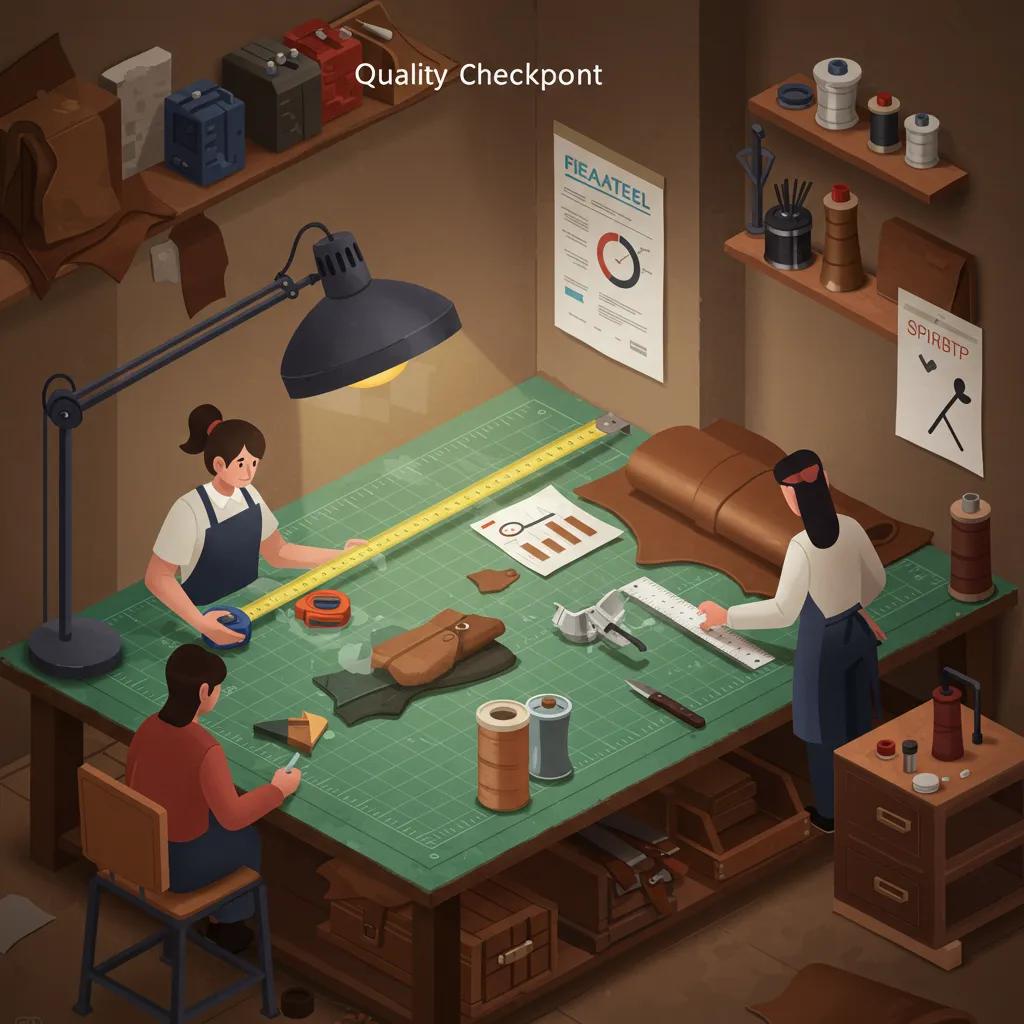
A robust QC programme includes inbound raw-material inspection, in-process checks and final pre-shipment inspection—each with measurable acceptance criteria to guarantee consistency and traceability. Inbound checks verify hide selection, batch IDs and initial defect sorting; in-process controls monitor colour matching, stitch density, seam strength and dimensional tolerance; pre-shipment inspection confirms finish uniformity, packaging and export documentation. Example metrics include maximum allowable colour delta, minimum seam-strength in Newtons and an acceptable visual-defect rate per batch. Regular sampling—such as 5% of units per batch—balances inspection cost with statistical assurance of quality.
The supply chain’s complexity makes robust traceability solutions essential to protect product integrity and sustainability claims.
Blockchain for Leather: Ensuring Traceability and Sustainability in the Supply Chain
The leather supply chain involves many organisations and stakeholders, which can lead to inaccurate records and limited provenance. This paper proposes a blockchain-based solution using Ethereum smart contracts to create immutable, decentralised traceability from farm to consumer. By securing provenance data on-chain, the approach aims to guarantee data integrity and transparency, supporting trusted sustainability claims and reliable product tracing throughout the leather life cycle.
A documented QC checklist with defined sampling rates and acceptance thresholds reduces rework and increases buyer confidence in consistent delivery.
What Innovations Drive Efficiency and Customization in Leather Manufacturing?
Innovation in leather manufacturing pairs automation for repetitive tasks with digital tools that enable precise customisation and resource savings. CNC cutting and automated embossing increase repeatability and reduce waste, while leaving finishing and hand-stitching to artisans preserves premium hand-feel. Digital colour‑matching tied to Pantone libraries speeds bespoke colour development and improves first-pass accuracy. Wastewater digital monitoring and process analytics enable targeted interventions that lower chemical use and water consumption, improving environmental KPIs and reducing operating cost.
The table below compares technologies by primary benefit and example outcomes to help manufacturers prioritise investments that deliver both efficiency and customisation.
| Technology / Process | Benefit | Example Metric or Outcome |
|---|---|---|
| Automation (cutting/embossing) | Repeatability and material savings | 10–20% improvement in material yield |
| Digital color-matching | Faster custom colour approvals | 30% reduction in colour-mismatch rework |
| Wastewater digital monitoring | Targeted treatment optimisation | +15% improvement in water reuse rate |
How Is Automation Enhancing Leather Production Processes?
Automation focuses on high-repetition tasks—precise cutting, programmed embossing and some programmed stitching—boosting throughput, reducing material waste and delivering tighter tolerances than manual methods. In hybrid workflows, machines handle repeatable geometry while artisans complete hand-finishing and complex stitching to preserve hand-feel. Measurable benefits include lower scrap rates, shorter lead times and more predictable seam allowances, which support larger wholesale batches. Still, automation doesn’t replace artisan work in surface finishing and complex assemblies, so workflows should be designed to use both strengths.
Balancing automation with hand-finishing enables scalable, bespoke production that meets durability and aesthetic targets—essential for export-ready manufacturers.
What Custom Design Options Does Pakistan Leather Offer for Unique Products?
Pakistan Leather provides bespoke design services: custom patterns, Pantone-based colour development, hide selection across sheep, goat, cow and buffalo, and hand-stitched finishing tailored to client specs. Our Pantone colour matching shortens approval cycles for brand orders, while artisan finishing delivers unique textures and reinforced stress points. For wholesale and export clients we support scalable batches with documented traceability and pre-shipment QC to ensure consistency. Lead times for bespoke work depend on tanning and finishing choices; eco-friendly tanning routes typically require longer processing windows.
These options show how a manufacturer can combine technical capability and craft to serve retail and wholesale customers with consistent quality.
How Does Ethical Responsibility Shape Pakistan Leather’s Production Practices?
Ethical responsibility spans animal-welfare controls, worker safety, fair-labour practices and community engagement—areas that reduce reputational and compliance risk for exporters. Pakistan Leather uses supplier audits and batch traceability to verify legal sourcing and humane handling upstream, and implements worker-safety measures and labour oversight to maintain stable capacity. Clear policies and documented practices help buyers assess ethical risk and show readiness for regulated markets. Embedding these practices in procurement and production creates measurable buyer value through lower risk and more reliable supply.
The subsections below describe animal-welfare verification and worker-safety measures, with practical checkpoints buyers can request when evaluating suppliers.
What Animal Welfare Standards Are Followed in Leather Sourcing?
We verify animal welfare through supplier documentation, traceability and targeted audits that check legal sourcing and humane handling at origin. Practical audits review supplier paperwork, confirm batch records and inspect handling and transport conditions during site visits—steps that reduce ethical risk and support export compliance. Although specific certifications are not listed here, buyers should request provenance documentation and audit summaries to assess supplier alignment with their standards. Traceability remains the verification backbone, linking finished goods to supplier records for objective evaluation.
Transparent audit trails and supplier openness help mitigate buyer concerns about sourcing ethics and support long-term partnerships.
How Are Worker Safety and Fair Labor Practices Ensured?
Worker safety and fair labour are backed by written safety protocols, basic personal protective equipment (PPE), regular training and oversight of working hours and conditions—measures that protect staff and preserve product quality. Training raises skills for tasks such as saddle stitching and finishing, lowering defect rates and enabling consistent output for wholesale clients. Fair-labour practices reduce turnover and support predictable capacity planning—crucial for large or repeat orders. Buyers can ask for training summaries and safety procedure documents as part of supplier due diligence to confirm responsible production practices.
Integrating worker welfare into operations reduces business risk and supports dependable, high-quality delivery that meets buyer expectations.
For wholesale or export enquiries, Pakistan Leather can supply product samples, bespoke Pantone colour matching and documented batch traceability. Contact us at info@leather.com.pk or by phone at +92 300 4597039.
Frequently Asked Questions
What are the main environmental concerns associated with leather production?
The main environmental concerns are high water demand, chemical pollution from tanning processes and solid-waste generation. Tanneries can put pressure on local water resources, especially in arid regions, and tanning chemicals like chromium pose contamination risks if not managed. Solid waste from cutting and finishing also requires careful disposal or valorisation. Addressing these points is central to sustainable leather manufacturing and reduced ecological impact.
How can consumers identify ethically sourced leather products?
Consumers can look for certifications or labels showing compliance with animal-welfare and environmental standards, and favour brands that publish supply-chain transparency and traceability. Companies that share supplier audit summaries, provenance data and tanning-method information are more likely to follow responsible practices. Contacting brands directly about sourcing and labour practices is also an effective step.
What role does technology play in improving leather manufacturing sustainability?
Technology helps in multiple ways: automation reduces material waste, digital monitoring tracks water and chemical use, and advanced wastewater treatments lower discharges. Digital colour-matching tools speed approvals and reduce dye rework. Together these technologies cut resource use and help manufacturers meet quality and sustainability targets.
What are the benefits of using vegetable tanning over traditional methods?
Vegetable tanning uses plant-derived tannins and generally leaves lower heavy-metal residues, yielding biodegradable offcuts and a distinctive hand. It’s environmentally preferable in many respects, though it can be slower and offer a narrower colour range compared with chrome-based processes. For artisanal and premium lines, the aesthetic and sustainability benefits often outweigh longer lead times.
How can manufacturers ensure consistent quality in leather products?
Consistent quality comes from a structured QC programme: inbound inspections, in-process controls and final pre-shipment checks, backed by measurable acceptance criteria and sampling. Investing in workforce training and equipment calibration also reduces defects, producing more reliable batches and fewer returns.
What are the implications of supply chain transparency in leather production?
Supply-chain transparency improves ethical sourcing and consumer trust. Clear provenance and supplier-practice visibility mitigate risks tied to animal welfare or environmental harm, strengthen brand reputation and increase customer loyalty. Transparent chains also make regulatory compliance and product claims easier to defend.
How does Pakistan Leather differentiate itself in the global market?
Pakistan Leather combines artisanal craftsmanship with sustainability-minded practices and a focus on quality. Our hand-stitched, custom leather goods and Pantone-based colour development serve diverse client needs, while traceability and documented QC build buyer confidence. Integrating practical technologies with skilled hand finishing helps position us as a competitive, export-capable partner in the international leather market.
Conclusion
Sustainable leather manufacturing reduces environmental impact while strengthening product quality and market access. By adopting traceability, eco-friendlier tanning and rigorous quality controls, manufacturers can lower their footprint and meet ethical sourcing expectations. Buyers should prioritise suppliers who can demonstrate these practices to ensure a responsible, high-quality leather supply chain. Contact us to explore how we balance craftsmanship and sustainability on your next project.


