
Methods for Stitching Leather
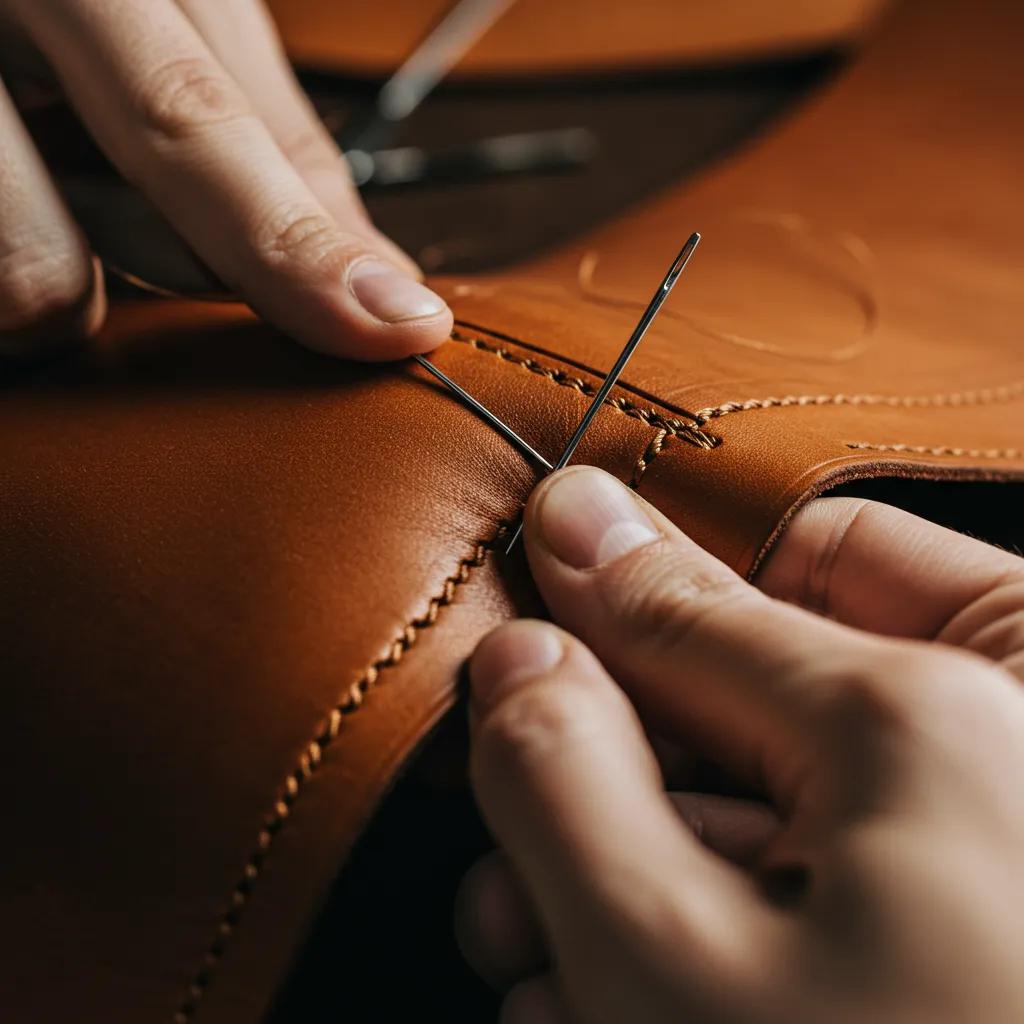
How We Stitch Leather: A Practical Guide to Hand and Machine Techniques
Stitching is where a leather piece proves itself — in daily wear, in repairs, and up close. This guide breaks down what leather stitching is, why your stitch choice matters for durability and serviceability, and how hand and machine methods trade off strength, speed and finish. You’ll learn how the saddle stitch works, how lockstitching compares, which tools and materials matter, and step-by-step practices that deliver consistent seams. We map practical rules for jackets, bags, wallets and motorcycle gear, explain key industrial machine features, and show how stitch decisions shape both design and longevity. Throughout, you’ll find side-by-side comparisons, numbered saddle-stitch steps, and clear checklists to help pick the right approach for production or repair.
Top Hand Stitching Techniques for Leather — Which Work Best?
Hand stitching means sewing leather with needles and thread rather than a powered machine. Craftspeople value it for redundancy, repairability and its visible, finished edge. Most hand methods — especially the saddle stitch — use two threads or two needle passes that lock inside each hole. That internal interlock stops a single broken stitch from running the seam. The result is superior durability for high-wear parts like wallets and handles and a tactile, handmade edge. The table below gives a quick comparison to help you choose by strength, repairability, speed and best uses.
Hand stitches differ in complexity and look; matching stitch to function gives better, longer-lasting results.
| Stitch Type | Key Traits (Strength, Repairability, Speed, Best Uses) | Notes / Typical Applications |
|---|---|---|
| Saddle stitch | Very strong; highly repairable; moderate speed | Favored for load-bearing seams — bag handles, wallets, gussets |
| Running stitch | Lower strength; easy repair; fast | Good for temporary joins, linings and basting steps |
| Box stitch | High corner strength; repairable; slower | Used at right-angle joins and reinforcement points on bags |
| Cross stitch | Moderate strength; decorative; slower | Applied for visible accents and decorative panels |
This snapshot explains why the saddle stitch is preferred for tensioned seams while running and decorative stitches serve supporting roles. The sections that follow unpack saddle mechanics and common hand stitches to guide your selection.
Why the Saddle Stitch Lasts — The Mechanics Behind the Strength
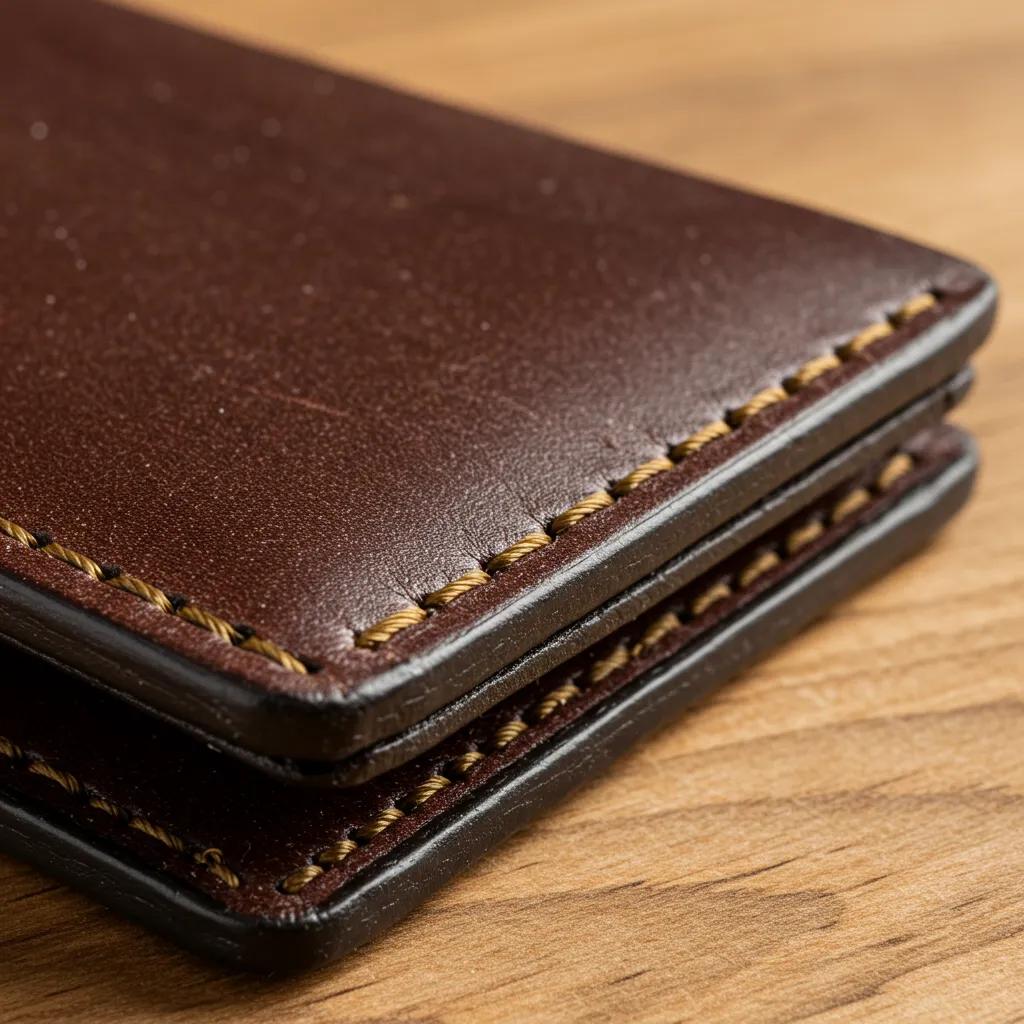
The saddle stitch uses two needles and a single thread run so each needle passes the same hole from opposite sides. Inside the leather the threads interlock, preventing the seam from unravelling if one thread breaks. Load is shared across both threads, so the seam keeps working under shear and abrasion — exactly why it’s the go-to for gussets, wallet edges and strap joins. The stitch also lets you repair a small section without taking the whole seam apart, extending product life. For premium leather goods where serviceability matters, saddle stitching delivers both strength and long-term value.
With that foundation, it’s easy to see when alternate hand stitches are useful on different parts of a product.
Other Common Hand Stitches: Running, Box and Cross — When to Use Each
A few hand stitches complement the saddle stitch by offering speed, decorative effect or local reinforcement. The running stitch is a single-thread, fast option for temporary joins, linings or basting before a permanent seam. The box stitch focuses material at a square junction to reinforce corners and strap anchors. Cross stitches and other decorative patterns add visual contrast while providing moderate support — often used on jacket panels or accent areas to showcase handcrafted detail. Together these stitches form a practical toolkit: saddle for strength, running for speed, box for corner loads and cross for visible detail.
Machine Sewing vs Hand Stitching — How They Compare for Leather
Machine sewing relies on powered machines that form stitches mechanically, most commonly a lockstitch. Machines deliver fast, consistent seams for high-volume runs. A lockstitch interlocks needle and bobbin threads inside the material to make uniform stitches, but it lacks the internal redundancy of a saddle stitch — a broken lockstitch can run if not secured. For manufacturers, machines trade repairability for throughput and lower labor cost per unit, so they’re commonly used for internal seams, long joins and bulk production where consistency and speed are priorities.
Below is a concise comparison to help production teams decide which method to use.
| Technique | Considerations (Speed, Cost, Strength, Typical Use) | Notes |
|---|---|---|
| Hand saddle stitch | Slow; higher labor cost; very high strength | Best for visible, high-wear seams on premium products |
| Industrial lockstitch machine | Very fast; lower labor cost per unit; good strength | Ideal for linings, multi-panel joins and large runs |
| Hybrid (machine + hand finish) | Balanced speed and appearance; moderate cost | Machine for main assembly, hand finish for visible edges |
This comparison shows when machine sewing improves production efficiency and when hand stitching justifies its cost through durability and perceived value. Next we look at industrial machine features and how to choose between machine and hand.
What Makes an Industrial Leather Sewing Machine Fit for Purpose?
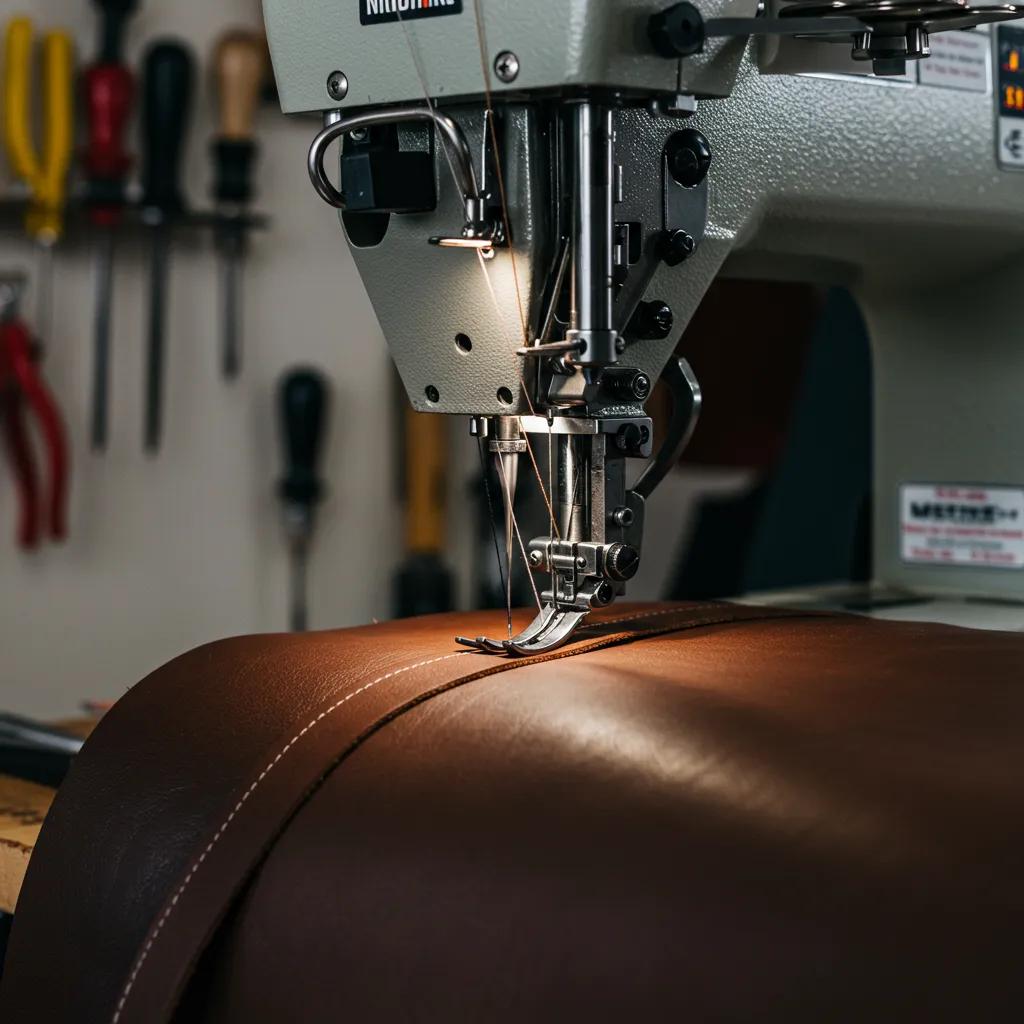
Industrial leather machines are built for torque and material control: high-torque motors, walking-foot or compound-feed systems, and heavy-duty needle assemblies keep thick hides moving without slipping. Walking-foot or compound-feed synchronizes needle and material feed to prevent layer shift on multi-ply assemblies like motorcycle jackets. Robust needles, adjustable tension and specialized presser feet help form consistent stitches and avoid skipped stitches or puckering. Machine selection depends on product type — flat-bed for garments, cylinder-arm for rounded parts, post-bed for structured accessories — and smart setup reduces variability across long runs.
Choosing the right equipment is a key step in optimizing efficiency and quality for leather production.
Picking the right machines and setup lets manufacturers scale quality while meeting production targets.
Algorithm for Selecting Sewing Machines for Leather Garment Manufacturing
The tools and techniques for garment processing evolve as new materials and machinery appear. This study develops a decision approach for choosing equipment that matches material properties and process requirements when working with artificial leather. By reviewing machine options and manufacturers, the authors selected Juki machines to build a matrix of equipment choices and produced a morphological scheme and mathematical description to capture the production variables and their interactions.
When to Favor Machine Stitching Over Hand Stitching
Choose machine stitching when throughput, consistency and unit cost drive decisions — typical for wholesale and export production. Machine seams suit internal joins and long uninterrupted seams where speed outweighs redundant thread paths. For high-volume items like mass-produced jackets or belts, machines improve lead times and maintain consistent quality. A hybrid approach — machines for structure and hand finishing for visible seams — often gives the best balance of economy and premium appearance. Weigh expected lifetime, repairability and perceived value against production budgets to find the right mix.
These decision rules lead naturally to the tools and materials that make chosen methods perform well.
Tools and Materials You Need for Reliable Leather Stitching
Good stitching starts with matching tools and materials to leather weight, stitch type and intended use. Essential items include awls and pricking irons, waxed thread, leather needles, a stitching pony, and machine-grade needles and thread. The right components control hole size, stitch density and friction — all factors that affect seam strength and finish. The table below maps tools to their purpose so you can set up correctly for any project.
| Tool / Material | Purpose (Best For) | Notes |
|---|---|---|
| Awl / Pricking iron | Make holes and set stitch spacing; ideal for hand seams | Use pricking irons for uniform spacing; awls to adjust hole size |
| Waxed thread | Reduces friction and resists moisture; ideal for saddle stitch | Waxed linen or polyester thread improves longevity and pull-through |
| Leather needles | Stronger needles for hand stitching | Choose blunt or sharp point based on hole type and leather grain |
| Industrial needles & thread | Machine-compatible consumables for production sewing | Match needle size and thread strength to leather weight and layers |
This quick mapping helps you match tools to function so stitch performance is predictable. The sections that follow focus on awls, needles, waxing and machine consumables in more detail.
The Role of Awls, Needles and Waxed Thread in Hand Stitching
An awl or pricking iron sets hole geometry and spacing, which controls stitch density and seam flexibility. Larger holes work with thicker leather and heavier thread; fine holes protect grain on light hides. Leather needles are stronger and sized to pass through pre-punched holes without bending; choose blunt or sharp depending on whether you are widening existing holes or piercing grain. Waxed thread adds friction inside the hole and resists moisture, stabilizing tension and reducing loosening over time. Maintain your tools and choose sizes that match leather thickness to produce consistent seams and reduce rework.
How the Right Machine Setup Improves Stitch Quality
Needle type, thread choice, tension and presser foot all shape how a machine forms stitches on leather. The correct needle gauge prevents skipped stitches and breakage; balanced tension lets needle and bobbin threads lock cleanly without puckering. Presser foot pressure and feed type must be tuned for layered materials to avoid stretching or misalignment. Regular troubleshooting of skipped stitches, uneven feed or thread breakage keeps production moving. Good machine setup preserves seam integrity while delivering the speed manufacturers need.
With tools and materials chosen correctly, stitching choices translate directly into stronger, better-looking products.
How Custom Stitching Boosts Design and Durability
Stitch decisions — stitch type, spacing, thread color and reinforcement — affect both how a product looks and how it performs. Stitch spacing and thread strength control load distribution; contrast or tone-on-tone thread becomes a design signature that signals craftsmanship. Reinforcements like bar tacks and box stitches at stress points extend service life, and color-matched stitching ties into the product’s overall aesthetic. Below are common custom details and a short note showing how custom options pair with manufacturing capabilities and color matching.
Brands that offer custom stitching combine design and durability to deliver tailored, long-lasting items.
Popular Custom Stitching Details for Jackets and Bags
Common custom options include contrast topstitching to define pattern lines, reinforced bar tacks at strap junctions, double-row topstitching for visual weight and extra strength, and decorative braiding or welt piping for accent panels.
These details vary in complexity and cost: contrast stitching is quick to add but visually effective, while braided or piped edges require extra tooling and hand finishing. Thread color and pattern choice must coordinate with leather surface and dyeing. For higher-end projects, precise color matching ensures thread and leather tones align across production. Paying attention to these details makes stitching an intentional part of both design and performance.
Manufacturers can supply samples and demonstrate stitches on actual products to validate technique and materials. Pakistan Leather (also known as Atlanta Enterprises) showcases hand-stitched jackets and bags as saddle-stitch examples and provides visual references on their Pinterest profile for buyers assessing custom quality or wholesale options.
This practical link between method and product gives readers manufacturer-level validation without disrupting the instructional focus.
How Stitching Choices Affect Longevity of High-End Goods
Stitch type, thread quality and stitch density determine how loads are shared and how seams stand up to wear, UV and moisture. Higher stitch density with strong waxed thread increases fatigue resistance but requires more labor. Hand-stitched seams — especially saddle stitches — allow local repairs and prolong life because a single thread failure doesn’t destroy the whole seam. Machine lockstitches can be secure, but they may need larger repairs if they unravel. Using premium threads and reinforcing stress points with bar tacks or box stitches reduces common failures like pull-out and abrasion. Designing for serviceability keeps value in the product longer — a strong selling point for premium leather goods.
Understanding these longevity drivers leads into practical hand-stitching procedures and repair techniques that preserve seams in the field.
Best Practices for Hand Stitching Leather
Follow accurate hole preparation, consistent stitch spacing and tension, the right thread and needles, and secure finishing techniques to get reliable hand-stitched seams. Even holes from a pricking iron or awl ensure uniform stitch length. A stitching pony or clamp stabilizes work and keeps tension consistent. Regularly wax thread and use secure knots or backstitching to prevent slippage. Below is a step-by-step saddle-stitch summary followed by tips for maintenance and repair.
These procedural steps help both beginners and experienced makers produce durable hand-stitched seams.
- Tools and setup: Gather a pricking iron or awl, two needles, waxed thread, a stitching pony and a clamp to steady the work.
- Mark and punch: Lay out even stitch spacing and punch holes with a pricking iron or awl to control alignment and hole size.
- Saddle stitch technique: Thread two needles on each end of a length of waxed thread, pass both needles through each hole from opposite sides, pull evenly to set tension and work sequentially down the seam.
- Finish and reinforce: Lock the seam with secure knots or overlapping stitches, trim excess thread, and burnish or edge-finish the seam to protect against abrasion.
Using the correct tool sizes for your leather weight and following these steps produces a dependable saddle stitch. The next section gives a compact saddle-stitch sequence and notes on common mistakes to avoid.
Step-by-Step: How to Execute a Clean Saddle Stitch
Begin by matching thread thickness to leather weight and cut a working length of waxed thread roughly four times the seam length. Prepare needles on both ends for uninterrupted stitching. Mark and punch evenly spaced holes with a pricking iron, then secure the work in a stitching pony to maintain angle and tension. Pass one needle and then the other through the same hole from opposite sides, pull both threads until the stitch seats cleanly, and keep tension even to avoid puckering. Lock the end by overlapping a few stitches, trim tails and, if desired, tuck or slightly melt the thread knot beneath the leather for a neat finish.
Following these steps helps prevent uneven tension, skipped holes and weak finishes. Manufacturers can also provide samples and demonstrations to validate techniques on real products — an option Pakistan Leather (Atlanta Enterprises) uses to show saddle-stitch applications and quality.
Maintaining and Repairing Hand-Stitched Leather
Routine care keeps hand-stitched pieces serviceable: clean gently, condition to maintain suppleness and inspect stitch lines for abrasion or fraying — address issues early to avoid progressive failure.
For spot repairs, remove only the damaged thread and re-stitch the affected area using the original stitch pattern and a matching thread, keeping hole alignment and tension consistent. For extensive damage, replace the seam segment or consult a professional repair service that can match spacing and color. Proper storage — out of direct sun and away from high humidity — also protects leather and thread from accelerated wear.
Knowing when to do a local repair and when to rely on professional restoration preserves both value and usability. At the end of this section, production buyers may request sample pieces or wholesale quotes from manufacturers combining hand and machine work. Pakistan Leather (also known as Atlanta Enterprises) lists hand-stitched jackets, bags and garments on their Facebook page and invites inquiries for samples and custom production.
This manufacturer invitation keeps the article educational while offering a clear next step for buyers seeking production-level validation.
Advantages and Limitations of Different Stitching Methods
Each stitching method brings distinct benefits: hand stitching adds redundancy and an artisanal finish, while machine stitching gives speed, consistency and lower per-unit labor cost. Each also has limits that affect product strategy. Hand stitching is time-intensive and raises unit cost despite its repairability and perceived value; machine stitching scales efficiently but may need extra finishing to meet premium expectations. A hybrid approach — machine-sewn structure with hand-finished visible seams — balances throughput and perceived value. The short summary below highlights these trade-offs to inform design and production choices.
Use these pros and cons when aligning product specs with manufacturing processes.
- Hand stitching: superior repairability, high perceived value, and resilience at high-stress seams.
- Machine stitching: fast throughput, consistent stitch formation and lower labor cost at scale.
- Limits: hand stitching increases time and cost; machine stitching offers less redundancy and can be harder to repair.
These characteristics point to product roles: hand stitching for premium visible seams, machines for internal joins and volume lines, and hybrid approaches where both benefits are needed.
Why Hand Stitching Remains a Top Choice for Premium Leather
Hand stitching communicates craftsmanship and delivers real longevity through redundant stitch patterns and easier repairs — attributes premium buyers value because they preserve resale and sentimental value. Visible saddle stitches and carefully chosen topstitching are both functional and part of the product story, helping justify higher price points. Local repairability also reduces full-seam replacements and extends useful life, making hand work attractive for high-end jackets, bespoke bags and heritage pieces.
This explains why luxury and heritage brands often reserve hand stitching for signature seams and visible details.
Speed and Cost Advantages of Machine Stitching
Machine stitching greatly increases throughput, cutting labor hours per unit and enabling competitive wholesale pricing for high-volume lines. Modern industrial machines hold stitch length and tension steady across long runs. For products where consistency and lead time matter — such as export garments — machine sewing reduces cost of goods sold and supports reliable delivery. Economies of scale often offset reduced repairability by allowing replacement manufacturing rather than repair. Hybrid strategies can combine machine assembly with hand finishing on trim to deliver both efficiency and premium appearance.
These trade-offs complete the framework for selecting stitch methods across product ranges and production models.
Frequently Asked Questions
How should I choose between hand and machine stitching for a project?
Decide based on the item’s purpose and budget. Choose hand stitching for visible seams, repairability and a premium finish. Choose machine stitching when speed, consistency and lower per-unit cost matter. For mixed goals, use machines for main assembly and hand finish the visible edges.
How can I improve my hand-stitching technique?
Start with the right tools: a pricking iron for even holes, quality waxed thread, and a stitching pony for tension control. Practice consistent stitch spacing and even pull on each stitch. Inspect alignment as you go and learn from video tutorials or workshops to pick up advanced tips.
Which leathers are best for hand stitching?
Vegetable-tanned and other firmer, thicker leathers hold stitches best and suit high-wear items like wallets and bags. Softer leathers are easier to work but may require reinforcement or different stitch choices to avoid seam failure. Match leather choice to the product’s function and desired look.
Can I use machine stitching for decorative work?
Yes. Many industrial machines produce decorative topstitching and patterned stitches that enhance design. Use contrasting thread or specialty stitches for effect, and be sure machine settings prevent puckering or damage to the leather.
What maintenance does a hand-stitched leather item need?
Clean gently, condition regularly and inspect stitch lines for wear or fraying. Address small issues early to avoid larger repairs. Store items away from direct sunlight and excess humidity to protect both leather and thread.
How does thread choice affect stitch quality?
Thread choice is critical. Waxed threads reduce friction, hold tension and resist moisture — ideal for hand stitching. Thickness should match leather weight: thicker thread gives strength but needs larger holes. Thread material (linen vs polyester) affects both performance and appearance, so choose to fit the product’s needs.
Conclusion
Whether you sew by hand or machine, good stitching makes leather goods last and look better. Understanding each method’s strengths and limits helps you choose the right approach for your production goals and customers. Use the guidelines here to improve durability, finish and repairability — and reach out to suppliers or manufacturers for samples and production support to validate your decisions. Ready to start? Explore the right tools and materials and take your leatherwork to the next level.


