
Methods for Dyeing Leather
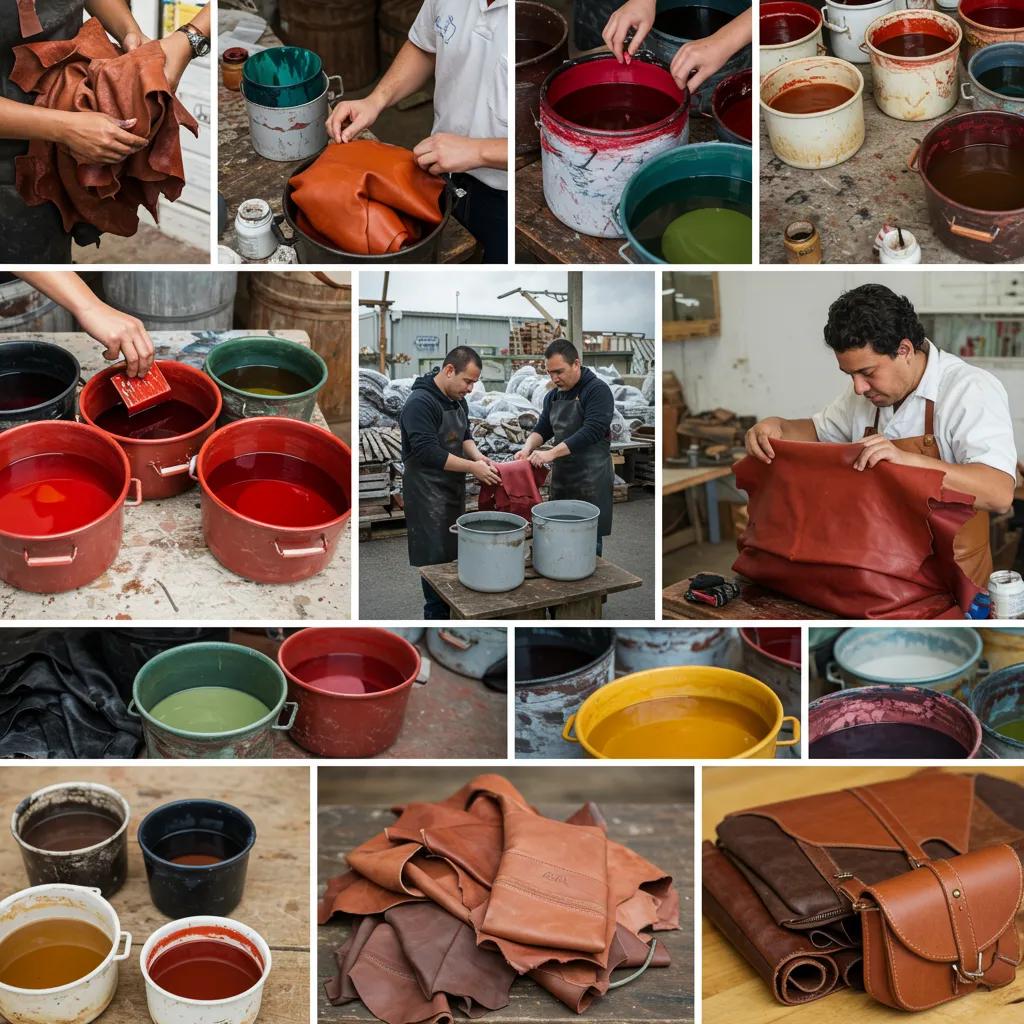
Leather Dyeing Methods: Practical Techniques and Custom Color Solutions
Dyeing turns raw hides into finished products with the right color, character, and durability. This guide walks through the main dye chemistries, industrial and handcraft techniques, preparation and aftercare, and how Pantone matching and factory workflows keep results consistent. You’ll learn which dye types suit different leathers, how application methods shape finish and wear, and step-by-step prep and sealing practices that protect colorfastness. We also cover QA measures—batch control, lightfastness and rub testing, and topcoat selection—that reduce returns and meet export standards for jackets, bags and small goods. Finally, we share practical manufacturer examples showing how drum and hand methods are combined and how bespoke Pantone workflows are executed for custom orders.
If you’re a brand or designer needing sample swatches or Pantone-matched proofs, we include a short request process below so you can start a bespoke color project quickly.
What are the main leather dye types and how do they behave?
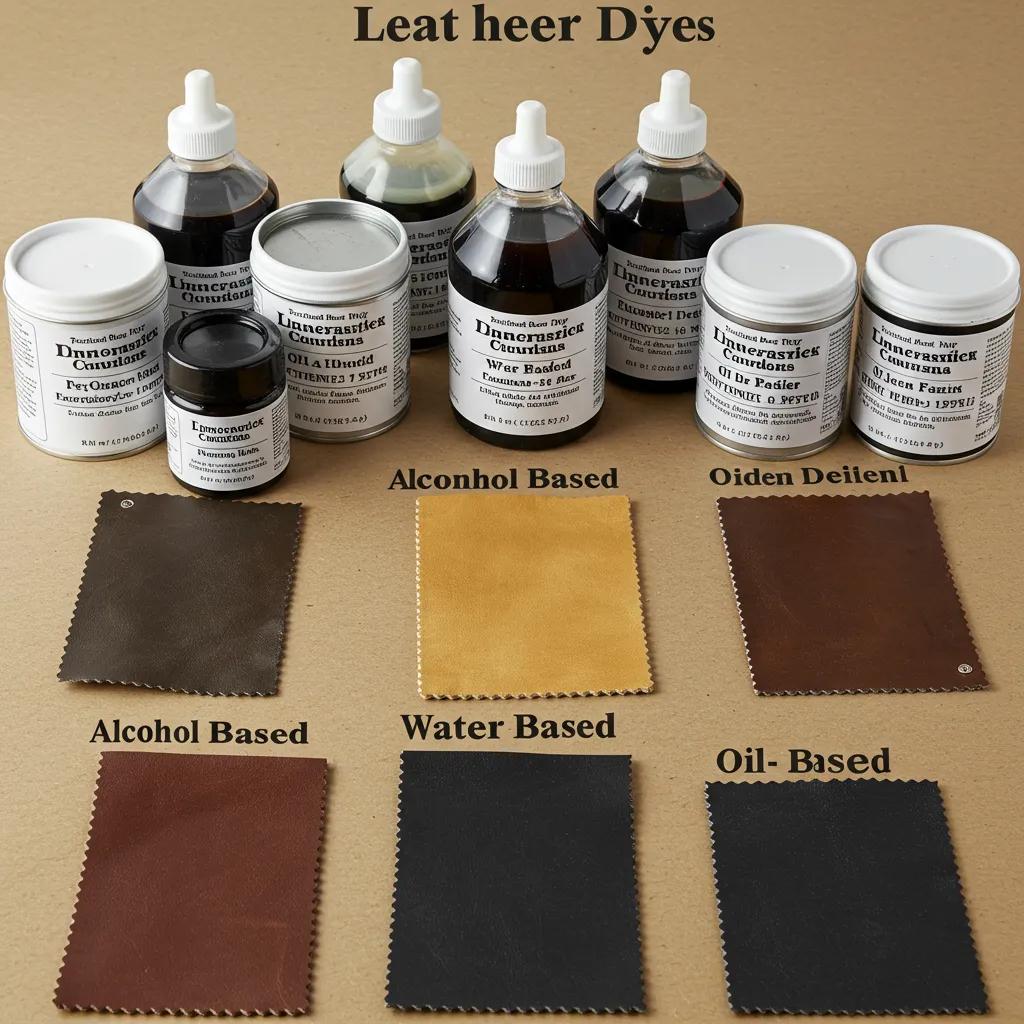
Leather dyes are organized by base chemistry, which drives penetration, color intensity and the resulting hand. Knowing these bases explains why some dyes highlight grain while others give opaque coverage—and why VOCs and toxicity affect ventilation and export compliance. Below we compare alcohol-, water- and oil-based systems and touch on specialty and natural options for artisanal or sustainable work. The table summarizes performance and best-use cases for common leathers like full-grain, vegetable-tanned and suede.
| Dye Base | Penetration & Effect | Best Use Cases |
|---|---|---|
| Alcohol-based dyes | Deep penetration, very vivid and transparent color; may tighten fibers and slightly firm the hide | Full‑grain garments and pieces where clear, rich color and visible grain are desired |
| Water-based dyes | Moderate penetration with a softer hand and lower VOCs; tones are often subtler | Supple leathers, eco-conscious lines and lightweight goods |
| Oil-based dyes | Good penetration while preserving conditioning oils; keeps leather flexible | Heavy cow and buffalo hides, work/leisure goods that need lasting suppleness |
Choosing the right dye base affects both aesthetics and how the leather feels and handles—correct selection lowers rework and keeps the intended hand.
Which dye base is right: alcohol, water or oil?
Each base serves a purpose. Alcohol dyes penetrate deeply and give transparent, vibrant color that shows grain—ideal for high‑end full‑grain jackets and luxury accessories. Water‑based dyes offer gentler tones with lower VOCs, suited to lighter garments and brands prioritizing lower emissions. Oil‑based dyes often include conditioning oils, helping thicker hides stay supple and resist cracking. Base choice also affects ventilation, drying time and sealer compatibility—always test on representative scrap before running full batches.
What about specialty and natural dyes?
Specialty systems expand options: pigments give opaque, uniform color for mass production; natural dyes (plant extracts, tannins) create unique, handcrafted looks that appeal to eco-conscious buyers but may trade off some colorfastness. Other specialty finishes—wax dyes, resolene-style sealers and retrofit topcoats—add protection, sheen or controlled patina. Designers and manufacturers pick among these based on wear expectations, durability needs and environmental or regulatory limits for export.
Function and appearance intersect—your choice depends on leather grade and intended use.
How do different dyeing techniques work and what finishes do they produce?
Techniques control uniformity, opacity and scale. Results range from transparent aniline looks to opaque, surface-bound pigment finishes. Methods include full immersion (drum dyeing) and surface application (spray, hand daubers); each influences penetration, uniformity and production speed. The table below maps common techniques to finish, scalability and typical product uses to help choose the right method for jackets, bags and small goods.
| Technique | Application Mechanism | Finish Type & Uniformity | Typical Product Applications |
|---|---|---|---|
| Aniline dyeing | Soluble dyes penetrate the hide | Transparent finish that reveals grain and natural variation | Luxury jackets, premium upholstery |
| Pigment coating | Surface pigments held with binders | Opaque, uniform surface that conceals imperfections | Bags, mass-produced small goods |
| Drum dyeing | Hides tumbled with dye liquor | Highly uniform penetration suited to large batches | Wholesale garments and large-order production |
Technique choice is both aesthetic and practical: drums prioritize repeatability and throughput, while aniline preserves natural character.
What is aniline dyeing and how does it change appearance?
Aniline dyeing uses soluble dyes that soak into the hide without covering the grain, producing rich, transparent color and keeping texture and suppleness. It’s suited to high‑grade full‑grain leathers where natural variations and patina are desired. The trade‑off is less surface protection—aniline items need careful finishing and conditioning to resist UV and abrasion. Designers choose aniline when depth and natural expression matter more than uniformity.
How does pigment dyeing differ and when should it be used?
Pigment systems apply color as a surface layer bound by polymers or resins, producing an even, opaque look that hides blemishes. When paired with the right topcoat, pigments deliver strong rub and lightfastness, making them ideal for bags, belts and heavy‑use items. Surface color also simplifies batch matching because it’s less affected by hide variability—useful when you need consistent results across large orders.
Drum dyeing vs hand dyeing—how do factories use both?
Drum dyeing immerses and tumbles hides so dye liquor moves through the thickness, yielding excellent uniformity and high throughput for wholesale runs. Hand dyeing—using daubers, sponges or brushes—creates gradients, antiquing and bespoke effects for small batches. Many manufacturers combine methods: drums set a consistent base color, and hand techniques add surface nuance or detailing. This balance lets factories deliver scale without losing artisanal finishes.
Here are concise manufacturer use-cases that tie technique → product → finish in practice.
Pakistan Leather uses drum dyeing for bulk jacket runs to achieve even base color and consistent grain appearance, keeping unit costs competitive for wholesale clients. For bespoke bags and hand‑stitched wallets, Pakistan Leather pairs pigment coatings with careful hand finishing to deliver tough, uniform surfaces that withstand shipping and wear. For premium full‑grain jackets that need depth and visible grain, Pakistan Leather employs aniline dyeing followed by measured topcoats and conditioners to balance patina with protection for export markets.
These examples show how production choices translate design intent into repeatable goods.
How should leather be prepared before dyeing for best results?
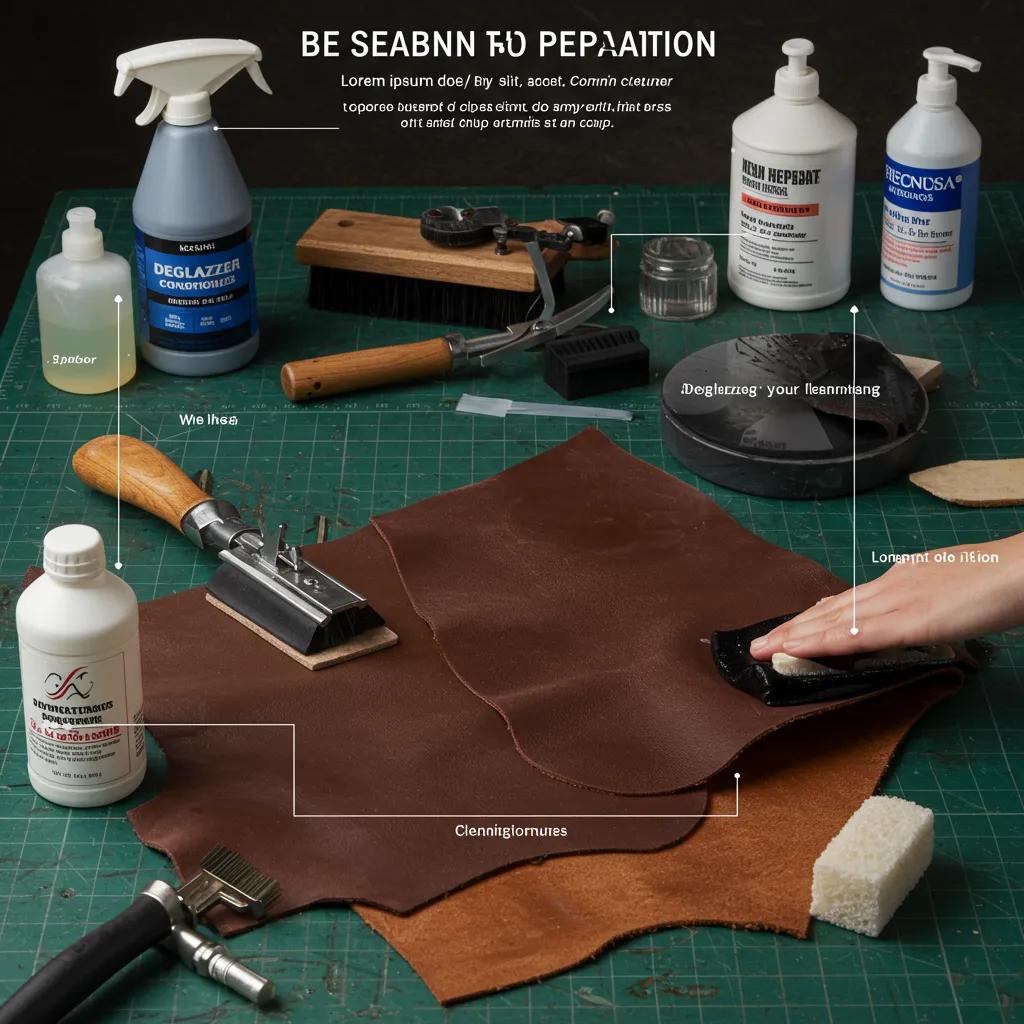
Preparation sets the chemical and physical conditions for even dye uptake and long-term performance. Key steps include cleaning to remove oils and grime, controlled deglazing to lift old finishes, even dampening to equalize moisture, and light conditioning to restore suppleness before dyeing. Good prep reduces blotches, improves penetration and creates a consistent surface for color matching—critical when scaling to production. The sections below explain why each step matters and how to perform it safely and effectively.
Follow this checklist before applying dye:
- Clean the surface with leather-safe solvents to remove dirt and oils.
- Deglaze where needed to remove old finishes and expose grain for penetration.
- Dampen evenly to equalize moisture and avoid localized blotching.
- Apply light conditioner to restore fiber flexibility and prevent post‑finish stiffening.
These preparations reduce defects and improve color consistency across hides and batches.
Why are cleaning and deglazing essential before dyeing?
Cleaning and deglazing remove surface contaminants and prior coatings that block dye absorption. Dirt, oils and factory topcoats create hydrophobic spots that lead to mottling or patchy color—so start with a solvent rinse and, when required, a controlled deglaze. Used correctly, deglazers remove barrier layers without stripping structural oils; overuse can harm grain and dry out leather. Work with proper ventilation, PPE and always test on a scrap piece before full‑scale application.
Clearing surface barriers makes dampening and conditioning more effective and leads into moisture control strategies.
How do dampening and conditioning improve dye penetration?
Even dampening brings leather moisture to a consistent baseline so dye molecules migrate uniformly, reducing blotches and streaks. Conditioning replenishes oils and plasticizers so the hide stays supple as dyes and finishes cure—important for vegetable‑tanned and lightweight leathers. Timing matters: let dampened hides equilibrate before dyeing, and choose a conditioner compatible with your dye chemistry to avoid repellency. Run tests on representative scraps to dial in the best combination for penetration and final hand.
These prep steps lead directly into application and finishing choices that lock in color and durability.
What are best practices for post-dyeing care to keep color and durability?
Post-dyeing care seals color, preserves suppleness and defends against UV and abrasion that cause fading. Best practices include choosing compatible sealers (acrylics, resolene-style), sequencing conditioning and topcoats correctly, carrying out rub and lightfastness tests, and using proper buffing to reach the desired sheen. Packaging and labeling for export—storage instructions and protective interleaving—also protect long‑term appearance. The list below gives actionable post‑dyeing steps to maintain colorfastness and reduce claims in distribution.
- Apply a compatible sealer to lock dye and resist transfer.
- Condition to keep leather flexible and prevent cracking in use.
- Buff and polish to the specified sheen, avoiding over‑buffing that removes finish.
- Run rub and lightfastness tests and record results for batch traceability.
Following these steps helps dyes remain stable through handling, transport and consumer use.
How do you seal and condition dyed leather for lasting color?
Sealing and conditioning protect color and maintain hand. Typically we apply a mild conditioner to replenish oils, then a sealer that bonds to surface fibers and limits dye migration. Acrylic topcoats or resolene-like finishes add abrasion and UV resistance while conditioners with natural oils restore flexibility. Allow proper cure time between layers and test samples for adhesion and rub resistance before full runs. Document sealer and conditioner specs to support export paperwork and give buyers clear care instructions.
Testing also informs buffing and finishing steps that tune sheen and feel.
What buffing and finishing techniques do we recommend?
Buffing and finishing control luster and surface durability. Use soft cloths or mechanical buffers with graded materials for subtle sheen adjustments, and choose finishing agents (matte, satin, gloss) to match product goals. Multiple thin coats outperform a single heavy film for long‑term durability. Inspect under consistent lighting for uniformity and edge coverage, and perform final QC checks—dry rub, wet rub and lightfastness tests. Pack with interleaving and humidity control to protect finished items during transit.
Next we describe how Pakistan Leather puts QA and care into its export workflows.
Pakistan Leather follows QA guidelines aligned with export standards, recommending conditioners and UV‑stable topcoats for finished garments and accessories. Our process emphasizes batch testing—rub and lightfastness checks on swatches—and documented cure times to ensure shipped goods meet buyer expectations. For customers who request care instructions, we provide product‑specific guidance that matches sealed finishes and helps extend product life—building trust with individual buyers and wholesale partners alike.
How does Pakistan Leather handle custom dyeing and Pantone color matching?
We offer bespoke color development centered on Pantone matching, lab swatch approval and controlled batch production for retail and export orders. As a manufacturer working with sheep, goat, cow and buffalo leathers, Pakistan Leather creates lab swatches from Pantone references, refines formulas through iterations and records approvals for repeatable production. This process helps designers and brands move a color from concept to full run while maintaining export-ready QA like colorfastness testing and batch documentation. The workflow below outlines what clients can expect.
- Send a Pantone reference or a physical sample for initial review.
- Receive a lab swatch made on the target leather for evaluation and tweaks.
- Approve the final swatch to begin scaled drum or hand dyeing under batch controls.
Our documented swatch rounds and batch controls reduce color drift from sample to production, ensuring consistent results for wholesale and export orders.
What is the bespoke Pantone matching process?
Bespoke color work starts with a client Pantone or physical sample, which we translate into a lab‑scale swatch on the selected leather and dye base. We refine formulas through swatch rounds—each round records formula, method and finish—until you approve. Once approved, the exact formula and process parameters are added to batch documentation for drum or hand dyeing. Pilot runs undergo lightfastness and rub testing. This documented swatch‑to‑batch flow creates traceability and reduces variability across multiple production runs.
This structured workflow bridges design intent and scalable manufacture while keeping color fidelity intact.
Which dye methods support products like jackets and bags?
Method selection aligns appearance and function: aniline preserves grain depth for premium jackets, pigment systems provide durable uniform color for bags, and hand dyeing creates bespoke finishes for limited small goods. For jackets where grain and depth matter, we may use aniline on full‑grain hides with minimal topcoating and dedicated conditioning. For bags and luggage, a pigment base plus a robust topcoat resists abrasion during shipping. For small, hand‑stitched items, hand dyeing adds nuanced shading that appeals to niche buyers while documentation ensures repeatability when required.
These pairings help clients choose the right balance of durability and style for their market.
Why does professional coloring matter for quality, durability and export?
Professional coloring delivers consistency, compliance and long‑term performance that brands and exporters rely on. Manufacturer‑led processes control dye formulas, application methods and tests to meet rub, UV and colorfastness standards demanded by international buyers. Batch documentation and standardized tests reduce returns and protect brand reputation overseas. The table below links QA measures to their export value so product managers can prioritize testing and documentation investments.
| QA Measure | Purpose | Export/Wholesale Value |
|---|---|---|
| Colorfastness (rub test) | Verifies dye resists transfer under normal use | Reduces customer returns and claims |
| Lightfastness (UV testing) | Assesses color stability under sunlight | Preserves appearance during display and use |
| Batch documentation | Records formula and process parameters for each run | Enables repeatable production and traceability |
These QA steps are essential for export-focused manufacturers; they support product longevity and commercial reliability.
How do QA measures protect against UV damage and fading?
QA uses standard tests to measure resistance to rubbing and fading and prescribes protective steps based on results. Lightfastness testing simulates sun exposure to predict fading; dry and wet rub tests check transfer and abrasion. When tests show weakness, factories add UV‑stable topcoats or tweak pigment binders to meet buyer thresholds. Recording test conditions and outcomes gives export clients the documentation they need and helps handle any post‑shipment claims.
These objective checks show buyers a supplier’s reliability.
What advantages does industrial dyeing bring to wholesale/export production?
Industrial methods—drum dyeing, automated spray lines—deliver scale, repeatability and cost efficiency that benefit large orders. Drum dyeing produces uniform penetration across batches, lowering per‑unit cost and simplifying color control; automated finishing reduces human variability and speeds throughput. Industrial workflows also support traceability through batch records and standardized cure times, easing compliance for international shipments. For brand and procurement teams, industrial dyeing converts design into consistent, deliverable quantities.
That’s why manufacturers often pair industrial scale with selective artisanal finishes to meet varied market needs.
Key takeaways on selecting dye methods for production
- Match dye base to leather and desired hand: Alcohol for vivid, transparent color on full‑grain; water for softer, lower‑VOC finishes; oil for suppleness on heavy hides.
- Choose technique by scale and finish: Drum dyeing for uniform, high‑volume runs; hand dyeing for bespoke effects and small batches.
- Prioritize QA and documentation for export: Run rub and lightfastness tests and record batch parameters to ensure reproducibility.
For sample swatches, Pantone matching or bespoke runs, Pakistan Leather provides lab swatch workflows and batch control for individual designers and wholesale/export clients. We work with sheep, goat, cow and buffalo leathers and develop custom colors per customer needs, backed by QC tests that align with export expectations.
This guide covered dye bases, techniques, preparation, finishing and manufacturer workflows so you can choose methods that deliver the desired look and durability for leather products.
Leather Dyeing and Finishing: Techniques for Color and Surface Effects
Leather receives surface treatment during finishing to shape its visual and tactile qualities. Dyeing occurs in the wet phase of production, while dyestuffs and pigments are also used later in the finish to adjust or intensify color. Dyestuffs and pigments primarily provide color and secondly create effects such as two‑tone, glossy or matte surfaces. Most leathers require a finish to protect the surface and help match pieces visually. Because leather is a natural material, pieces often show different grain marks or structures, which makes perfect matching across multiple pieces difficult.
Finishing and Dyeing, 1999
A well‑designed finishing stage is key to both look and long‑term protection of dyed leather.
Ultrasound‑Aided Leather Dyeing: Optimizing Parameters for Efficient Production
Applying ultrasound in leather dyeing can improve efficiency and support advanced manufacturing. Key scale‑up parameters—mechanical agitation, float and dye bath concentration—affect dye exhaustion. Studies report improved exhaustion using ultrasound versus conventional methods, with significant gains for chrome‑tanned wet‑blue and vegetable‑tanned leathers. Measurements show a large share of acoustic energy is absorbed by the leather, and ultrasound can reduce dye aggregate size to aid diffusion. Different ultrasonic setups have been compared, and preliminary techno‑economic analysis indicates potential cost benefits and dye savings that can justify equipment investment over time.
Ultrasound‑aided leather dyeing: a preliminary investigation on process parameters influencing ultrasonic technology for large‑scale production, V Sivakumar, 2009
New technologies like ultrasound can boost dye exhaustion and production efficiency.
Frequently Asked Questions
What factors should be considered when choosing a leather dye?
Consider the leather type, desired finish and the product’s end use. Alcohol, water and oil dyes behave differently in penetration, color and durability; environmental factors like VOCs and compatibility with sealers also matter. Always test on scrap leather to confirm the result before committing to production.
How can I ensure consistent color across different leather batches?
Use strict QA: keep formula records, standardize application methods and test each batch with rub and lightfastness checks. Maintain controlled dyeing and finishing conditions and document every step so discrepancies can be traced and future batches match the approved standard.
What are the environmental considerations in leather dyeing?
Think about dye base, effluent management and regulatory compliance. Water‑based systems often reduce VOCs, but proper waste treatment is essential for any dyeing process. Stay updated on local and international rules for chemicals and disposal to maintain sustainable operations.
What maintenance is required for dyed leather products?
Regular cleaning with leather‑safe products, periodic conditioning and protection from direct sunlight and excessive moisture will prolong appearance. Use compatible sealers for extra protection and follow product‑specific care instructions for the best results.
How do I choose between industrial and artisanal dyeing techniques?
Match technique to volume and finish. Industrial methods like drum dyeing deliver scale and consistency for large orders; artisanal techniques allow unique finishes for small batches. Many brands pair both: industrial base color with hand finishing for added character.
What are the benefits of natural dyes in leather production?
Natural dyes—from plants and tannins—offer sustainable appeal and distinct aesthetics, appealing to eco‑minded customers. They may require compromises in colorfastness and consistency, so weigh those limits against the product’s positioning and test thoroughly.
Conclusion
Knowing dye bases, techniques and proper prep and finishing helps brands and designers get the look and performance they expect. Choose the dye base and method that match your leather and use case, then validate with swatches and QA testing to ensure consistency and export compliance. Pakistan Leather can support custom work—Pantone matching and lab swatches through to controlled production—to help bring your leather designs to market with confidence. Contact us to start your color development project.


