
Leather Recycling and Upcycling
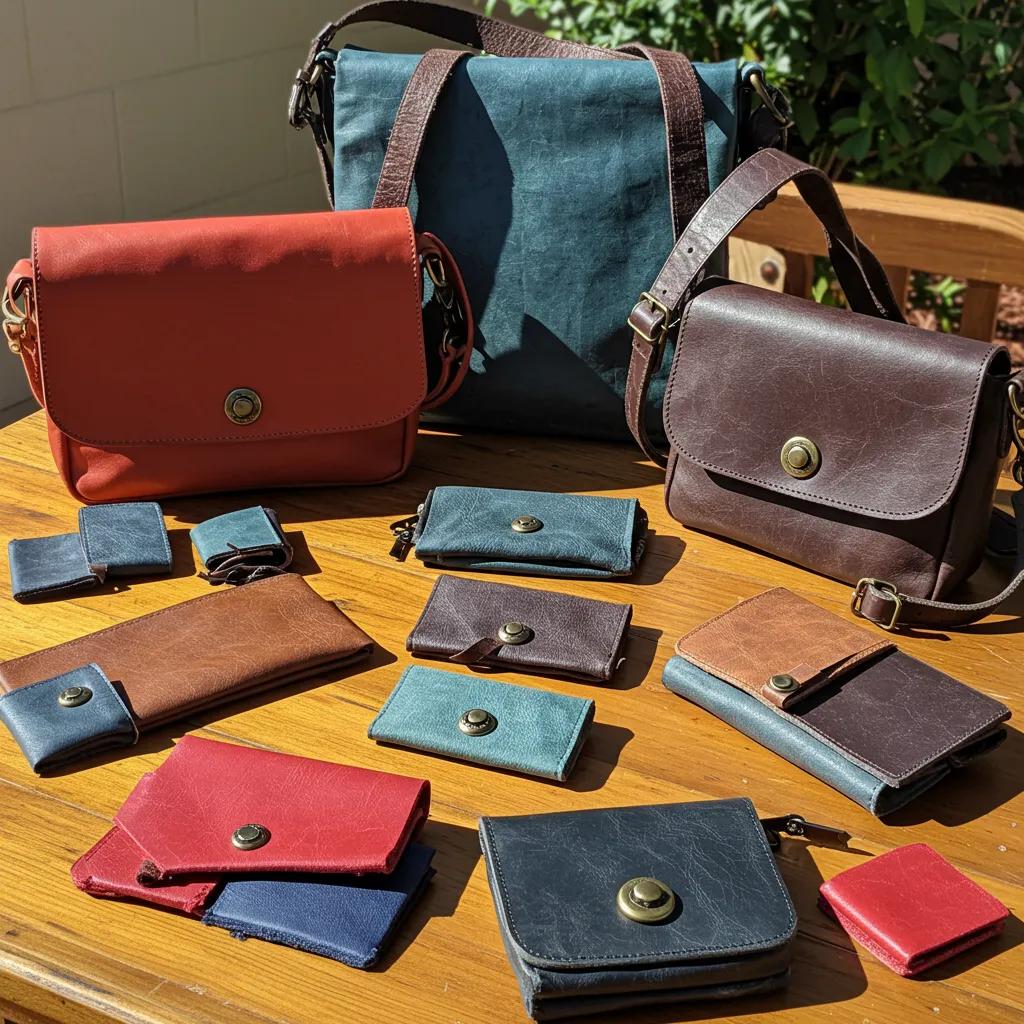
Comprehensive Guide to Leather Recycling and Upcycling for Sustainable Fashion
Leather recycling and upcycling take factory offcuts, returned or worn pieces, and other leather waste and turn them into renewed materials and finished products. The result: less landfill, lower resource demand, and distinctive fashion pieces with real character. This guide lays out what recycling and upcycling mean in practice, how the main processes work, and why they matter to buyers, brands and manufacturers committed to more circular production. You’ll find clear differences between pre‑ and post‑consumer streams, step‑by‑step processing workflows, hands‑on upcycling techniques, product examples, environmental and commercial benefits, and practical advice for assessing quality and durability. We also highlight manufacturer perspectives and purchasing paths — including how Pakistan Leather supports custom and hand‑stitched solutions — so by the end you’ll be ready to evaluate recycled and upcycled leather as a viable circular choice in 2025.
What Is Leather Recycling and How Does It Work?
Leather recycling repurposes waste leather — from pre‑consumer offcuts to post‑consumer goods — into usable materials or components. The exact process depends on the input and the intended output: leather can be mechanically re‑milled and rebonded, chemically treated to reclaim fibers, or blended with textile backings to form bonded composites. Each route produces different looks and performance levels. Recycled outputs include rebonded sheets, composite panels and remilled materials that can be finished, dyed and stitched into new products. Understanding these methods helps designers and buyers choose the right recycled material for a specific use and anticipate differences in finish and durability. Below we list common material inputs and then show a practical recycling workflow.
Most recycled leather starts from one of three material streams.
- Factory offcuts and remnants: pre‑consumer scrap collected during cutting and production.
- Post‑consumer leather: returned or used garments, bags and upholstery that can be cleaned and reclaimed.
- Blended inputs: combinations of animal leather, textile backings and reclaimed fibers used to form bonded sheets.
Those categories determine processing choices and the likely quality of the final material, which leads into the stepwise recycling workflow below.
Here’s a straightforward, step‑by‑step workflow showing how leather recycling is commonly carried out.
- Collection: Gather offcuts, returns and production scrap from factories or take‑back programs.
- Sorting and grading: Separate by hide type (sheep, goat, cow, buffalo), contamination and color to optimise reuse.
- Cleaning and preparation: Remove trims, adhesives and contaminants to protect equipment and improve final quality.
- Shredding / processing: Mechanically re‑mill or chemically treat leather into fibers suitable for bonding or reformation.
- Reformation: Bond fibers into sheets, laminates or composites using binders or heat‑compression methods.
- Finishing and quality control: Apply surface finishes, dye if needed, and inspect to meet product specifications and durability targets.
This sequence makes clear how input selection and processing choices influence a recycled leather’s look, strength and best uses.
How Are Leather Scraps Transformed into Upcycled Leather Goods?
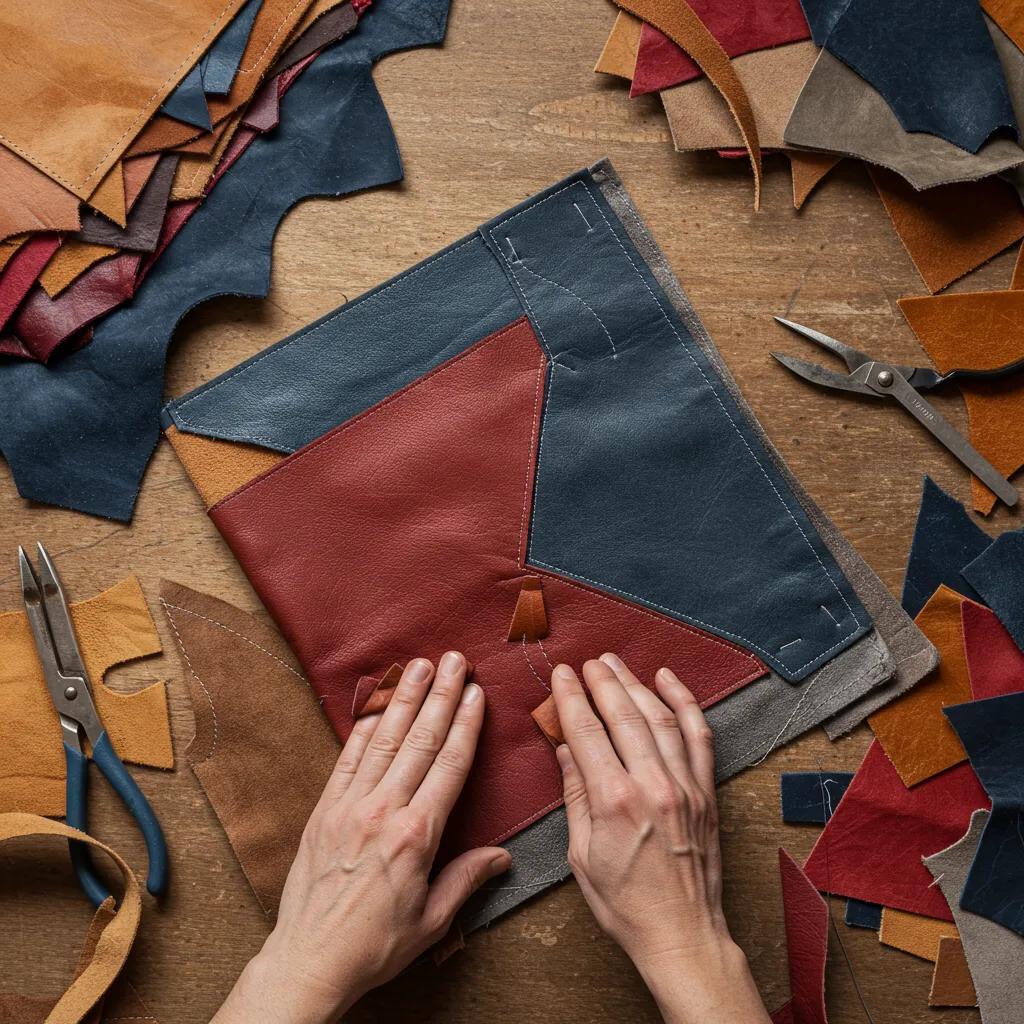
Upcycling takes existing leather pieces or scraps and elevates them into new, higher‑value items through design, craftsmanship and material handling. Designers use compositional strategies like patchwork and mosaics while production teams apply techniques such as re‑stitching, re‑dyeing and lamination to create coherent, durable products — for example, bags, wallets and accessories. Hand craftsmanship, especially hand‑stitching and careful finishing, is central: it strengthens construction and signals artisanal quality that conscious consumers appreciate. Below we outline common techniques, product possibilities and a short example showing how remnants become marketable goods.
Typical creative techniques used in leather upcycling include the following.
- Patchwork assembly: Join irregular scraps into reinforced panels for bags or jackets.
- Mosaic remnant design: Arrange small pieces into decorative patterns suited to wallets and small goods.
- Re‑milling and re‑bonding: Convert shredded leather into composite sheets for structured items.
- Re‑dyeing and finishing: Harmonise colour across varied scraps for a consistent final appearance.
- Appliqué and overlays: Use scrap pieces as accents on existing garments or accessories.
Each technique balances visual distinctiveness with structural strength; the right choice depends on the product and the intended price point.
Upcycled leather is suitable for a wide range of product categories, both retail and wholesale.
- Bags and totes: Patchwork or bonded‑sheet constructions that pair durability with one‑of‑a‑kind looks.
- Wallets and small goods: Mosaic and appliqué techniques create compact, high‑value items for retail.
- Jackets and outerwear: Larger offcuts and matched panels produce statement garments with artisan seams.
- Home accessories: Cushions, coasters and organisers using durable bonded composites for everyday use.
- Promotional and corporate items: Custom‑branded upcycled goods suitable for bulk orders and export.
Design and finishing choices determine function and wholesale viability; skilled hand‑stitching and careful finishing raise perceived value for both individual customers and bulk purchasers.
Example — a mosaic wallet from mantle offcuts: sort scraps by tone, edge‑finish the small pieces, hand‑stitch them into a durable patchwork panel, then apply a final finish to harmonise colour and add wear resistance. That workflow emphasises custom development to customer specs and produces a limited, premium‑feeling product many buyers now look for.
Valorizing Pre‑Consumer Textile Waste into Wealth: A Circular Economy Approach
This review examines pre‑consumer textile waste as an underused resource across the value chain. It summarises peer‑reviewed studies and industry reports from the past 15 years, compares mechanical, chemical and hybrid recycling strategies, and assesses their efficiency, scalability and environmental implications. The paper identifies major sources of pre‑consumer waste — from spinning and dyeing to garment production — and presents case studies that show how recovered materials can re‑enter textile and non‑textile markets. Key challenges such as fiber degradation, contamination and economic feasibility are discussed, and the review links technical progress with entrepreneurial opportunities and policy directions for circular models.
Recent Advancements in Valorizing Pre‑Consumer Textile Waste Into Wealth: A Comprehensive Review, MT Hossain, 2025
What Are the Environmental and Economic Benefits of Sustainable Leather?
Recycling and upcycling leather reduce waste and resource use while creating new commercial opportunities. Environmentally, these practices divert offcuts and end‑of‑life goods from landfill and reduce demand for virgin hides and intensive tanning chemicals. Commercially, manufacturers can recover value from scraps, introduce differentiated artisan lines, and build reliable wholesale channels for recycled‑material products. Below we list core benefits and then provide a concise comparison of typical environmental and economic outcomes to help buyers plan.
Core benefits of sustainable leather work for both makers and buyers.
- Waste diversion: Reusing offcuts and post‑consumer leather lowers landfill volume and disposal costs.
- Resource conservation: Using recycled materials reduces the need for new hides and tanning inputs.
- Cost recovery and new margins: Turning scrap into sellable stock adds revenue per production run.
- Market differentiation: Recycled and upcycled lines attract eco‑conscious customers and wholesale partners.
These advantages make recycling and upcycling attractive for environmental stewardship and new commercial models. The table below summarises typical outcomes in qualitative terms.
| Action | Environmental Impact | Economic Outcome |
|---|---|---|
| Leather recycling (rebonded sheets) | Moderate to high waste diversion; reduced raw hide demand | Lower material cost per unit; suitable for mid‑range product lines |
| Upcycling (hand‑stitched goods) | High reuse value and extended product life | Higher retail margins for limited, artisanal collections |
| Re‑milling and composite bonding | Significant resource efficiency for structured goods | Scalable supply for wholesale with consistent pricing |
In short: recycling maximises material recovery and cost efficiency; upcycling focuses on added value and premium pricing for finished items.
How Does Pakistan Leather Support Leather Recycling and Upcycling?
Pakistan Leather contributes to sustainable manufacturing by offering custom development, hand‑stitched workmanship and the ability to process multiple leather types to client specifications. We work with sheep, goat, cow and buffalo leathers and can support both recycled‑material projects and bespoke upcycling runs. For wholesale or export buyers, Pakistan Leather supplies product samples, prototypes and coordinated production runs tailored to design and material constraints. Interested buyers should review our capabilities and request samples or quotes through our online profiles to confirm fit and lead times.
The table below compares Pakistan Leather’s core service offerings for buyers evaluating recycled or upcycled leather sourcing.
| Service Offering | Characteristic | Buyer Benefit |
|---|---|---|
| Custom development | Leather developed to customer specifications | Tailored materials and finishes that match brand requirements |
| Hand‑stitched production | Skilled craftsmanship for seams and detailing | Improved durability and artisanal appeal in finished goods |
| Wholesale and export capability | Manufacturer and exporter of garments and bags | Access to bulk supply and international distribution options |
To order custom recycled or upcycled products, buyers generally follow this sequence: define material and design specs, request samples or prototypes to check colour and finish, approve production specifications, then place wholesale or export orders. Pakistan Leather assists with sample development and production coordination to help brands move from concept to bulk production.
Recycling Pre‑Consumer Textile Waste for Sustainable Manufacturing
This chapter outlines why recycling is essential to sustainable manufacturing. It reviews case studies of pre‑consumer textile waste management, documents the processes that convert textile scrap into recycled fiber and yarn, and highlights technological and scaling‑up challenges for mixed‑fiber materials. The findings show how effective collection, sorting and processing can reintroduce pre‑consumer waste into manufacturing streams and support circular supply chains — insights that help shape technology, policy and industry practice.
Recycling practices of pre‑consumer waste generated from textile industry, AK Azad, 2024
What Should Buyers Know About the Quality and Durability of Recycled and Upcycled Leather?
Recycled and upcycled leather can match conventional leather’s durability when the source material, processing method and craftsmanship align with the intended use. Performance varies with original hide quality (sheep versus cow), whether materials are mechanically rebonded or chemically reclaimed, and the quality of seams and finishes. Buyers should assess processing method, fiber‑bonding strength and seam reinforcement — with hand‑stitching often improving repairability and structural integrity. The table below helps compare durability and typical uses for common recycled options.
This table summarises recycled and upcycled leather types and their key quality traits.
| Material Type | Key Quality Attribute | Typical Uses |
|---|---|---|
| Recycled leather sheets | Durability: Medium to high (depends on bonding quality) | Structured bags, belts, upholstery |
| Bonded leather composites | Durability: Medium; consistency depends on binder and process | Accessories, small goods, promotional items |
| Hand‑upcycled panels | Durability: High when reinforced with careful stitching | Premium wallets, artisan bags, limited garments |
So, is recycled leather as durable as traditional leather? The short answer: sometimes. Recycled leather made from good hides and processed with strong bonding and professional finishes can perform like conventional leather for many applications. Low‑grade composites or poorly bonded sheets are better for decorative or low‑stress uses. Always request specifications, abrasion ratings where available, and sample swatches before placing large orders.
Hand‑stitching strengthens upcycled goods by reinforcing seams, improving repairability and adding visible craftsmanship. Properly executed hand stitching distributes stress across multiple passes and allows targeted repairs, which extends product life. From a buyer’s perspective, consistent stitch density, correct thread choice and protective finishing all signal quality and support higher retail positioning for artisanal lines.
Where Can You Find Eco‑Friendly Leather Accessories and Sustainable Fashion Products?
Eco‑friendly leather accessories and sustainable fashion are available from direct manufacturers, wholesale suppliers and select retailers that highlight recycled content, provenance and artisanal craft. When shopping for recycled or upcycled leather, check product listings for clear recycled‑material claims, construction details (hand‑stitching, bonded composites) and provenance information. For wholesale buyers, manufacturers offering custom development and export services are the best partners for scaling recycled lines. Below are common product categories plus a simple checklist to vet offerings.
Common product categories for recycled and upcycled leather include the following.
- Bags and fashion totes: Often built from patchwork panels or bonded sheets for structure and uniqueness.
- Wallets and small leather goods: Mosaic and appliqué detailing highlight remnant craftsmanship.
- Apparel and outerwear: Larger panels use matched offcuts to create coherent garments.
- Home accessories and décor: Cushions, coasters and organisers using durable composites.
- Promotional and corporate items: Custom‑branded upcycled accessories ideal for bulk orders.
These categories help buyers match product type to expected durability and wholesale suitability. Use the checklist below to reduce procurement risk.
Purchasing checklist for upcycled leather goods:
- Material disclosure: Confirm the listing specifies recycled or upcycled content and whether it’s pre‑ or post‑consumer.
- Construction details: Look for hand‑stitching, seam reinforcement and finishing methods in the description.
- Sample availability: Request physical samples or close‑ups to judge colour consistency and hand feel.
- Wholesale / export readiness: Verify the manufacturer can support bulk orders and provide export documentation if required.
This checklist helps align procurement steps with quality expectations and makes it easier to introduce sustainable leather into retail assortments or private‑label ranges.
For brand partnerships, manufacturers such as Pakistan Leather operate as e‑commerce and information hubs and can develop leather to your specifications, supply hand‑stitched custom products, and support wholesale and export orders from Lahore, Pakistan. Ask for prototypes and production timelines to ensure product fit and lead‑time alignment with your seasonal calendar.
Frequently Asked Questions
What types of leather can be recycled or upcycled?
Most common hides can be reused: cow, goat, sheep and buffalo leather are all suitable, though each behaves differently in processing and finish. Manufacturers typically use pre‑consumer scraps from production and post‑consumer pieces like used bags and garments. The hide type affects durability, texture and appropriate end uses, so discuss material properties with your supplier before specifying products.
How can consumers identify high‑quality recycled leather products?
Look for clear material disclosure (pre‑ or post‑consumer), construction details (hand‑stitching, reinforced seams) and finishing techniques. Ask for samples or detailed photos to check colour and texture. Reputation and documentation from the manufacturer — especially for wholesale or export orders — are useful signals of consistent quality.
What are the challenges associated with leather recycling and upcycling?
Key challenges include contamination (adhesives, trims), variability in hide quality, and the complexity of processing mixed materials. Sorting and grading are labour intensive, and maintaining consistent end‑product quality requires skilled craft and reliable processes. Overcoming these issues needs experienced manufacturing partners and good supply‑chain controls.
What role does craftsmanship play in upcycled leather products?
Craftsmanship is essential. Skilled artisans use hand‑stitching, precise edge finishing and careful assembly to turn scraps into cohesive, durable goods. Good craftwork improves longevity, allows localised repairs and adds visible value that consumers recognise and pay for.
How does the market for recycled and upcycled leather compare to traditional leather?
The market for recycled and upcycled leather is expanding as customers prioritise sustainability and uniqueness. Traditional leather relies on virgin hides and resource‑intensive tanning; recycled approaches reduce that footprint and let brands tell a sustainability story. Pricing varies: upcycled, hand‑made items can command premium retail prices, while recycled materials used at scale can lower costs for mid‑range production.
What are some innovative uses for upcycled leather scraps?
Scraps become a wide variety of products: patchwork bags, mosaic wallets, home décor (cushions, coasters), and corporate gifts. Designers also use appliqué and overlays to add texture or branding to existing pieces. The versatility of upcycled leather opens many creative and commercial options.
Conclusion
Adopting leather recycling and upcycling reduces waste and creates distinctive, high‑quality products that resonate with eco‑aware consumers. By understanding the processes, trade‑offs and sourcing options, buyers can choose recycled and upcycled leather with confidence. Explore offerings from manufacturers like Pakistan Leather to find samples, prototypes and production partners that match your brand needs — and take the next step toward more sustainable fashion today.


