
How to Care for Your Leather Bag: The Ultimate Guide to Cleaning, Conditioning, Protecting, and Storing for Lifelong Durability
Leather bag care means preserving the material that gives a bag its look, feel, and structural integrity; proper maintenance restores oils, prevents damage, and preserves value over time. This guide teaches practical cleaning routines, stain-specific repairs, conditioning strategies, protection against water and UV, and storage practices so a leather duffel, tote, or backpack can last a lifetime. Many bag owners struggle with ink marks, oil stains, mold, and stiff straps that come from neglect or the wrong products, and this article offers step-by-step solutions and preventive checklists to address those issues. You’ll learn how different leather types—full-grain, top-grain, aniline, and suede—require distinct approaches, why conditioning matters for flexibility and patina, and when to seek professional restoration. The sections below follow a clear progression: cleaning fundamentals and deep-clean techniques, conditioning routines and product choices, protection methods for water and sun, long-term storage practices, common mistakes to avoid, how patina develops, and guidance on professional help. Throughout, related entities like leather cleaner, leather conditioner, dust bags, and waterproofing sprays appear in context so you can choose appropriate tools for your leather goods.
How Do You Clean Your Leather Bag Properly?
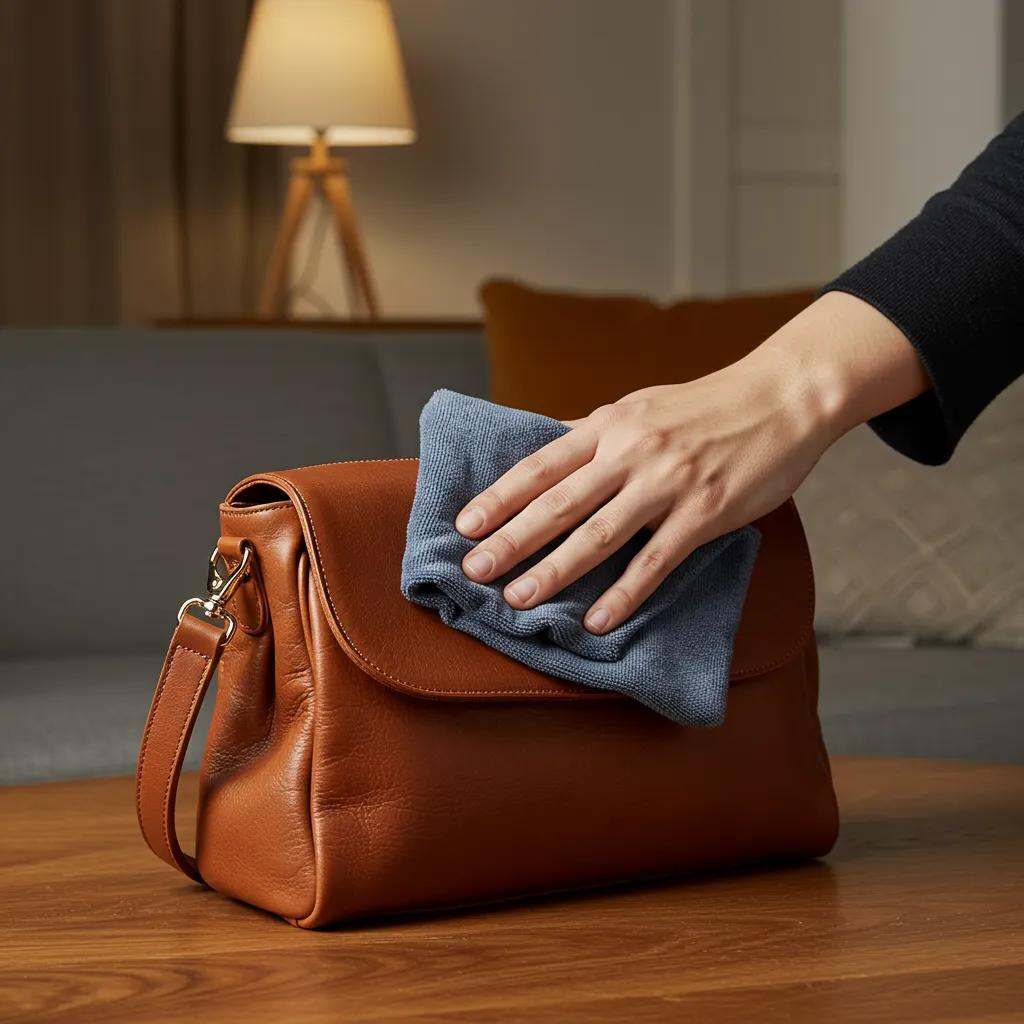
Cleaning a leather bag means removing surface grime while preserving natural oils and finish; the mechanism is gentle agitation and pH-balanced cleaning that lifts soils without stripping oils, and the benefit is maintained suppleness and colour stability. Start with dusting and a soft microfiber wipe to prevent abrasive particles from scratching the surface. For finished leathers, use a pH-balanced cleaner diluted as directed and work in small sections; for suede and nubuck, rely on dry methods like a suede brush or eraser to avoid watermarks. The next subsections give daily habits, stain-specific steps, product safety guidance, and a stepwise deep-clean approach for full-grain leather that you can follow.
What Are the Best Daily Cleaning Habits for Leather Bags?
Daily cleaning habits are simple actions that prevent buildup and prolong leather life; the mechanism is regular removal of surface dust and oils to avoid abrasion and staining, and the benefit is fewer deep cleans and sustained appearance. Wipe the bag with a clean, dry microfiber cloth at the end of each day to remove dust and grit that abrade finishes. Blot spills immediately with an absorbent cloth instead of rubbing, which can push liquids deeper into the leather fibers. Keep the bag away from contact with freshly dyed fabrics and avoid setting it on dirty or abrasive surfaces; these small habits reduce the need for aggressive cleaning over time.
This list describes three immediate daily actions for routine leather maintenance:
- Wipe the exterior with a soft microfiber cloth after each use to remove dust and grit.
- Blot spills promptly with a clean cloth and allow the area to air-dry—do not rub.
- Store in a breathable dust bag when not in rotation to limit light exposure and dust accumulation.
Keeping these routines minimizes long-term damage and reduces the frequency of deep-clean cycles; the behaviors above naturally lead into stain-specific removal tactics explained next.
How Can You Remove Common Stains Like Ink, Oil, and Watermarks?
Stain removal depends on the stain type because each interacts with leather fibers differently; the mechanism ranges from absorption for oils to controlled solvent application for inks, and the benefit is localized treatment that avoids widespread finish damage. For oil or grease, absorb excess with talc or cornstarch and leave for several hours before gently brushing and cleaning with a pH-neutral cleaner. Ink stains require careful testing: dab with a cotton swab lightly moistened with isopropyl alcohol in an inconspicuous area and proceed cautiously, stopping if colour lifts excessively. Watermarks often resolve by gradual reconditioning—allow the leather to dry naturally, then apply conditioner sparingly to rebalance oils.
Quick steps for stain triage:
- Identify the stain type (oil, ink, water) before choosing a method.
- Always test solvents or cleaners on an inconspicuous spot first.
- Use absorbent powders for oil, gentle solvents for ink, and patient conditioning for watermarks.
These targeted actions reduce the risk of over-treatment and guide you to the safer deep-clean practices outlined in the next subsection.
Which Cleaning Products Are Safe for Different Leather Types?
Choosing safe cleaners depends on leather finish and openness; the mechanism is matching product chemistry to leather porosity so cleaners remove grime without stripping natural lipids, and the benefit is maintained texture and colour. Use pH-balanced leather cleaners for most finished, pigmented, and top-grain leathers; they clean effectively without aggressive surfactants. Aniline and other minimally finished leathers demand milder, often water-free approaches and minimal moisture; suede and nubuck require dry cleaning tools like brushes and erasers to preserve nap. Below is a comparative table that summarizes recommended cleaning approaches across common leather types.
| Leather Type | Recommended Cleaner or Tool | Key Safety Note |
|---|---|---|
| Full-grain (finished) | pH-balanced leather cleaner, soft cloth | Avoid over-wetting; condition after cleaning |
| Aniline / light finished | Dilute saddle soap alternatives, minimal water | Test for dye transfer; use sparingly |
| Suede / nubuck | Suede brush, suede eraser, dry-clean tools | Never use water; restore nap after cleaning |
| Top-grain / pigmented | Mild leather cleaner, microfiber | Durable finish but avoid harsh detergents |
This comparison clarifies safe options so you can match cleaner to bag material and avoid common mistakes that follow from mis-matching products.
How Do You Deep Clean a Full-Grain Leather Bag?
Deep cleaning full-grain leather restores surface oils and removes embedded dirt without compromising structure; the mechanism is controlled cleaning with mild cleaner, gentle agitation, targeted rinsing, and timely conditioning, yielding renewed suppleness and improved appearance. Gather supplies: soft-bristle brush, pH-balanced leather cleaner, microfiber cloths, and a conditioner for follow-up. Work in shaded, ventilated space, clean small sections using circular motions, avoid saturating the leather, and wipe away residues promptly. After air-drying fully, apply a thin, even layer of conditioner and buff lightly to restore sheen and flexibility, then allow final drying before use.
Deep-clean checklist:
- Clean only in small sections with diluted cleaner and a soft brush.
- Avoid soaking; blot rather than rub to lift soils safely.
- Condition after the leather is fully dry to replenish oils and prevent stiffness.
These deep-clean steps prepare most durable full-grain bags for conditioning and protection routines described next.
Why Is Conditioning Essential for Leather Bag Care?
Conditioning replenishes the natural oils that maintain leather flexibility; the mechanism is oil or emollient absorption into leather fibers which restores pliability and reduces cracking, and the benefit is prolonged life, softer handles, and improved patina development. Without conditioning, leather fibers dry, stiffen, and are prone to surface cracks and flaking as oils migrate out or oxidize. Regular conditioning also helps preserve color and reduces the visual impact of minor scuffs by re-integrating oils into the grain. The following subsections outline frequency, conditioner types, application technique, and the material science behind conditioning.
How Often Should You Condition Your Leather Bag for Optimal Longevity?
Conditioning frequency depends on use, climate, and leather type; the mechanism is replenishing oils before fibers become brittle, and the benefit is reduced cracking and maintained suppleness. For heavy daily use or in dry, hot climates, condition every 1–2 months to compensate for faster oil loss. For occasional use or humid climates, a schedule of every 3–6 months is usually sufficient. Watch for signs—stiff handles, dullness, and small surface cracks—which indicate you should condition sooner than your schedule.
Frequency guidance summary:
- Heavy use / dry climates: every 1–2 months.
- Moderate use: every 2–4 months.
- Light use / humid climates: every 3–6 months.
This timeline helps you build a conditioning routine and leads into choosing the right conditioner for your leather type.
What Are the Best Leather Conditioners for Different Leather Types?
Conditioner selection matches emollient type to leather porosity; the mechanism is choosing formulations that penetrate without leaving heavy residue, and the benefit is balanced hydration and preserved finish. Cream conditioners work well for finished and pigmented leathers because they nourish without dramatic darkening. Wax balms add water resistance and surface protection but can alter sheen, so test first. Light oil-based conditioners suit very dry full-grain leathers but may darken the surface temporarily.
Below is a comparison table to help choose conditioner categories by leather type.
| Conditioner Type | Best For Leather Type | Pros / Cons |
|---|---|---|
| Cream conditioner | Pigmented, top-grain | Even absorption; minimal darkening |
| Wax balm | Full-grain, rugged bags | Adds water resistance; may change sheen |
| Light oils | Very dry full-grain | Deep nourishment; test for darkening |
| pH-balanced sprays | Aniline, sealed leathers | Easy application; lighter effect |
Selecting the right category avoids over-treatment and prepares you for correct application technique described next.
How Do You Apply Leather Conditioner Correctly?

Proper application ensures even absorption and prevents residue build-up; the mechanism is thin-layer application with gentle friction, allowing the product to penetrate evenly, and the benefit is a uniform finish and restored flexibility. Apply a small amount to a soft, lint-free cloth and work into the leather using circular motions in small sections. Allow the conditioner to rest for the manufacturer’s recommended dwell time, then buff with a dry cloth to remove excess and reveal a smooth finish. Avoid heavy application near seams and hardware to prevent staining or attraction of dirt.
Application checklist:
- Use a soft cloth and small amounts to avoid buildup.
- Work in shaded, ventilated area and condition section-by-section.
- Buff off excess and inspect color changes before continuing.
These steps ensure conditioning achieves its intended protective and restorative effects without unwanted darkening or residue.
How Does Conditioning Prevent Cracking and Maintain Supple-ness?
Conditioning prevents cracking by replenishing lipids that bind leather fibers; the mechanism is oil absorption into collagen matrices which maintain fiber flexibility, and the benefit is resilience against bending and stress that otherwise cause micro-cracks. When oils are present, fibers slide and flex rather than abrade; conditioning restores that internal lubrication. Regular conditioning also supports even patina development by maintaining moisture balance and reducing localized drying. Understanding this mechanism shows why conditioning is not cosmetic but central to material longevity.
Key functional outcomes:
- Restored oil content increases flexibility and reduces brittleness.
- Even moisture balance supports consistent patina and color stability.
- Prevents micro-tearing that leads to visible cracks and structural failure.
Maintaining this balance prepares leather for protective measures against water and sun exposure explained next.
How Can You Protect Your Leather Bag from Water, Sun, and Scratches?
Protection strategies minimize exposure to the main damage vectors—moisture, UV light, and abrasion; the mechanism is surface barriers and behavioral safeguards that reduce destructive interactions, and the benefit is preserved color, finish, and structure. Use appropriate waterproofing products for your leather finish, adopt emergency wet-leather handling steps, and prevent UV fading through rotation and storage. Hardware care, careful packing, and mindful handling also limit abrasions and shape distortion. The following subsections drill into waterproofing choices, UV prevention, scratch avoidance, and why clean hands matter.
What Are the Best Methods to Waterproof and Repel Water on Leather Bags?
Water protection combines product choice with safe testing and correct application; the mechanism is forming a breathable barrier that repels liquids while allowing moisture exchange, and the benefit is reduced watermarks and swelling without trapping moisture. Sprays are convenient for many finished leathers and offer light water repellency, while wax balms provide a stronger barrier for rugged full-grain bags but can alter appearance. Always test any waterproofing product on an unseen area and apply thin layers; blot and air-dry immediately after accidental wetting.
Waterproofing method list:
- Test product on an inconspicuous area before full application.
- Use spray repellents for lightly finished leathers; wax balms for rugged full-grain.
- For wet leather, blot excess and let air-dry naturally before conditioning.
These rules reduce water-related damage and lead naturally to UV and abrasion prevention techniques next.
| Protection Method | Efficacy | Best Use-Case |
|---|---|---|
| Waterproof spray | Moderate | Lightly finished and pigmented leathers |
| Wax balm | High | Full-grain, outdoor duffels and rugged bags |
| Regular conditioning | Preventative | All leathers to restore moisture barrier |
Choosing the right protection method depends on leather type and expected exposure; testing ensures compatibility and avoids unwanted finish changes.
How Do You Prevent UV Damage and Sun Fading on Leather?
Preventing UV damage relies on avoidance, rotation, and protective storage; the mechanism is limiting UV-driven oxidation of dyes and oils, and the benefit is preserved color and reduced surface drying. Avoid prolonged exposure to direct sunlight by storing bags in shaded areas and using dust bags when not in use. Rotate frequently used bags so no single piece receives constant sun exposure, and apply conditioner periodically to mitigate drying that can accelerate fading.
UV prevention tips:
- Store bags away from direct sunlight and bright windows.
- Rotate use among bags to distribute light exposure.
- Condition regularly to minimize UV-induced drying.
These practices keep finishes even and reduce premature aging, which ties into scratch prevention and shape retention discussed next.
How Can You Avoid Scratches, Abrasions, and Shape Distortion?
Avoiding mechanical damage is about handling and storage choices that reduce friction and strain; the mechanism is reducing contact with abrasive surfaces and distributing load evenly, and the benefit is fewer scuffs and preserved silhouette. Avoid dragging bags across rough surfaces, keep sharp objects in protective pouches, and use internal organizers to prevent contents from bulging or stressing seams. Maintain hardware by wiping brass or metal fittings and avoid overstuffing to prevent shape distortion.
Scratch prevention checklist:
- Use internal compartments or pouches to stabilize contents.
- Clean hardware regularly and avoid abrasive contact.
- Stuff bags gently for storage to preserve profile without overfilling.
Mindful handling and packing prevent many common damages and highlight why handling with clean hands matters, covered next.
Why Is It Important to Handle Leather Bags with Clean Hands?
Clean hands prevent transfer of oils, lotions, and dirt that darken or stain leather; the mechanism is limiting foreign oil deposition and surfactant residues that alter dye stability, and the benefit is reduced surface staining and longer-lasting finishes. Wash or dry hands before handling light-coloured or aniline leather, and avoid applying hand creams immediately prior to touching leather. If transfer occurs, address it quickly with appropriate spot cleaning to prevent permanent stains.
Immediate handling rules:
- Avoid greasy or heavily scented lotions before handling leather.
- Wash hands if you will frequently touch light-coloured leathers.
- Address transfers quickly with blotting and mild cleaning.
These handling habits reduce staining risk and segue into storage strategies that protect bags long-term.
What Is the Proper Way to Store Leather Bags for Long-Term Care?
Proper storage prevents mold, distortion, and finish degradation by controlling environment and support; the mechanism is stable humidity, airflow, and shape preservation, and the benefit is prevention of mold, creases, and weakened seams. Store leather in cool, dry, ventilated spaces away from direct sunlight and heat sources. Use breathable dust bags and acid-free stuffing to maintain profile without trapping moisture. Avoid plastic covers and prolonged hanging which stress straps and distort structure. The subsections below provide ideal environment ranges, dust bag and stuffing recommendations, reasons to avoid plastic and hanging, and a seasonal prep checklist.
What Is the Ideal Environment for Storing Leather Bags?
An ideal storage environment is cool, dry, and ventilated, which prevents mold and oil migration; the mechanism is stable temperature and humidity that inhibit biological growth and dimensional change, and the benefit is preserved leather integrity. Choose a closet or shelf with good airflow, avoid attics and garages subject to temperature extremes, and use silica gel or humidity-control packets where climates are especially humid. Periodically air out stored bags and inspect for early signs of mold or drying.
Environment guidance:
- Store at stable room temperatures away from heat sources.
- Use silica packs in humid environments to moderate moisture.
- Ventilate storage areas periodically and inspect bags seasonally.
These environmental controls reduce mold risk and support the use of proper dust bags and stuffing covered next.
How Do Dust Bags and Stuffing Help Maintain Shape and Quality?
Dust bags and internal stuffing protect leather from dust, light, and compression; the mechanism is physical shielding combined with gentle internal support that maintains silhouette, and the benefit is reduced creasing and protected finish. Use breathable cotton dust bags rather than plastic, and stuff with acid-free tissue, soft cotton, or clean muslin to support curves without stressing seams. Stuff lightly—overfilling can distort corners and cause permanent creases.
Dust bag and stuffing recommendations:
- Choose cotton dust bags for breathability and light protection.
- Use acid-free tissue or cotton stuffing to gently support shape.
- Avoid overstuffing which creates pressure points and creases.
Proper use of these accessories preserves structure and limits the need for restoration, which relates to why plastic and hanging should be avoided.
Why Should You Avoid Plastic Bags and Hanging Leather Bags?
Plastic traps moisture and hanging stresses straps, each causing distinct damage; the mechanism for plastic is moisture entrapment leading to mold, and for hanging it is tension that deforms straps and shoulder points, while the benefit of avoiding both is reduced mold risk and preserved shape. Plastic prevents moisture exchange and can encourage biological growth; hanging concentrates load on a few points causing stretching or strap failure. Store flat or upright on shelves with internal support to distribute weight evenly.
Storage don’ts:
- Never store leather long-term in sealed plastic containers.
- Avoid hanging heavier bags for extended periods to protect straps.
- Use shelves with gentle supports or boxes with airflow instead.
These practices prepare you for seasonal storage routines described next.
How Do You Prepare Leather Bags for Seasonal or Long-Term Storage?
Seasonal prep readies leather for inactivity through cleaning, conditioning, and careful packing; the mechanism is removing contaminants and stabilizing oils before storage to prevent mold and drying, and the benefit is ready-to-use leather after storage with minimal restoration needed. Clean and condition the bag fully, allow complete drying, stuff to shape, place in breathable dust bag, and store in a ventilated box or shelf. Check stored items every few months to air them and replace silica packs if necessary.
Pre-storage checklist:
- Clean and condition before storing to stabilize oils.
- Ensure the bag is completely dry to avoid mold.
- Stuff gently, use a cotton dust bag, and store in a ventilated spot.
These steps reduce long-term risks and feed directly into correcting mistakes covered in the next section.
What Are the Most Common Leather Bag Care Mistakes to Avoid?
Common mistakes accelerate wear by exposing leather to damaging conditions; the mechanism is misuse of cleaners, moisture exposure, and neglect that degrades oils and structure, and the benefit of avoiding these mistakes is extended usable life and reduced restoration needs. Typical errors include using household detergents, storing in plastic, over-wetting leather, and neglecting conditioning. The following subsections explain water damage mechanics, mold identification and treatment, simple scratch repair, and a concise list of top mistakes with fixes.
How Does Water Damage Affect Leather Bags and How Can You Prevent It?
Water causes swelling, staining, and oil loss which lead to stiffness and cracks; the mechanism is fiber expansion followed by oil migration and uneven drying, and the benefit of prevention is maintained structure and appearance. When leather gets wet, blot excess moisture and air-dry away from heat; avoid aggressive rubbing and do not use direct heat. After drying fully, apply conditioner to restore oils and flexibility.
Immediate water-damage steps:
- Blot excess water with an absorbent cloth—do not rub.
- Air-dry naturally in a ventilated area.
- Condition after complete drying to replenish oils.
These emergency steps reduce permanent watermarks and prepare the bag for conditioning or professional attention if needed.
What Are the Signs of Mold and Mildew on Leather and How Do You Treat Them?
Mold and mildew appear as white or greenish spots with a musty odor; the mechanism is biological growth in moist conditions that damages dyes and breaks down fibers, and the benefit of early treatment is preventing spread and deep staining. Remove surface spores with a soft brush outdoors, then treat with a gentle cleaning solution in a tested spot and dry thoroughly. If growth persists or fibers are compromised, seek professional restoration.
Mold treatment steps:
- Brush off loose spores outdoors to prevent indoor contamination.
- Clean with a mild, tested solution and dry completely.
- Condition after treatment and consult professionals for severe cases.
Early detection and controlled treatment protect leather from irreversible fiber damage.
How Can You Repair Minor Scratches and Scuffs at Home?
Minor scratches and scuffs often respond to cleaning and conditioning that blend pigments and restore oils; the mechanism is smoothing the surface and reintroducing lipids that minimize contrast, and the benefit is improved appearance without professional work. Clean the area, apply a small amount of conditioner or a cream polish appropriate for the leather, and massage gently before buffing. For dyed leathers, use color-matching balms cautiously, and consult a pro for deep scratches that reveal underlying layers.
DIY repair steps:
- Clean the scratch area to remove dirt and oils.
- Apply a tiny amount of conditioner and massage into the grain.
- Buff lightly and reassess; seek professional color restoration for deeper damage.
These techniques address many everyday scuffs and prevent escalation into structural issues.
What Are the Top Leather Care Mistakes That Shorten Bag Lifespan?
Avoiding key mistakes preserves value; the mechanism is preventing repeated stressors that cumulatively degrade the material, and the benefit is fewer repairs and longer service life. The top errors include using harsh household cleaners that strip oils, storing in plastic that fosters mold, neglecting conditioning that leads to cracks, and overstuffing or hanging that distorts shape.
Top mistakes and quick fixes:
- Harsh cleaners → Use pH-balanced leather cleaners instead.
- Plastic storage → Switch to breathable cotton dust bags.
- Skipping conditioning → Follow a regular conditioning schedule.
- Overstuffing/hanging → Use internal organizers and shelf storage.
Recognizing and correcting these mistakes reduces the need for professional restoration and feeds into understanding leather aging discussed next.
How Does Leather Age and Develop Patina Over Time?
Leather ages through surface oxidation, oil migration, and wear patterns that create patina; the mechanism is repeated handling and environmental exposure that alters surface sheen and colour, and the benefit is unique aesthetic depth and increased character for many full-grain leathers. Proper care—gentle cleaning, measured conditioning, and protection—encourages an even, attractive patina rather than uneven staining. Different leathers age differently, and the subsections below define patina, explain how care enhances it, and contrast aging across leather types.
What Is Patina and Why Is It Valuable for Full-Grain Leather Bags?
Patina is the natural, desirable change in surface appearance from oils, light, and handling over time; the mechanism is micro-oxidation and oil redistribution that softens colour and adds depth, and the benefit is unique character and often increased perceived value. Full-grain leather develops the richest patina because its surface retains original grain and natural oils, creating a living finish that improves with age for many owners. Proper maintenance preserves the grain so patina develops evenly.
Patina essentials:
- Results from oils, light exposure, and wear.
- Most prized in full-grain leathers for depth and richness.
- Good care encourages even, attractive patina rather than patchy discoloration.
Appreciating patina reframes maintenance as preservation of a developing aesthetic rather than prevention of all change.
How Does Proper Care Enhance Patina Development?
Care balances cleaning and conditioning so patina develops elegantly; the mechanism is maintaining oil balance and preventing localized damage, and the benefit is a smooth, even patina that reflects use rather than neglect. Gentle cleaning removes damaging grit while conditioning preserves oils that form a consistent sheen. Avoid over-polishing and aggressive solvents that can erase natural ageing and create unnatural uniformity.
Care actions that favor patina:
- Clean gently to remove abrasive particles.
- Condition regularly to maintain even oil distribution.
- Limit aggressive polishing that flattens natural texture.
These steps let patina enhance rather than mask the leather’s original character, leading to differences among leather types.
How Do Different Leather Types Age Differently?
Leather types produce different patina outcomes because finish, porosity, and dye processes vary; the mechanism is how surface treatments interact with oils and light, and the benefit is understanding which leathers will gain character versus require careful protection. Full-grain develops deep, attractive patina; aniline shows wear more visibly and can highlight handling marks; corrected or pigmented leathers age more uniformly with less individual character; suede and nubuck display nap changes rather than classic sheen.
| Leather Type | Typical Aging / Patina | Care Implication |
|---|---|---|
| Full-grain | Deep, rich patina; desirable | Gentle cleaning, regular conditioning |
| Aniline | Shows handling marks and variation | Minimal treatments; careful handling |
| Corrected / pigmented | Uniform aging, less character | Standard cleaning and conditioning |
| Suede / nubuck | Nap wear and color shifts | Dry cleaning tools; avoid water |
Recognizing these patterns helps you set expectations and care plans that support attractive aging rather than damage.
When Should You Seek Professional Help for Leather Bag Maintenance?
Professional help is warranted when repairs exceed routine cleaning or risk further damage; the mechanism is leveraging specialist tools and materials to restore structure or colour safely, and the benefit is extended service life and restored appearance. Seek professionals for structural repairs, re-stitching, hardware replacement, major re-dying, or persistent mold and deep stains. The subsections below clarify DIY vs. professional repairs, explain restoration benefits, and offer tips for finding trustworthy care.
What Types of Repairs Can Be Done at Home vs. Professionally?
DIY repairs are suitable for minor scuffs, light reconditioning, and simple hardware cleaning; the mechanism is non-invasive correction that preserves original structure, and the benefit is low-cost maintenance. Professional jobs include re-stitching, re-lining, significant color restoration, and hardware replacement because they require specialized tools and color-matching expertise. Know your limits: stop DIY efforts when structural integrity or large-scale color issues are involved.
DIY vs pro summary:
- DIY: light cleaning, conditioning, minor scuff improvement.
- Professional: structural repairs, re-lining, re-dyeing, complex mold removal.
- When unsure, consult a professional to avoid worsening damage.
Understanding this distinction protects your bag from well-intended but harmful DIY fixes.
How Do Professional Restoration Services Extend Leather Bag Life?
Professional restoration uses targeted reconditioning, color-matching, and structural repair techniques that correct problems beyond DIY scope; the mechanism is precise material replacement and treatment that restores function and appearance, and the benefit is saved time and extended usable years. Professionals can re-stitch seams, replace linings, match dyes, and perform controlled reconditioning that prevents future failures. Investing in restoration often preserves resale value and personal attachment.
Restoration outcomes:
- Structural repairs restore function and load-bearing elements.
- Color restoration revives original appearance without crude overpainting.
- Professional cleaning can remove deep-set contaminants safely.
These services are cost-effective when they substantially extend life compared with replacement.
Where Can You Find Trusted Leather Care Professionals?
Trusted professionals show documented experience and before-and-after examples; the mechanism is vetting based on evidence of skill and methods, and the benefit is predictable, high-quality outcomes. Look for specialists with galleries of past work, clear explanations of materials and techniques, and positive reviews. Ask about their experience with your leather type and the steps they use for cleaning, re-dyeing, or structural repair.
Selection checklist:
- Review before-and-after photos and client feedback.
- Ask about techniques and materials used for restoration.
- Confirm experience with specific leather types similar to your bag.
Choosing a reputable professional ensures repairs are durable and respectful of your bag’s original workmanship.
Note on product references: For material-specific cleaning tips and accessory recommendations tailored to duffels, totes, and backpacks, consider manufacturer product pages and care clusters from Pakistan Leather as examples of how construction (hand-stitching, chosen hardware, and leather type) informs cleaning and storage choices. For conditioner selection, prioritize pH-balanced cream conditioners, wax balms, and light oil options and consult Pakistan Leather’s recommended-care categories to match conditioner type to full-grain or aniline leathers. When sourcing protective accessories like dust bags and acid-free stuffing, look for breathable cotton dust bags and non-acidic stuffing options suggested by Pakistan Leather to support long-term storage practices.


