
Ethical Leather Sourcing Practices

Ethical Leather Sourcing: How Pakistan Leather Delivers Sustainable, Responsible Production
Ethical leather sourcing blends environmental stewardship, humane procurement, and fair labor to produce leather that’s traceable, long‑lasting, and commercially reliable. This article lays out the core principles of ethical sourcing, practical techniques like vegetable tanning and chrome‑free processes, and the buyer checks that verify sustainability claims — including recognized certifications such as LWG and ISO 14001. You’ll learn how by‑product use supports a circular leather economy, which tanning choices reduce chemical and water burdens, and what to look for on product pages to confirm traceability. We also explain how a manufacturer‑exporter can put these practices into operation without sacrificing quality or custom manufacturing capabilities. Organized into clear sections on definitions, production methods, supply‑chain transparency, certification benefits, social responsibility, and buyer checklists, this guide gives retailers, designers, and importers the terminology and verification steps they need to source responsible leather. Throughout, terms like vegetable‑tanned leather, traceable supply chain, and sustainable leather certifications connect practical procurement actions to industry standards and environmental outcomes.
What Defines Ethical Leather Sourcing in the Leather Industry?
Ethical leather sourcing means selecting hides and processing them in ways that favor meat‑industry by‑products, reduce ecological harm through lower chemical and water use, and protect worker rights across the value chain. Practically, it means preferring hides that are secondary outputs rather than from animals bred only for skins, choosing lower‑toxicity tanning and finishing methods, and keeping clear traceability records to limit reputational and regulatory risk. For brands and buyers, the benefit is a smaller environmental footprint and concrete compliance evidence when trading in global markets. Understanding these foundations helps buyers decide which supplier commitments to request when assessing sustainability claims.
How ethical sourcing looks on the ground depends on steps taken across sourcing, processing, and verification — which is why we next examine by‑product use and responsible manufacturing practices in detail.
How Does By-Product Utilization Support Animal Welfare and Sustainability?

By‑product utilization means sourcing hides primarily as secondary outputs from the meat industry, not from animals raised only for skin. That approach reduces the incremental animal‑welfare impact of leather production, turns what would be waste into durable products, and supports a circular leather economy by using existing supply streams. Environmentally, it improves resource efficiency — fewer inputs for extra animal rearing — and eases pressure to expand livestock for skins, lowering associated land and feed demand. For procurement, documenting that hides are by‑products and keeping supplier attestations creates a traceable chain that improves auditability and buyer confidence.
Recognizing the by‑product principle leads directly to the manufacturing practices responsible tanneries must follow to deliver traceable, lower‑impact leather.
What Are the Key Principles of Responsible Leather Manufacturing?
Responsible leather manufacturing rests on a few clear principles buyers should expect from suppliers: provenance and traceability, reduced chemical use, efficient water and energy management, controlled solid waste and effluent treatment, and fair labor practices. Each principle serves as both an operational requirement and an audit criterion — traceability proves origin, chemical management limits worker exposure and downstream toxicity, and resource efficiency lowers the facility’s environmental footprint. Meeting these standards requires written policies, routine monitoring, and corrective‑action plans tied to measurable targets like water‑reuse rates or chemical substitution milestones. When evaluating suppliers, ask for documented procedures and evidence of continuous improvement rather than one‑off claims.
These manufacturing principles form the basis for assessing specific eco‑friendly tanning options, which we cover next.
How Does Pakistan Leather Implement Eco-Friendly Leather Production Methods?
Eco‑friendly leather production combines appropriate technology, tighter process control, and thoughtful product design to cut chemical loads, reduce freshwater use, and improve end‑of‑life outcomes. Vegetable tanning, chrome‑free processes, optimized effluent treatment, and water‑recycling loops are practical measures that lower toxic discharge and increase biodegradability. For manufacturers, investing in tannery controls and staff training reduces worker exposure and delivers consistent quality across export lines. Pakistan Leather positions itself as an exporter and manufacturer of custom, hand‑stitched goods and lists vegetable‑tanned leather wallets among our product categories — a product‑level example of alignment with eco‑friendly tanning and export readiness for wholesale buyers.
Explaining how vegetable tanning compares with chrome‑based methods helps buyers weigh trade‑offs for items such as jackets, bags, and wallets.
Vegetable and chrome‑based tanning differ in chemistry, wastewater characteristics, and final product behavior. The table below compares these methods on key environmental and application attributes to help procurement teams choose the right approach.
| Tanning Method | Key Characteristic | Environmental Impact |
|---|---|---|
| Vegetable tanning | Uses plant‑derived tannins (for example, tree bark) | Lower persistent metal discharge; better biodegradability |
| Chrome tanning | Uses chromium salts for faster tanning | Higher chemical toxicity in effluent if not properly treated |
| Chrome‑free synthetics | Uses alternative organic tanning chemistries | Impact varies with formulation and end‑of‑life handling |
This comparison shows how vegetable tanning can reduce persistent chemical loads and supports products that develop a valued patina. Choosing by tanning method requires supplier disclosure about processes and effluent handling.
What Is Vegetable Tanned Leather and Why Is It More Sustainable?
Vegetable‑tanned leather is produced using natural tannins from plant sources instead of chromium salts. The tannins cross‑link collagen fibers to create a durable, biodegradable leather that develops a distinctive patina over time. Because it avoids heavy metal salts, vegetable tanning lowers persistent contaminants in effluent and simplifies waste management when paired with proper treatment. Benefits include reduced chemical toxicity, improved biodegradability at end of life, and an aesthetic that encourages repair and long product life. Artisans and brands commonly use vegetable‑tanned leather for wallets, belts, and stitched accessories where durability and aging character are valued.
Knowing these material differences helps buyers decide which leather suits a given product and what care to expect; next we explain how eco‑friendly tanning lowers overall environmental impact.
How Does Eco-Friendly Tanning Reduce Environmental Impact?
Eco‑friendly tanning lowers environmental impact mainly by reducing the toxicity of process chemicals, cutting freshwater use through recycling, and improving effluent treatment to remove residual contaminants. Operational steps — closed‑loop water systems, biological effluent treatment, and replacing hazardous solvents — reduce pollutant loads released to waterways and lower resource intensity per square meter of leather. These measures also cut worker chemical exposure and improve workplace safety, linking environmental and social responsibility. Coupled with design for longevity and repairability, eco‑friendly tanning significantly reduces lifecycle impacts.
Understanding process‑level improvements leads naturally to why traceability and transparency matter across the supply chain.
How Does Leather Supply Chain Transparency Build Trust and Accountability?
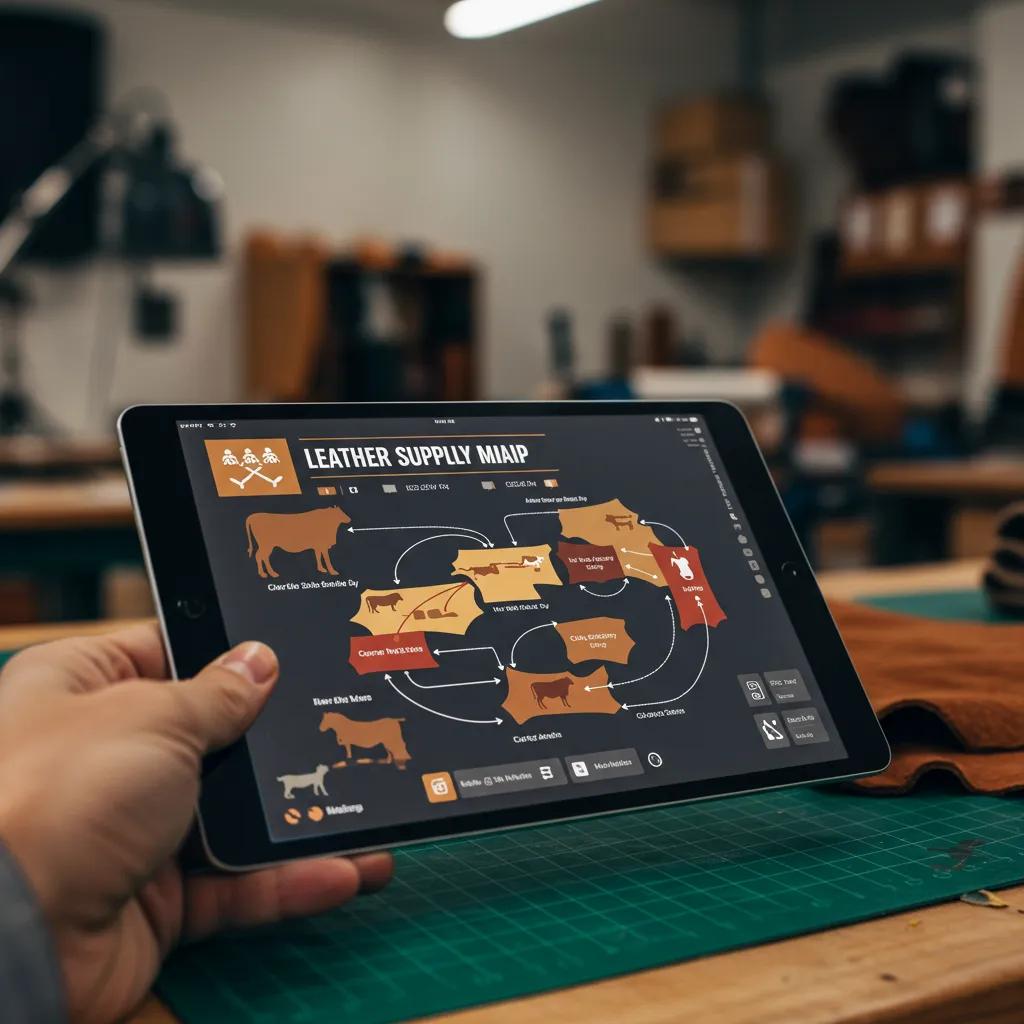
Supply‑chain transparency in leather means documented provenance, batch‑level tracking, and auditable records that link finished goods back to raw hides and processing steps. Traceability systems — paper trails, batch IDs, supplier attestations, and third‑party audits — reduce information gaps between suppliers and buyers and allow fast responses to compliance queries. The main benefit for buyers is lower reputational and regulatory risk: transparent chains prove due diligence and make claims verifiable for procurement or retail disclosure. For international buyers, documented traceability is often a prerequisite for meeting codes of conduct and joining sustainable sourcing programs.
Because verification matters, purchasers should look for concrete evidence such as supplier policies, batch IDs, and audit reports; the subsection below outlines steps manufacturers can take to demonstrate transparency.
What Steps Does Pakistan Leather Take to Ensure Full Supply Chain Transparency?
We support transparency by vetting suppliers, documenting hide provenance, and assigning batch or lot identifiers that follow goods from tannery to finished product. Practical evidence includes supplier attestations, purchase invoices, intake photos, and batch numbers on product labels or internal records — together these form an auditable paper trail. Consistent record‑keeping, paired with willingness to share non‑sensitive audit summaries, builds buyer trust — especially for wholesale and export customers seeking traceable wallets, jackets, or bags. Many buyers find the option to request sample batches and production photos during pre‑shipment checks a valuable trust‑building measure.
How Do Certifications Like LWG Verify Sustainable Leather Production?
The Leather Working Group (LWG) is a third‑party benchmark that audits tanneries on environmental performance — covering effluent treatment, chemical handling, energy use, and management systems. LWG audits yield environmental scores and reports buyers can use to speed due diligence and compare suppliers on objective criteria, reducing procurement risk. Other standards complement LWG by focusing on management systems or product‑level safety, giving buyers a multi‑dimensional verification framework. When certifications are referenced, buyers should request certificate IDs or audit summaries and ask suppliers for evidence that matches their procurement policies.
Understanding how certifications map to buyer benefits helps procurement teams decide which attestations matter most; see the table below for a quick comparison.
| Certification | Certification Attribute | Buyer Benefit |
|---|---|---|
| Leather Working Group (LWG) | Independent environmental audit and scored rating | Reduces due diligence and signals environmental performance |
| Sustainable Leather Foundation (SLF) | Guidance on lifecycle and sustainability practices | Supports broader sustainability strategy and benchmarking |
| ISO 14001 | Environmental management system standard | Demonstrates structured environmental risk management |
What Are the Benefits of Choosing LWG Certified Leather Products?
Choosing LWG‑certified leather gives buyers an independent signal that a tannery has been audited for effluent control, chemical management, and environmental systems — reducing uncertainty in procurement. The core mechanism is an independent audit that measures performance and issues a score buyers can use to compare and prioritize suppliers. Key benefits include lowered regulatory and reputational risk, clearer benchmarking for sustainability goals, and smoother supplier onboarding for retailers and importers. When combined with product‑level disclosures and supplier traceability, LWG certification streamlines compliance checks for larger procurement teams.
Here are the direct buyer benefits to make selection criteria actionable.
- Clear environmental benchmarking: measurable scores for comparison.
- Reduced due diligence time: independent audits lessen the buyer’s verification burden.
- Supply‑chain credibility: signals an operational commitment to environmental management.
These advantages support procurement strategies that prioritize verifiable sustainability and lead into how audits enforce environmental compliance in practice.
How Does LWG Certification Promote Environmental Compliance?
LWG certification promotes compliance by auditing effluent treatment, chemical controls, and management practices against established criteria, requiring tanneries to document procedures and maintain performance records. The process includes on‑site inspections and data review, creating a baseline both buyers and regulators can reference. For buyers, LWG status reduces the need for ad hoc testing because audit reports summarize conditions and corrective actions, providing a defensible procurement record. Sourcing from certified suppliers therefore aligns commercial activity with environmental risk management and helps retailers meet sustainability disclosure obligations.
The Leather Working Group (LWG) is an important benchmark for verifying environmental performance within the leather industry.
Leather Working Group (LWG) Certification for Supply Chain Sustainability
Studies show LWG certification is associated with measurable environmental improvements — including lower water and energy use, stronger chemical management, and wider adoption of lifecycle assessment (LCA) tools. Traceability and digital monitoring have also advanced through tools like blockchain and QR codes, improving supply‑chain disclosure and auditability.
Adoption of Leather Working Group (LWG) Certification and its Effect on Supply Chain Sustainability
What Other Certifications Support Ethical Leather Sourcing?
Several certifications complement LWG by targeting management systems, product safety, or lifecycle impacts: the Sustainable Leather Foundation offers broader sustainability guidance, ISO 14001 verifies environmental management systems, and product‑level standards such as OEKO‑TEX address chemical safety. Each certification serves a distinct verification role — some validate factory systems, others certify product safety or traceability. Buyers building a robust sourcing policy often combine attestations (for example, LWG for tannery performance plus ISO 14001 for overall management) so multiple validations provide layered assurance across production stages.
Evaluating complementary certifications helps buyers tailor a procurement checklist to their regulatory needs and brand risk profile.
How Does Pakistan Leather Uphold Fair Labor and Social Responsibility in Leather Manufacturing?
Social responsibility in leather manufacturing covers worker safety, fair wages, non‑discrimination, and community engagement, and it stands alongside environmental measures as central to ethical sourcing. Effective mechanisms include written labor policies, health and safety training, grievance procedures, and skills‑development programs that strengthen local supplier capacity. For buyers, these measures lower social risk and align purchases with corporate social responsibility commitments — an important factor for export markets and retail partners. Transparent documentation — policies, audit reports, and training records — helps buyers assess social performance and shows a supplier’s willingness to operate responsibly.
Linking social responsibility to circular economy goals clarifies how ethical sourcing benefits both people and material flows.
What Fair Labor Practices Are Followed in Pakistan Leather’s Production?
Pakistan Leather’s role as a manufacturer and exporter implies a focus on production quality and custom manufacturing. Within that context, fair labor practices typically include workplace safety measures, non‑discrimination, and skills training for hand‑stitching and quality inspection. Buyers should request policy documents, training records, and internal audit summaries that demonstrate compliance with labor standards. Investing in worker skills and safe facilities reduces turnover and improves product quality — a clear benefit for wholesale customers seeking consistent, hand‑stitched leather goods. Documenting these practices strengthens buyer confidence in both product integrity and social responsibility.
Recorded labor practices also help integrate social responsibility into lifecycle planning and support circular economy outcomes.
How Does Ethical Sourcing Contribute to the Circular Leather Economy?
Ethical sourcing supports a circular leather economy by prioritizing by‑product hides, designing goods for repairability, and choosing tanning methods that minimize persistent pollution at end of life. Circularity relies on reuse, repair, and material recovery to extend product life and reduce landfill waste. For leather goods, design choices — robust construction, repairable stitching, and modular components — make second‑life strategies feasible. The environmental payoff is a lower lifetime resource intensity per functional year, aligning procurement with circularity goals and cutting lifecycle emissions.
Integrating circular design into sourcing decisions supports long‑term sustainability and gives manufacturers and brands a clear market differentiation.
Tackling the complexity and challenges in the leather supply chain is essential to reach meaningful sustainability outcomes.
Sustainable Leather Manufacturing: Addressing Challenges in Pakistan’s Leather Industry
The leather sector has faced scrutiny over animal welfare, environmental impacts, and labor conditions. Initiatives are underway to improve sustainability and transparency across the supply chain. This analysis highlights the industry’s complexity and key challenges — air and water pollution, waste generation, and reliance on harmful chemicals — and emphasizes the need to balance social, economic, and environmental goals. Innovations such as bio‑based tanning agents, enzyme‑based and microbial tanning, ultrasound and nanotech approaches, compact glyoxal systems, and circular strategies like zero liquid discharge aim to reduce the industry’s environmental footprint.
Confronting Challenges in Technological Development Within Sustainable Leather Manufacturing: Barriers and Routes, N Jamil, 2014
How Can Buyers Identify Truly Sustainable and Ethically Sourced Leather Products?
Buyers verify sustainability by checking for clear product attributes: tanning method disclosure, certification badges, batch or lot IDs, and traceability statements on product pages or in supplier documentation. The verification approach is evidence‑based: request certificates, audit summaries, and batch‑level provenance; when these items are present buyers can map product claims to verifiable records. The payoff is lower procurement risk and a stronger ability to communicate authentic sustainability claims to customers. Below is a practical checklist and examples for supplier evaluation.
First, a short checklist highlights the most actionable product signals to request from suppliers.
- Tanning method disclosed: Look for “vegetable‑tanned” or “chrome‑free” on product listings or spec sheets.
- Certification presence: Ask for LWG, ISO 14001, or SLF certificate identifiers when referenced.
- Traceability markers: Request batch numbers, supplier attestations, or production photos that link to intake records.
These signals form a minimum evidence set for ethically sourced leather and guide the next steps in supplier conversations.
Below is a practical table buyers can use to map product‑level cues to the evidence they should expect from suppliers.
| Product Attribute | What to Look For | Example from Pakistan Leather |
|---|---|---|
| Tanning method | “Vegetable‑tanned” label or process description on the spec sheet | Vegetable‑tanned leather wallets listed as a product category |
| Certification badge | Certificate name and ID or summary of audit findings | Products paired with supplier statements about export readiness and manufacturing quality |
| Traceability info | Batch/lot IDs, supplier attestations, intake records | Option to request batch IDs and production photos for custom, hand‑stitched orders |
This checklist helps buyers translate visible product claims into specific documentation requests and supports clearer procurement decisions.
What Product Attributes Indicate Ethical Leather Sourcing?
Reliable product attributes include clear material origin statements, disclosed tanning method, recognized certifications, batch or lot IDs, durability data, and care/repair guidance. Each attribute offers a verification angle — tanning method reveals chemical footprint, certifications show third‑party audit, and batch IDs enable traceability back to raw hides. Buyers should favor products that combine multiple attributes because layered evidence reduces ambiguity. If attributes are missing, ask suppliers for supporting documentation before placing orders.
Requesting concrete evidence of these attributes leads naturally to how suppliers should present them on product pages.
How Does Pakistan Leather Communicate Ethical Attributes on Product Pages?
Good product pages include concise material descriptions, tanning notes, origin statements, care instructions, and an invitation to request certificates or batch information; structured data and clear image captions improve discoverability and auditability. For Pakistan Leather, that means listing tanning details and leather species (sheep, goat, cow, buffalo) for items like vegetable‑tanned wallets, jackets, and custom hand‑stitched bags, and prompting wholesale buyers to request batch‑level documentation. Consistent labeling and structured descriptions reduce buyer friction and make compliance evidence easier to obtain for export transactions.
Clear product information boosts buyer confidence and simplifies verification during pre‑shipment or sample reviews.
Advanced tools like blockchain can strengthen trusted traceability and sustainability across a complex leather lifecycle.
Blockchain for Trusted Traceability and Sustainability in Leather Products
The leather supply chain spans many organizations and stakeholders, making transparency and data provenance difficult. A growing demand for sustainable practices has driven proposals for blockchain‑based solutions to secure traceability and strengthen sustainability claims across the product lifecycle.
Blockchain‑based Trusted Traceability and Sustainability Certification of Leather Products, R Islayem, 2025
For procurement teams seeking ethically sourced, traceable leather, Pakistan Leather offers custom manufacturing and export capabilities, with examples such as vegetable‑tanned wallets, hand‑stitched bags, and jackets. Buyers interested in wholesale orders, production samples, or batch documentation are encouraged to contact Pakistan Leather to discuss specifications and export readiness.
Frequently Asked Questions
What are the environmental benefits of using vegetable-tanned leather?
Vegetable‑tanned leather reduces reliance on heavy metal salts by using plant‑based tannins, which lowers persistent chemical toxicity in effluent and improves biodegradability. This method can also reduce water and energy use when combined with efficient tannery practices, resulting in a smaller overall ecological footprint and products that are easier to manage at end of life.
How can consumers verify the ethical sourcing of leather products?
Consumers can check for certification badges (for example LWG or ISO 14001), clear tanning method disclosures, and traceability information like batch or lot IDs on product pages. Requesting supplier documents such as audit summaries and attestations provides further confirmation. Together, these items help consumers make informed choices that match their sustainability values.
What role do certifications play in sustainable leather sourcing?
Certifications offer third‑party validation of a supplier’s environmental and social practices. LWG, for example, assesses tanneries on chemical management, effluent treatment, and environmental performance. Certifications reduce buyer due diligence time and help ensure suppliers meet agreed sustainability standards, allowing brands and retailers to make confident sourcing decisions.
How does ethical leather sourcing impact animal welfare?
Ethical sourcing emphasizes hides that are by‑products of the meat industry rather than from animals raised solely for leather, which helps reduce demand for livestock bred only for skins. Combined with humane handling standards through the supply chain, this approach lowers the overall animal‑welfare impact of leather production.
What are the social responsibility practices in Pakistan's leather industry?
Social responsibility practices include fair labor standards, workplace safety, and local community engagement. Manufacturers are expected to uphold fair wages, non‑discrimination, and health and safety training. Transparent records — audit reports and training documents — help buyers confirm these practices and build confidence in supplier integrity.
How does the circular economy relate to ethical leather sourcing?
The circular economy complements ethical sourcing by prioritizing by‑product hides, designing goods for repair and longevity, and enabling reuse and material recovery. Extending product life and reducing waste lower lifecycle impacts and create economic value from materials that might otherwise be discarded.
What are the challenges faced in achieving sustainable leather production?
Challenges include managing tanning‑related pollution, reducing water use, ensuring fair labor across complex supply chains, and maintaining consistent transparency from suppliers. Overcoming these issues requires collaboration, investment in cleaner technologies, and sustained commitment to continuous improvement throughout the leather supply chain.
Conclusion
Ethical leather sourcing advances environmental care, animal welfare, and fair labor across the supply chain. Choosing responsibly sourced leather reduces ecological impact and supports a circular economy. Working with suppliers like Pakistan Leather gives buyers access to traceable, high‑quality products that align with ethical standards. Explore our offerings today and make procurement choices that deliver both performance and positive impact.


