
Essential Leather Manufacturing Tools
Essential Leather Manufacturing Tools: Core Equipment and Practical Techniques for Consistent, High‑Quality Leather Goods
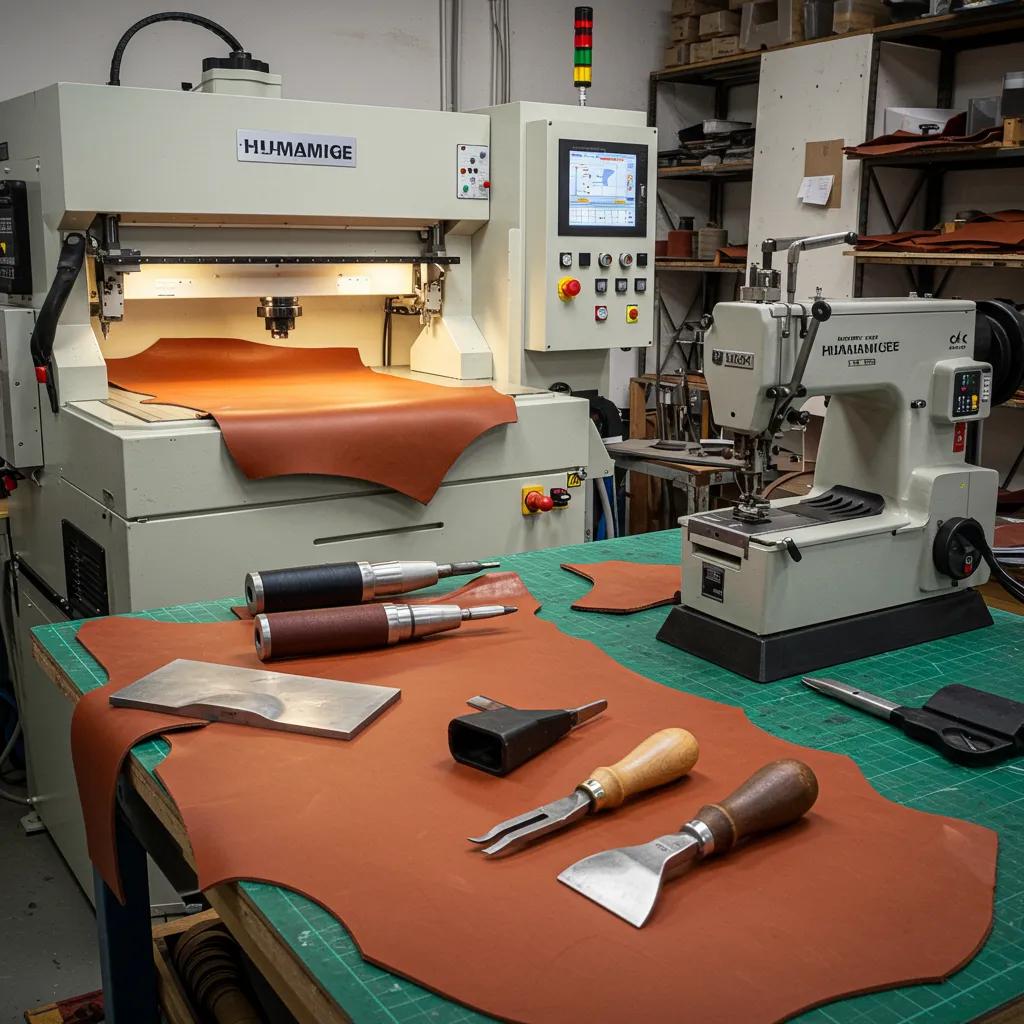
Leather manufacturing tools are the machines and hand implements that turn raw hides into reliable, attractive leather goods. From CNC cutters and heavy‑duty sewing machines to edge burnishers and skiving heads, each tool affects fit, finish and material yield. Choosing the right equipment reduces waste, strengthens seams and extends product life for both manufacturers and buyers. This guide breaks down the essential leather machinery, explains how each tool works, and links equipment choices to measurable outcomes such as stitch strength, consistent sizing and export‑ready quality. You’ll find focused sections on industrial cutting, advanced sewing, finishing and embossing, pre‑production preparation and QC, artisanal hand tools, and how Pakistan Leather applies these practices in wholesale and retail production.
What Are the Essential Tools for Industrial Leather Cutting?

Industrial cutting tools slice patterns from hides quickly and repeatedly by combining precise motion systems with hardened blades or press tooling. Accurate cutting reduces dimensional variance and overlapping material, improving seam alignment and lowering waste per hide—critical factors for cost per unit and fit accuracy. This section outlines the main cutting technologies, compares their trade‑offs, and explains when CNC cutting or hydraulic die cutting is the better fit on a factory line. Knowing how to select cutting tools helps manufacturers balance throughput, tooling amortization and yield, which in turn affects sewing and finishing stages. The following subsections describe each machine family and show how precise cutting delivers clear quality improvements.
This list presents the primary industrial cutting technologies used in leather factories and the main advantage of each:
- CNC oscillating knife cutters — precise contouring for complex shapes with minimal setup time.
- Hydraulic die cutting presses — repeatable, high‑volume blanking for simple to medium‑complexity parts.
- Manual and clicker die cutting — flexible and low‑capex for small runs and prototypes.
Each approach maps to different production models and cost structures; the right choice depends on order size and part complexity.
Which Industrial Leather Cutting Machines Ensure Precision and Efficiency?
CNC oscillating knife cutters use a fast‑vibrating blade under computer control to follow vector paths, allowing complex outlines and minimal material movement for consistent results. They improve nesting efficiency and cut‑per‑hide yield compared with hand layout. Hydraulic die cutting presses use hardened dies to stamp identical pieces quickly—ideal for high‑volume runs but requiring upfront tooling and storage. Many factories use CNC for prototyping and die presses for established styles to balance flexibility and throughput. Understanding these capabilities helps you sequence cutting operations to meet deadlines while preserving material yield across cow, goat, sheep and buffalo leathers.
How Does Precision Cutting Impact Leather Product Quality and Waste Reduction?
Accurate cutting improves seam alignment, pattern matching and panel fit—details that matter for jackets, bags and wallets. When parts fit within tight tolerances, sewing machines produce even stitch lines with less puckering, lowering repairs and boosting perceived durability. Optimized nesting on CNC systems often reduces offcut waste versus hand layout, increasing usable area per hide and lowering raw material cost per unit. Less waste shortens production cycles because fewer manual fixes are needed, improving throughput and on‑time delivery. These efficiency gains affect pricing, buyer confidence and make precision cutting a strategic investment for scalable leather manufacturing.
| Cutting Technology | Characteristic | Typical Benefit |
|---|---|---|
| CNC oscillating knife cutter | High‑precision, programmatic cutting for complex shapes | Better nesting efficiency and lower waste |
| Hydraulic die cutting press | High‑speed, repeatable stamping with hardened dies | Fast throughput for large runs and consistent part quality |
| Clicker/manual die cutting | Low‑capex, flexible for prototypes and small batches | Cost‑effective for bespoke or low‑volume production |
This comparison highlights trade‑offs between precision, flexibility and throughput so manufacturers can match cutting tech to product mix and order volume.
What Advanced Leather Sewing Machines Are Used in Factory Production?
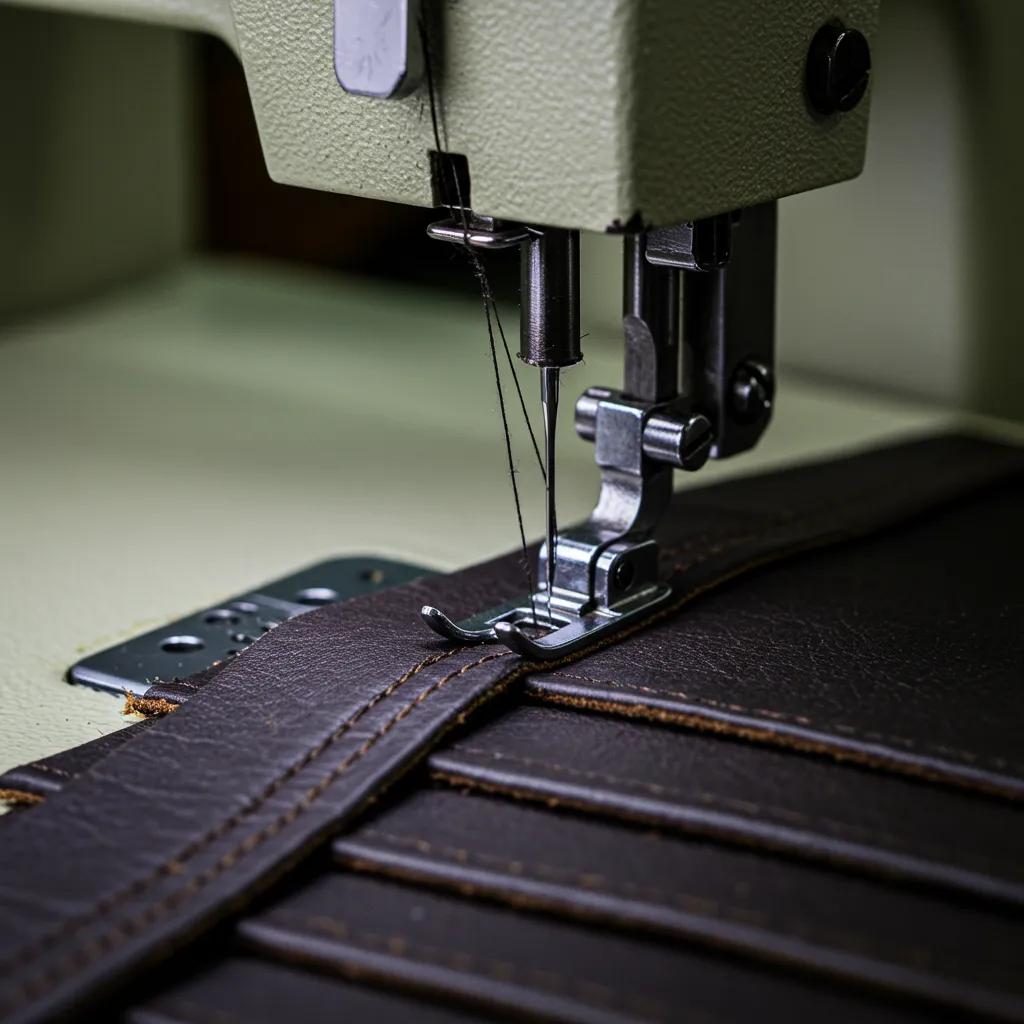
Advanced leather sewing machines are heavy‑duty industrial units built to handle thick materials and long runs. They deliver consistent stitch strength with robust feed systems, high‑torque motors and special needles. Key categories include walking foot, cylinder‑arm and post‑bed machines—each suited to particular goods and seam types. This section covers defining features, throughput considerations and how the right machines improve seam durability and lower failure rates across production runs. The following H3s outline the features to prioritise and the mechanical advantages that extend product life.
Industrial sewing for leather relies on machines with several core capabilities. Prioritise these three features:
- Walking foot / compound feed: Keeps material moving evenly to prevent slippage on thick hides.
- Large‑capacity hook and heavy needles: Accept bigger thread sizes and reduce missed stitches under load.
- Adjustable presser foot pressure and tension control: Fine‑tune stitch formation for varying leather thicknesses.
Choosing machines with these features cuts skipped stitches and produces stronger seams on belts, structured bags and other heavy goods.
What Features Define Heavy-Duty Leather Sewing Machines for Factories?
Walking foot and compound feed systems synchronise needle and material movement so multiple leather layers feed without slipping—critical for laminated or thick assemblies. Cylinder‑arm and post‑bed machines give access to curved or three‑dimensional parts—handy for rounded gussets, collars and cuffs—so operators can keep stitch lines consistent. Heavy machines also use oversized hooks, industrial motors and work with waxed or bonded nylon threads made for load‑bearing seams. These design elements cut operator adjustments per seam, raise throughput and preserve stitch integrity. The next subsection explains how these features translate into longer product life through consistent stitch formation and load resistance.
How Do Industrial Sewing Machines Enhance Stitching Strength and Product Longevity?
Industrial machines deliver uniform stitch length and controlled tension across batches, lowering the risk of seam failure and improving durability. Consistent stitch geometry avoids stress concentrations that lead to early separation, and matched heavy‑duty needles and threads ensure loads pass through strong materials instead of frayed fibers. Fewer defects mean less rework and fewer warranty claims, improving margins for wholesale and export customers. For designers and buyers, that consistency yields predictable product lifespans, reinforcing brand reputation and repeat orders. These results depend on maintenance, operator training and solid process controls to keep stitching steady across large runs.
| Machine Type | Stitch Capability / Thickness | Production Throughput |
|---|---|---|
| Walking foot sewing machine | Long, even stitches for multi‑layer leather | High — ideal for linear seams on heavy goods |
| Cylinder-arm sewing machine | Access to curved panels and tubular shapes | Moderate to high — suited to complex forms |
| Post-bed sewing machine | Precision around hardware and narrow workspaces | High — for detailed, structured assemblies |
Which Tools Are Essential for Leather Finishing and Embellishment?
Finishing and embellishment tools give leather goods their tactile and visual character. Machines and hand tools bevel, burnish, emboss and stamp surfaces to control edges, thickness transitions, texture and branding. The right finishing equipment raises perceived value through consistent gloss, sealed edges and sharp imprints. Here we cover edge burnishers, skiving machines, embossing presses and hot foil stamping units—what they do and how they improve durability and look. The following subsections show how finishing reduces seam bulk, protects exposed edges and enables premium branding.
Key finishing tools and their primary visual or functional effects are:
- Edge bevelers and burnishers — refine and seal cut edges for a smooth, durable finish.
- Skiving machines — taper thickness at seams to remove bulk and enable flat joins.
- Embossing presses and hot foil stamping machines — add logos, patterns and metallic accents for branding.
These finishing steps shape tactile quality and visual consistency; the right combination of tools produces repeatable, premium results for wholesale orders.
How Do Edge Burnishers, Skiving Machines, and Embossing Presses Improve Leather Appearance?
Skiving machines shave controlled layers to create tapered edges that sit flat when stitched, avoiding lumps and improving seam transitions. Edge burnishers heat, compress or apply sealants to raw edges, yielding a sealed surface that resists moisture and shows a clean sheen. Embossing presses use dies and pressure to create repeatable textures or logos, ensuring consistent brand presentation across batches. Together, these processes remove visible variability from finished goods so garments and accessories meet buyer expectations for luxury touchpoints. The next subsection explains how hot foil stamping pairs with these techniques for durable personalised branding.
What Role Does Hot Foil Stamping Play in Custom Leather Design?
Hot foil stamping transfers metallic or pigmented foils to leather with a heated die, producing high‑contrast logos and personalisation that hold up when applied correctly. It supports subtle blind embossing through to bright metallic accents, offering bespoke options for wholesale clients who need consistent branding across large runs. Success across leather types—sheep, goat, cow or buffalo—depends on temperature, pressure and foil choice; controlled settings ensure repeatability from batch to batch. For buyers needing precise logo placement and colour matching, foil stamping delivers durable, premium branding that complements mechanical finishing and handwork, elevating product identity for retail and wholesale markets.
| Finishing Tool | Finish Result | Ideal Use-Case |
|---|---|---|
| Edge burnisher | Smooth, sealed edge with controlled gloss | Belts, bag edges, wallet perimeters |
| Skiving machine | Reduced bulk at seams for flat joins | Overlapping panels, gussets, collars |
| Embossing / hot foil press | Crisp logos and textures; metallic accents | Brand marking, personalisation, luxury labels |
What Leather Preparation and Treatment Tools Are Vital Before Manufacturing?
Preparation tools standardise hide thickness, remove unwanted surface finishes and condition material properties before cutting and sewing to ensure consistency across production lots. Typical equipment includes splitting and skiving machines, deglazers for surface prep before dyeing, and conditioning stations for moisture balance—each setting the stage for reliable downstream processing. Proper preparation reduces variability that causes misfits, needle breakage or poor adhesive bonding, improving first‑pass yield. The subsections below explain splitting and skiving in practice and why strong QC during preparation is essential for meeting wholesale and export tolerances.
Here are common pre‑production actions performed on hides:
- Splitting: Bringing hide thickness to a uniform target for specific product families.
- Skiving: Tapering edges and panels to accommodate layered seams.
- Deglazing and conditioning: Removing topcoats or preparing leather for re‑dyeing and finishing.
These operations reduce variability and help ensure consistent cutting and sewing results.
How Are Skiving, Splitting, and Deglazing Tools Used in Leather Preparation?
Splitting machines divide the hide into layers to reach target thicknesses for different applications, ensuring a consistent feel across many parts. Skiving heads remove thin layers at seam junctions so edges meet flush without creating bulk that disrupts stitch geometry. Deglazing tools abrade or chemically treat surfaces to remove topcoats for dye absorption or bonding, preparing panels for later finishing and colour matching. Operators must control removal rates to avoid weak spots; process controls and measurement tools verify tolerances. Proper preparation smooths sewing and finishing steps, improving predictability and cutting down on rework.
| Preparation Process | Equipment | Production Purpose |
|---|---|---|
| Splitting | Rotary or band splitting machine | Achieve uniform thickness by product family |
| Skiving | Precision skiving head | Reduce bulk at seams and edges for cleaner joins |
| Deglazing / conditioning | Abrasion or chemical treatment stations | Prepare surface for dyeing, staining or adhesive bonding |
Why Is Material Quality Control Important in Leather Manufacturing?
Material QC finds scars, thickness variance and surface flaws before production starts, preventing costly rework and returns. Inspection points—visual checks, thickness gauges and dye absorbency tests—classify hides by usable area and suitable end uses, helping planners allocate hides to the right runs. Tight QC reduces variability so lines keep steady throughput and sewing machines run with fewer needle breaks or skipped stitches. For wholesale and export customers, transparent QC procedures signal reliability and lower disputes over shipment quality, supporting long‑term partnerships. The next section explores hand tools where QC meets bespoke finishing choices.
What Hand Tools Support Bespoke and Custom Leather Craftsmanship?
Hand tools are vital for bespoke work, letting artisans add detail and structural care that machines can’t replicate. Common tools include saddle stitching kits, awls, punches and edge finishing implements. These implements give precise stitch placement, decorative hand‑stitching and on‑the‑spot corrections during prototypes or small batches. While machines provide speed and consistency, hand tools add visible craftsmanship—hand‑burnished edges, saddle seams and custom tooling—that luxury buyers value. This section lists typical hand tools, their roles, and how skilled craft complements factory production while preserving unique product identity.
Common hand tools and their main uses:
- Awls, needles and waxed thread for saddle stitching that creates durable, repairable seams.
- Wing dividers and edge bevelers for precise edge geometry and clean finishes.
- Punches and hammers for hardware fitting and decorative perforation.
These hand techniques are usually reserved for focal points where touch and detail most influence buyer perception.
Which Hand Tools Are Used for Custom Designs and Hand Stitching?
Saddle stitching uses two needles and a single thread to form interlocking stitches that remain secure even if one segment fails—ideal for high‑stress seams. Hand punches make clean holes sized to match thread and needle for optimal stitch formation, and edge bevelers with burnishing blocks let artisans shape edges before hand sealing for a smooth feel that machines alone may not achieve. These tools enable contrast stitching, hand‑burnished edges and fast alterations for custom orders—bridging industrial consistency with artisan exclusivity.
How Do Skilled Craftsmen Use Hand Tools to Enhance Product Uniqueness?
Skilled craftsmen apply controlled, subtle variations—slight stitch tension differences, hand‑burnished sheen and selective distressing—to add a human signature that sets bespoke pieces apart from mass production. These artisanal touches focus on strap ends, flaps and wallet edges where detail matters most. Pairing hand finishing with machine‑sewn structural seams lets factories scale while keeping high‑touch elements that justify premium prices. For buyers after uniqueness or small‑batch customisation, hand tools provide tangible differentiation that supports perceived value.
How Does Pakistan Leather Utilize Advanced Manufacturing Tools to Ensure Premium Quality?
Pakistan Leather uses modern tools and tested processes to win direct customers, secure wholesale and export orders, build trust and demonstrate production capability.
We manufacture and export high‑end leather garments and accessories—jackets, bags, wallets, belts and promotional items—combining machine precision with hand finishing. We work with sheep, goat, cow and buffalo leathers and offer Pantone colour matching and custom colour development to meet buyer specs. By integrating industrial cutting systems with heavy‑duty sewing platforms and dedicated finishing equipment, Pakistan Leather delivers consistent quality across both bulk and bespoke runs. Visuals of machinery in operation and clear QC checkpoints reassure wholesale and export customers about capability and traceability.
Here are the operational benefits Pakistan Leather highlights for buyers:
- Consistent batch quality through industrial cutting and sewing systems.
- Custom colour development and hand‑stitched options for bespoke orders.
- Factory capacity to scale for wholesale and export commitments.
These capabilities support customers looking for reliable production partners for retail collections and bulk orders alike.
What Cutting and Sewing Technologies Does Pakistan Leather Employ?
Pakistan Leather uses a mix of industrial cutting and sewing technologies to produce a wide range of leather goods, matching machine capabilities to design complexity. CNC and automated cutters provide efficient nesting and lower waste on complex panels, while die presses handle repeat parts at scale to control per‑piece cost. Heavy‑duty walking foot and cylinder‑arm sewing machines create robust seams for structured bags and outerwear, and selective handwork adds bespoke finishes where needed. Photographic evidence of blade paths, press cycles and stitched assemblies helps buyers assess process maturity and production hygiene. The next subsection links these systems to buyer outcomes for wholesale and export customers.
How Do These Tools Benefit Wholesale and Export Customers?
This integrated toolset delivers predictable quality across large runs, cutting defect rates and supporting scheduled deliveries required by wholesale and export buyers. Custom colour development and hand‑stitched finishing let buyers request brand‑specific variations while factory systems keep repeatability across batches. Pakistan Leather’s setup supports export readiness—managing material selection for target markets and meeting partner expectations for sample approval and bulk fulfilment. Contact Pakistan Leather for quotes, wholesale enquiries and custom requests to discuss minimums, lead times and sample production.
- Reduced Defects: Industrial cutting and sewing lower the variation that leads to returns.
- Scalability: Combining CNC, die cutting and heavy‑duty sewing supports larger order volumes.
- Customization: A mix of factory and hand processes enables bespoke colour and stitching options.
These buyer‑focused outcomes show how tool choice and process control create commercial advantages for customers sourcing leather goods from a manufacturer set up for wholesale and export.
Frequently Asked Questions
What are the benefits of using CNC cutting machines in leather manufacturing?
CNC cutters bring precision and efficiency to leather production. Computer‑controlled blades follow intricate designs to deliver consistent cuts with less waste, improving material utilisation and cutting costs. They handle complex shapes that challenge manual cutting, making them well suited to high‑volume work. Quick design changes also speed prototyping and custom runs, giving manufacturers more flexibility to meet market needs.
How does leather quality impact the final product?
Leather quality affects durability, appearance and value. Better hides resist wear and keep their look longer, while poor‑quality leather can lead to fraying, uneven surfaces and seam issues. Quality also influences stitching and finishing processes—so sourcing premium hides is essential to meet customer expectations for longevity and luxury.
What role does quality control play in leather manufacturing?
Quality control catches defects early, preventing expensive rework and ensuring only acceptable products reach customers. Common QC steps include visual inspections, thickness checks and dye absorbency tests. Strong QC keeps standards consistent across batches, reduces variability and boosts customer confidence—especially important for wholesale and export partners.
How can manufacturers reduce waste during leather production?
Reduce waste by optimising cutting layouts with CNC nesting, improving sewing techniques and using quality materials that need less rework. Lean manufacturing practices and staff training on handling machines and hides also cut unnecessary steps. Together, these measures increase usable area per hide and lower production costs.
What are the advantages of using hand tools in leather craftsmanship?
Hand tools let artisans add details machines can’t replicate. Awls, punches and bevelers provide precise control for stitching and finishing, and support on‑the‑spot adjustments during small runs or prototypes. This artisanal work raises perceived value and appeals to customers who want authenticity and craftsmanship.
How does the choice of leather type affect manufacturing processes?
Different hides require different approaches. Thick hides like cowhide need heavy‑duty machines and specific needles for strong seams; softer leathers like lambskin require gentler handling to avoid damage. Preparation steps—skiving, splitting and conditioning—also vary by leather type to reach target thickness and finish. Knowing these differences helps manufacturers optimise processes and meet quality goals.
Conclusion
Using the right leather manufacturing tools produces more consistent, durable and attractive goods. When precision cutting, robust sewing and careful finishing work together, factories reduce waste and improve product longevity. If you want to raise the quality of your leather production, reviewing equipment choices and processes is a practical first step. Explore our selection of premium tools and see how small changes can lift your results.


