
Popular Leather Color Palettes

Popular Leather Color Palettes and Trends for 2025: How to Choose and Customize Fashionable Leather Shades
Color shapes how we read leather — it affects perceived quality, how long a piece looks new, and how easily it fits into your wardrobe. This guide breaks down timeless neutrals and the 2025 trend families — earthy, jewel, pastel and metallic — and shows practical ways to choose shades that flatter your skin tone, match your closet and stand up to daily wear. You’ll find styling tips for jackets, bags and wallets, simple care steps to keep colors vivid, and a clear look at how Pantone-based custom color development delivers repeatable results for bespoke and wholesale orders. We also summarize how different leathers (sheep, goat, cow, buffalo) take dye and finish differently, with checklists and reference tables to make decisions faster. Finally, manufacturers and buyers get a step-by-step Pantone-to-leather workflow and guidance on where custom services fit into sourcing for direct sales and export.
What Are the Classic Leather Colors and Why Are They Timeless?
Classic leather colors — black, brown, tan, navy and grey — are wardrobe foundations because they’re versatile, hard-wearing and easy to style. These neutrals are produced with dye systems and finishes designed for colorfastness, so they mask wear on high-contact items and retain perceived value across categories. Knowing what makes these shades stable (dye formulation, finish type, and substrate) helps you pick pieces that work year after year and provides a neutral base for seasonal or statement updates.
Which Colors Define Classic Leather Palettes?
Classic leather palettes rely on a few reliable shades that read as quality and adaptability. Black suggests structure and formality — ideal for tailored jackets and structured wallets. Brown and tan bring warmth and vintage character, aging beautifully on softer aniline hides. Navy and grey act as modern neutrals that pair with both casual and business looks. These colors are typically paired with finishes chosen for the product: matte for understated luxury or semi-gloss for structured goods — so the finish matters as much as the hue.
How to Style Classic Leather Colors for Jackets and Bags
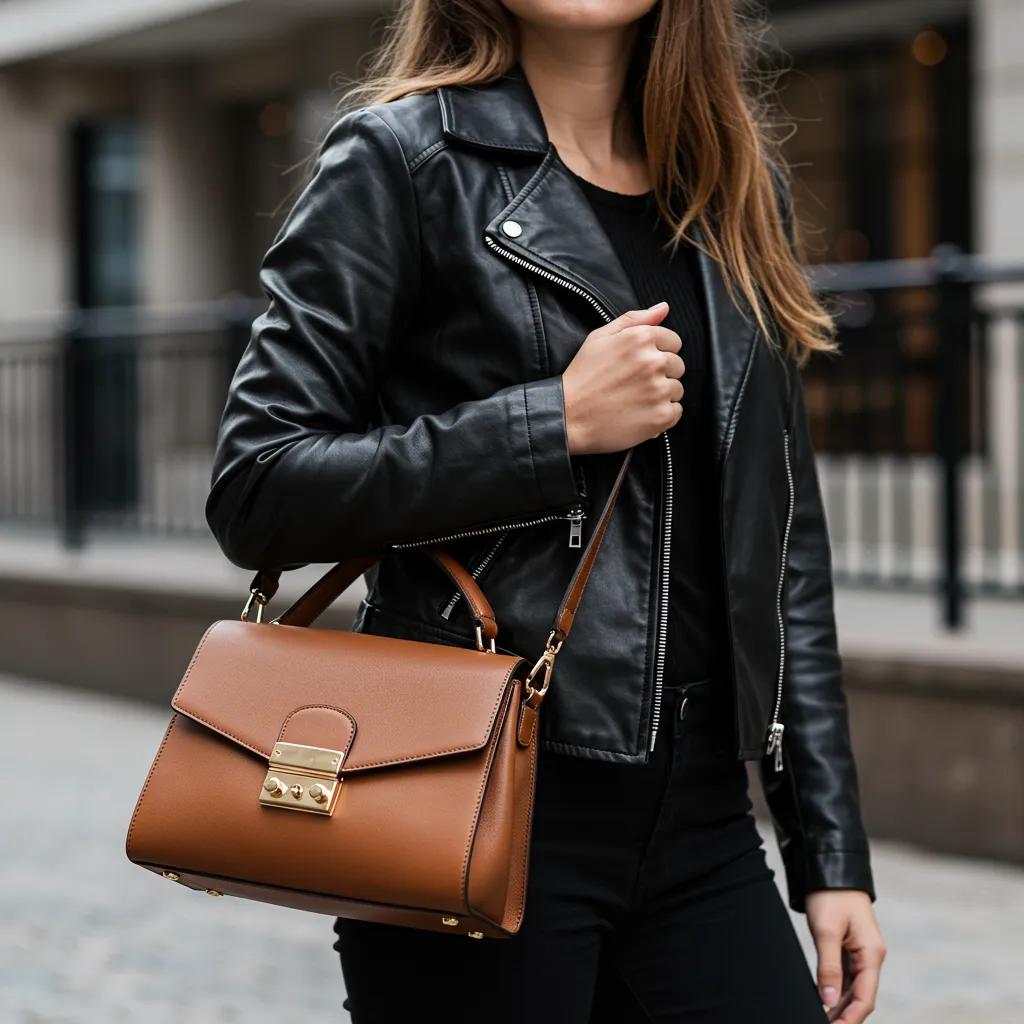
Classic colors suit many styling approaches and move easily from day to night. For jackets, black and navy pair well with denim and minimalist layers for a clean silhouette; brown and tan look great with earth-toned knits and textured layers. Neutral, structured bags act as capsule pieces that lift both casual and dress looks, while small wallets in deep brown or black remain timeless. Think about silhouette: structured bags benefit from deeper neutrals that hold shape; slouchier jackets often read better in lighter tans and cognacs — so match finish and cut to the color you choose.
Classic neutrals also make a reliable base for trend accents — which we cover next in the 2025 palette overview.
What Are the Trending Leather Color Palettes for 2025?
The 2025 forecast centers on four families: earthy, jewel, pastel and metallic. Each answers a fashion impulse — tactile authenticity (earthy), bold elegance (jewel), gentle personalization (pastel) and evening drama (metallic). Realizing these looks in leather requires specific dye and finishing choices, so pick palettes with the intended leather type and finish in mind. Below we explain how each family behaves in leather goods and how to apply them.
Which Earthy Tones Are Popular in Leather This Year?
Earthy shades for 2025 — terracotta, burnt sienna, olive and clay — echo natural landscapes and hand-dyed warmth. These colors work well with matte or lightly distressed finishes that enhance texture and hide minor scuffs, making them ideal for casual jackets and crossbody bags. Earthy tones flatter warm skin undertones and slip easily into neutral-focused capsule wardrobes. For these looks, full-grain or top-grain cowhide is a strong choice for bags, while goat and sheep leathers often suit garments for their drape and hand.
How Are Jewel Tones and Metallics Shaping Leather Fashion?
Jewel tones — emerald, ruby, sapphire — and metallic finishes bring intensity and occasion-ready appeal to leather, appearing on statement jackets and evening clutches. Jewel colors usually need deeper dye baths and robust topcoats to hold saturation and abrasion resistance; metallics rely on foils or coated systems to get reflective surfaces while keeping flexibility. These finishes fit premium accessories and occasion wear where colorfastness and finish durability are essential; manufacturers typically run pilots and finish tests to avoid flaking or transfer issues.
Leather’s Role in Fashion: Trends, Storytelling, and Iconic Pieces
Understanding a fashion product through its references and codes reveals how leather carries meaning and storytelling — especially in luxury, where iconic “it bags” from houses like Hermès, Chanel and Louis Vuitton set standards. Design and technical innovation drive new collections that compete globally; interpreting trends at an industrial level is key to producing commercially successful, compelling lines.
Why Are Pastel Leather Shades Gaining Popularity?
Pastels — blush, mint, lilac — translate seasonal color moods into wearable accessories that feel fresh, not overpowering. They work especially well for smaller silhouettes and fashion-forward bag shapes, offering a soft contrast against a neutral wardrobe. Producing pastels demands careful pigment balance and testing because light hues show wear and staining more easily than dark neutrals. As accent pieces, pastels extend seasonal versatility when paired with neutral outerwear.
Each palette suits different products and moods; the table below maps families to uses and gives example Pantone directions for designers and buyers.
| Palette Family | Mood / Use | Example Product Types | Pantone-style Example |
|---|---|---|---|
| Earthy (terracotta, clay) | Warm, casual, tactile | Casual jackets, everyday crossbodies | Warm terracotta references |
| Jewel (emerald, ruby) | Luxurious, statement | Evening bags, statement jackets | Deep emerald references |
| Pastel (blush, mint) | Soft, playful accents | Small crossbody bags, accents | Soft blush references |
| Metallic (silver, pewter) | Glamorous, evening | Clutches, accents on structured bags | Pale silver references |
This quick guide links trend families to product applications and sample Pantone directions for custom color work.
With palettes covered, the practical next step is matching shades to personal style and skin undertone — covered below.
How Can You Choose the Perfect Leather Color for Your Style and Wardrobe?
Start by reviewing your wardrobe’s dominant colors, the item’s intended use, and how the shade will age. Weigh versatility (daily carry versus statement), closet compatibility, and how the finish will handle wear. This process reduces impulse buys that don’t integrate well and ensures new pieces work with multiple outfits. Use the checklist below in store or when ordering custom pieces.
- Pick shades that complement your wardrobe’s main color family to maximize wearability.
- Choose darker, more saturated hues for high-contact items; reserve lighter shades for occasional or statement pieces.
- Match function to color: structured daily bags do best in deep neutrals; statement jackets are a place for jewel and metallic experiments.
Use this checklist to narrow options quickly; next we translate undertone guidance into specific shade suggestions.
What Leather Colors Match Different Skin Undertones?
Skin undertones help determine which leather shades flatter you. Warm undertones pair well with earthy and warm neutrals — tan, camel, terracotta — while cool undertones benefit from navy, black and jewel tones that create crisp contrast. Neutral undertones are flexible and can wear both families depending on layering. A simple test: hold a swatch near your face in natural light — if it brightens your complexion, it’s a good match. This rule keeps new pieces flattering and wardrobe-ready.
How to Integrate Leather Colors Seamlessly into Your Wardrobe
Integrating a new leather color is easier with a few rules: balance bold pieces with neutral anchors, repeat an accent color across two items to create cohesion, and consider the piece’s silhouette relative to your usual outfits. For example, pair a pastel bag with neutral outerwear and a scarf that picks up the same tone to make the color feel intentional. Rotating colors seasonally — earthy tones in autumn, pastels in spring — keeps pieces relevant longer. Thoughtful integration turns trends into lasting wardrobe elements.
What Are the Benefits of Custom Leather Color Development with Pantone Matching?
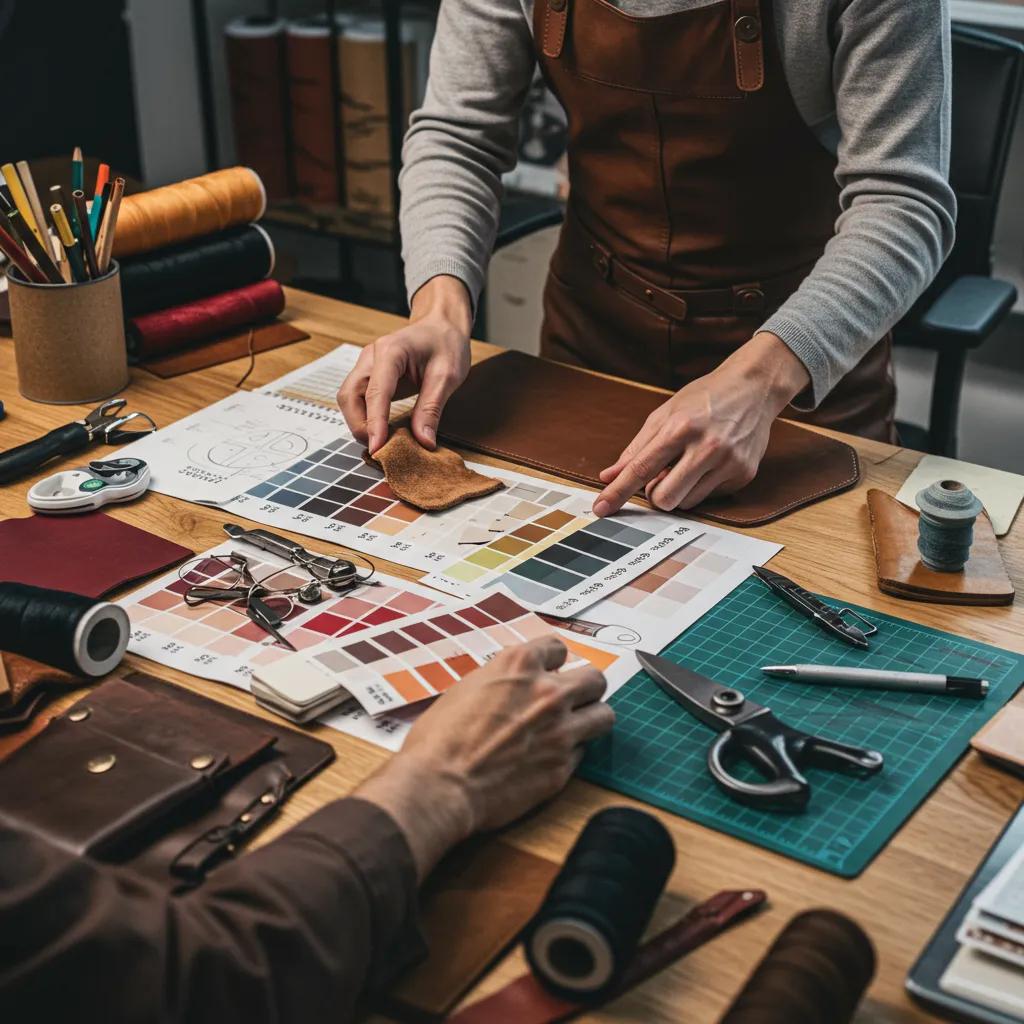
Pantone-based custom color development delivers precise, repeatable shades across production runs — essential for brand consistency and reliable wholesale or export orders. Matching to Pantone turns a visual target into a production-ready dye formula and helps maintain color across different leather types and finishes. For design and procurement teams, this approach supports coherent collections and simplifies inventory because approved swatches become the production standard. Expect these core benefits from a solid Pantone-to-leather workflow.
- Accurate color replication from pilot to full production, protecting brand consistency.
- Scalable manufacturing that preserves shade fidelity for wholesale and export orders.
- Stronger quality control through sample approvals and pilot dye runs before committing to volume.
These advantages make Pantone matching a standard for professional leather sourcing; below we outline a typical stepwise service workflow and deliverables.
Pakistan Leather offers manufacturing and export services with Pantone custom color development, hand-stitched high-end garments and bags, and a leather range including sheep, goat, cow and buffalo. For buyers who need bespoke shades at scale, Pakistan Leather can produce any Pantone-specified color and supports both direct sales and wholesale/export orders. Their workflow follows clear stages — sample approval, pilot runs, then full production — to ensure reliable color repeatability for brands and retailers.
The table below outlines a standard Pantone-to-leather workflow and the client deliverables you can expect.
| Service Step | What It Achieves | Client Deliverable |
|---|---|---|
| Sample Submission & Match | Translates Pantone reference into a trial dye | Physical swatch for approval |
| Pilot Dye Run & QC | Tests color on chosen leather type and finish | Pilot pieces and a QC report |
| Full Production Scaling | Ensures repeatability at volume | Bulk production in the approved shade |
This workflow clarifies each stage and the tangible outputs clients receive, helping buyers set accurate expectations.
How Does Pakistan Leather’s Custom Color Matching Process Work?
Pakistan Leather’s custom matching starts with a Pantone reference or physical sample, then creates swatches on the requested leather type to check how grain and finish affect the shade. Once the swatch is approved, a pilot dye run verifies colorfastness and finish performance through QC tests; pigment load and topcoat are adjusted as needed before scaling to full production. For wholesale and export orders, Pakistan Leather focuses on repeatability and quality assurance so brands receive consistent batches that match specification. Buyers can request sample sets and pilot approvals to validate shade and finish before placing larger orders.
What Leather Types Are Available for Custom Color Options?
Leather types accept dyes and finishes differently: sheep and goat leathers are soft with fine grain, ideal for hand-stitched garments and delicate handbags where subtle dye penetration is preferred; cowhide and buffalo are more durable and absorb dye differently, making them suitable for structured bags and wallets. Finish choice depends on the look you want — matte or aniline for natural surfaces, semi-aniline for a balance of protection and hand-feel, and metallic or coated finishes for statement pieces. Knowing these substrate differences helps you choose the right leather so Pantone-matched colors perform as expected over time.
These production details tie directly into care practices — essential for keeping colors bright.
How Should You Care for and Maintain Vibrant Leather Colors?
Keeping leather color vivid depends on regular cleaning, correct conditioning and protection from UV and moisture. Routine care preserves dye and finish performance, reduces repairs and keeps items looking their best. Using appropriate products and following a maintenance schedule prevents premature fading and surface damage. Below are practical daily and seasonal steps to protect your leather and extend color life.
- Clean with pH-neutral leather cleaners and a soft cloth to avoid stripping dyes or finishes.
- Condition periodically with products formulated for the leather finish to restore oils and suppleness.
- Store away from direct sunlight and rotate use to prevent localized wear and fading.
These simple habits form the base of long-term color preservation and prepare leather for occasional deeper care.
What Are the Best Practices for Leather Color Care?
Always spot-test cleaners and conditioners on an inconspicuous area to confirm compatibility and colorfastness. Use gentle, pH-balanced cleaners for everyday dirt removal and apply conditioners sparingly to avoid over-saturating the surface. For coated or metallic leathers, choose products made for topcoated finishes to preserve shine. Follow a seasonal routine — clean before storing and condition after heavy use — to keep pigments stable and reduce cracking risk. These routines help leather goods retain both look and function longer.
How to Protect Leather from Fading and Wear
Prevention reduces fading: avoid prolonged sun exposure, use protective sprays suited to the finish, and store items in breathable covers to control humidity. For high-contact pieces, consider finishes with UV inhibitors and topcoats that repel moisture and stains, and schedule periodic professional reconditioning for frequently used items. Small scuffs or mild fading can often be remedied with professional touch-up and recoloring that restores hue without harming texture. These measures protect color vibrancy and help maintain resale or wear value.
Regular care ties back to buying choices — selecting the right color and finish cuts down on maintenance and extends usable life.
What Are the Most Popular Leather Colors for Jackets, Bags, and Wallets?
Color recommendations vary by product: some hues work across categories, while others are best as seasonal accents. For jackets, choose colors that flatter many outfits and hide wear; for bags, match shade and finish to function and silhouette; wallets usually stick to classic neutrals for daily use. Below we map recommended colors to product types, explain why they work, and note options for wholesale and sample ordering.
Which Leather Jacket Colors Are Trending in 2025?
Jackets in 2025 still sell strongly in black and brown, with earthy terracotta and olive for casual silhouettes and jewel tones for statement outerwear. Finish choice influences the look: distressed mattes create a rugged feel, while semi-gloss lends a refined, structured appearance. For garments, sheep and goat leathers provide the softness and drape for hand-stitched jackets; cowhide gives the structure needed for heavier outerwear. Matching color, finish and leather type ensures the jacket complements both casual and elevated wardrobes.
What Are the Best Leather Bag Colors for Versatility and Fashion?
Everyday bags do best in classic neutrals — brown, tan, black — while pastels and metallics serve as seasonal or statement accents. Structured daily bags benefit from deeper neutrals that hide scuffs and match workwear; small clutches and crossbodies can use pastels or metallics to create a focal point. Pakistan Leather can produce these popular shades with Pantone matching across sheep, goat, cow and buffalo leathers to keep collections consistent. That manufacturing flexibility supports single-item custom work and large-scale export-ready runs.
Below is a quick buyer’s guide mapping product types to recommended colors and styling notes to simplify selection.
| Product Type | Recommended Colors | Versatility / Styling Notes |
|---|---|---|
| Jackets | Black, brown, terracotta, emerald | Balance structure with finish; choose softer leathers for drape |
| Bags | Brown, tan, pastel accents, metallics | Deeper neutrals for daily use; accents for seasonal interest |
| Wallets | Black, dark brown, navy | Classic neutrals for longevity and wear concealment |
We include practical sourcing, care and trend application tips throughout the article to help you buy and customize with confidence.
- Quick Sourcing Checklist: Choose leather type → Select finish → Confirm Pantone swatch → Approve pilot run.
- Top Maintenance Actions: Spot-test products → Clean with pH-neutral cleaner → Condition periodically → Store properly.
- Styling Rules for New Colors: Anchor bold pieces with neutral bases → Repeat accent colors across two items → Rotate seasonally.
Each checklist simplifies decisions from trend selection to long-term care, helping buyers and designers turn inspiration into durable, stylish leather products.
For bespoke color needs and scalable production that keeps shades consistent across materials and runs, Pakistan Leather’s Pantone-based development and manufacturing offers a practical path for designers, retailers and exporters seeking dependable, high-quality leather goods.
Frequently Asked Questions
What Factors Should I Consider When Choosing Leather Colors?
Consider your wardrobe’s dominant colors, the item’s purpose, and how the shade will age. Look for versatility — darker shades for daily, high-contact use; lighter shades for occasional or statement pieces — and check how the color complements your skin tone and style. This approach keeps new items wearable and long-lasting.
How Do I Maintain the Vibrancy of My Leather Items?
Set up a simple care routine: clean with pH-neutral products, condition to maintain suppleness, and protect from sun and moisture. Store items in cool, dry places with breathable covers and rotate use to avoid localized wear. These steps help prevent fading and keep leather looking its best.
What Are the Best Leather Types for Custom Color Development?
Sheep and goat leathers are great for soft, delicate items because of their fine grain; cowhide and buffalo are better for structured products that need durability. Each type takes dyes differently, so choose the leather that fits the product’s function and the look you want from the Pantone-matched color.
How Can I Integrate Trendy Leather Colors into My Existing Wardrobe?
Balance bold pieces with neutral anchors and repeat an accent color across two items to create cohesion. Pair a vibrant bag with a neutral outfit or match a pastel accessory with a patterned scarf that picks up the same tone. Seasonal rotation — earthy in fall, pastels in spring — keeps pieces feeling current.
What Are the Key Differences Between Earthy, Jewel, Pastel, and Metallic Leather Colors?
Earthy tones feel warm and natural, ideal for casual wear. Jewel tones are saturated and luxurious, best for statement pieces. Pastels are soft and playful, suited to smaller accessories. Metallic finishes add shine and glamour for evening wear. Choose the family that matches mood, product type and occasion.
What Maintenance Products Are Recommended for Different Leather Finishes?
For matte or aniline leathers, use gentle, pH-balanced cleaners and conditioners designed for those surfaces. Semi-aniline leathers benefit from products that restore oils without over-saturating. For coated or metallic finishes, pick cleaners meant to preserve shine without dulling. Always spot-test in an unseen area first.
Conclusion
Choosing the right leather color elevates both style and longevity. By understanding 2025’s palettes and how different leathers and finishes behave, you can make informed choices that reflect your taste and practical needs. Browse our range of leathers and custom color services to find the right match for your wardrobe or collection — and make your leather pieces work harder, longer, and more beautifully.


